
Across regions, the hope that democracy would bring quality governance, accountable leaders, and development is slipping rapidly out of reach.
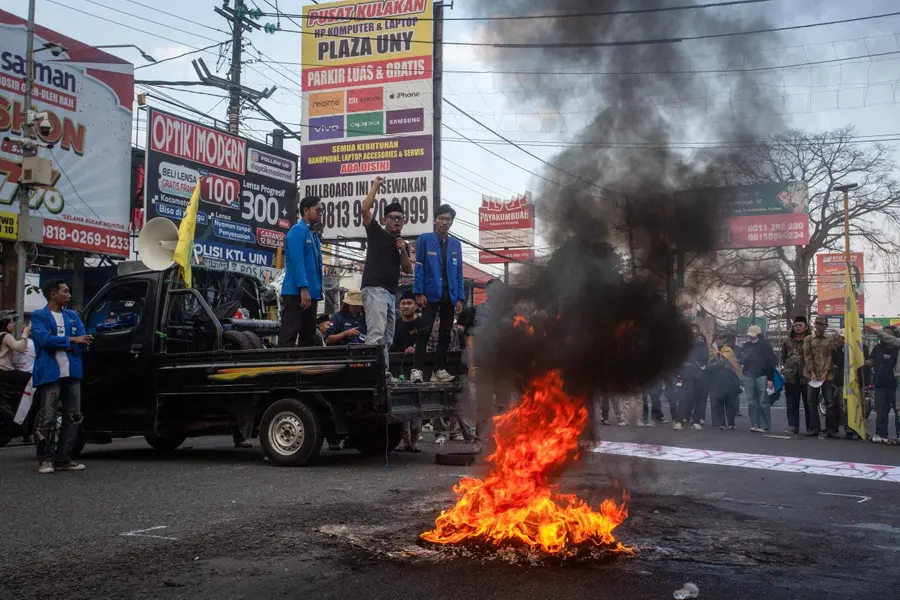
The unrest in Indonesia is more than a burst of local anger – it is a flare across Asia’s wavering democracies. In capitals from Jakarta to Manila, Bangkok to New Delhi, the hope that democracy would bring quality governance, accountable leaders, and development is slipping rapidly out of reach.
The protests have toned down for now, but the chants from Indonesia’s streets will continue to echo across the region: anger at corruption, frustration with inequality, and distrust of a political class seen as self-serving and unscrupulous.
Indonesia’s journey after the fall of Suharto in 1998 inspired the world – a model for how democracy could take root in a region where strongmen had held sway for decades. Today, it faces a disillusioned populace who took to the streets after lawmakers raised their benefits by 50 million rupiah (US$3,000) per month at a time when much of the country survives hand to mouth.
Indonesia is not alone in such political chauvinism: Thailand’s trio of monarchy, military and traditional parties has pushed out another elected prime minister; the Philippines is jolted as the president and supporters of the past president duel openly; Malaysia still reels from a corruption scandal that jailed a former prime minister; while the Myanmar junta continues to keep 80-year-old Aung San Suu Kyi behind bars.
Organic protests have erupted in all these countries in recent months. The fact that people from other ASEAN nations used food delivery platforms to send meals to Indonesian protesters shows the shared anger running across the region.
It is not limited to Southeast Asia. India, the “largest democracy,” shows ominous signs of backsliding, lost in majoritarian politics and fragmented opposition. In Sri Lanka, President Gotabaya Rajapaksa fled in 2022, and Bangladeshi Prime Minister Sheikh Hasina fled to India in 2024, after both faced fury over corruption and misgovernance.
These are symptoms of democratic systems that once promised to put “people first” but are breaking down. Elections come and go with dizzying frequency, yet often bring little real change. Channels of free expression – once democracy’s fuel – have been bullied into silence or turned into conduits of misinformation.
This has bred a rising culture of impunity. Leaders in many countries act more like aristocrats of a bygone era – shielded, unaccountable and cut off from the millions they purport to serve.
Dila, a 28-year-old office worker in Jakarta, put it plainly in an AFP interview: “It's the whole corrupt system, there is too big a distance between people in the government, the parliament, and us as the people they have to serve.”
The true aim of democracy – welfare of the people – has been hijacked. It now serves political parties, the military, organised minorities and religious forces.
India offers a sobering example. Corruption and nepotism, once whispered in corridors, are flaunted openly. Power is pursued not as service but as an end in itself. Ethics and principles have disappeared.
Leaders confine themselves to air-conditioned offices and luxury cars, their activism reduced to social media posts. They shore up their positions by doling out crumbs to support groups and favoured businesses. The political class in much of Asia has become an elite above the law, with no qualms about using state power and resources for its own benefit.
This is compounded by the decline of institutions meant to act as checks and balances. Parliaments still debate, courts still sit, opposition parties still campaign, media still reports – but increasingly these institutions legitimise decay instead of curbing it.
The result is a widening gulf between rulers and ruled, most visible in wealth inequality. Indonesia’s four richest individuals control more wealth than the poorest 100 million Indonesians combined, according to the Global Inequality Report 2022. In India, the top 1% held 40.1% of national wealth between 2022–23, says the World Inequality Lab.
This dysfunction has profound geopolitical implications. China’s rapid development under one-party rule looks like an increasingly attractive model, as democracies struggle with paralysis and fragmentation. The perception is rising that democracy hinders economic progress.
Singapore, often mischaracterised as a democracy, represents a third way: technocratic authoritarianism that delivers high living standards while tightly controlling political space. For many Asians watching their own democracies stumble, Singapore’s efficiency holds obvious appeal.
Countries like India and Indonesia once stood as rebukes to such authoritarianism – proof that democracy could deliver both bread and liberty. Today, that promise is threadbare. Frustration simmers, and the very legitimacy of democracy is on trial.
Protesters in Jakarta say their struggle is not over. They have launched “Reset System,” a pink-and-green themed movement resonating across the internet. The colours symbolise the green jacket of a delivery rider killed in the riots and the pink hijab of a mother whose clash with police went viral.
President Prabowo Subianto has rolled back the legislators’ pay rise and has promised reforms. But the former son-in-law of dictator Suharto, long shadowed by rights-abuse allegations from 1998, will see his new democratic credentials put to severe test.
Whether Reset Indonesia leads to real change is uncertain. But as despair turns to anger, neighbours across ASEAN – already simmering – will be watching closely.
Unless Asia’s democracies find the will to rebuild trust and reconnect with their people, these societies will drift, slowly but surely, from promise to peril.
Published: 06 Sept 2025, 09:27 am IST
Related Topics
Disclaimer: Kindly avoid objectionable, derogatory, unlawful and lewd comments, while responding to reports. Such comments are punishable under cyber laws. Please keep away from personal attacks. The opinions expressed here are the personal opinions of readers and not that of Mathrubhumi.
