
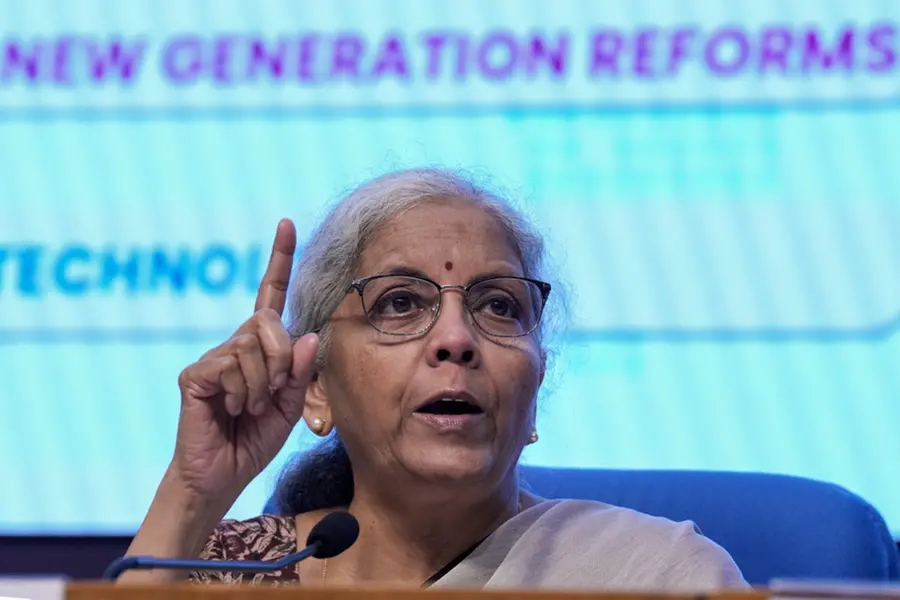
Income Tax Day, celebrated on July 24, marks the introduction of income tax by Sir James Wilson in 1860. While its roots date back to then, significant reform only occurred with the Income Tax Act of 1922. Since then, the tax system has seen numerous amendments. Every year, the public eagerly anticipates the annual budget announcement, hoping for tax reductions. However, recent budgets have not introduced any groundbreaking changes in this regard.
The Union Budget 2024 also does not offer much respite to the salaried tax payers. The only reform in the new tax regime was a marginal relief. The persistently high income tax rates coupled with inadequate salary increases matching inflation continue to weigh heavily on the common man.
As per the new regime, the basic tax dedication limit has been placed at Rs 3 lakh. The slab limit of three to six lakh has been increased by one lakh to seven lakh and tax kept at five percent. In the next slab, 10 percent tax has been applied to an income tab between 7-10 lakh. On the other hand, the tax for those earning up to Rs 12 lakh has been kept at 15 percent. Consequently, the tax for an income between Rs 12-15 lakh has been decided at 20 percent and 30 percent tax is applicable to income above Rs 15 lakh. In effect, an addition of Rs 1 lakh was added in three slabs. The standard deduction has also been increased from Rs 50,000- Rs 75,000.
Limit should be Rs 5 lakh
A change in the income tax slab in line with the inflation from time to time will bring relief to the common man. The rise in prices has significantly affected the purchasing power of the middle class. Prices of daily necessities have doubled in two years. The basic tax exemption limit under the old regime is still the same as Rs 2.50 lakh fixed over ten years ago. Last year, the tax deduction limit was increased to rs 3 lakh in the new tax regime.
At 7 percent average annual inflation, the value of Rs 5 lakh in 2014 is today equivalent to Rs 2.54 lakh. The value of Rs 10 lakh then is equivalent to Rs 5 lakh today. In other words, if you want to purchase something that was valued at Rs 1000 then, you need to pay Rs 1900 now. On the other hand, the price increase in the fields of treatment and education is above 10 percent. Salary income has not increased commensurate with inflation.
If the slab is revised commensurate with the inflation, the limit needs to be increased at least by Rs 5 lakh. Proportionate increase is also required in subsequent slabs. Considered in this manner, 30 percent tax should be made applicable only for an income of Rs 20 lakh or above.
Income tax slab as per New Regime
Income slab (In rupees) | New Tax Regime | Changes as per Budget 2024-25 (if any) |
0- 300000 | Nil | Nil |
300001- 600000 | 5 percent (Tax rebate u/s 87 A) | 300001- 700000- 5 percent |
600001- 900000 | 10 percent (Tax rebate u/s 87 A up to Rs 7 lakh) | 700001- 1000000- 10 percent |
900001- 1200000 | 15 percent | 1000000- 1200000- 15 percent |
1200001- 1500000 | 20 percent | 1200000- 1500000- 20 percent |
1500001 and above | 30 percent | 1500001 and above- 30 percent |
Income tax slab as per Old Regime:
Income slab (In rupees) | Individuals (Age < 60 years) | Senior Citizens ( ≥60 to 80 years) | Super Senior Citizens (80 years and above) |
Up to 250000 | Nil | Nil | Nil |
250001- 300000 | 5 percent | Nil | Nil |
300001-500000 | 5 percent | 5 percent | Nil |
500001-1000000 | 20 percent | 20 percent | 20 percent |
Above 1000000 | 30 percent | 30 percent | 30 percent |
Tax deductions should be increased
The government aims to stimulate economic growth by boosting consumption, which includes promoting a new tax regime designed to maximise market liquidity through reduced tax deductions. Advocates argue that retaining the old tax system while gradually increasing deductions under Section 80C to Rs 2 lakh would incentivize future savings among the general population. Additionally, they propose raising the health insurance limit for entire families from Rs 25,000 to Rs 50,000, aligning it with rising premium costs.
Tax liability as per Union Budget 2024
Rs 10 lakh | ||
| Old Regime | New Regime | |
| Annual Income | 10,00,000 | 10,00,000 |
| Standard Deduction | 50,000 | 75,000 |
| Other Concessions* | 4,75,000 | 0 |
| Taxable income | 4,75,000 | 9,25,000 |
| Tax | 0** | 42,500*** |
| Suitable | Old tax regime | |
*80C exemption- Rs 1.05 lakh, NPS Deduction Rs 1,00,000, 80D Health insurance- Rs 25,000, Home Loan interest- Rs 2,00,000 **Rebate- Rs 11,250 ***Expect cess | ||
Rs 20 lakh | ||
| Old Regime | New Regime | |
| Annual Income | 20,00,000 | 20,00,000 |
| Standard Deduction | 50,000 | 75,000 |
| Other Concessions* | 4,75,000 | 0 |
| Taxable income | 14,75,000 | 19,25,000 |
| Tax** | 2,55,000 | 2,67,500 |
| Suitable | Old tax regime | |
*80C exemption- Rs 1.05 lakh, NPS Deduction Rs 1,00,000, 80D Health insurance- Rs 25,000, Home Loan interest- Rs 2,00,000 | ||
Aversion to new system
It must be assumed that the benefits of the new tax regime were announced in last year’s budget, signalling a phase-out of the old regime, but it failed to attract salaried tax payers. Home loan borrowers seeking tax benefits and claiming deductions on health insurance, education expenses and house rent allowances are interested in continuing with the old regime. Those with an annual income of Rs 10 lakh would not have to pay a single rupee of tax on their old savings if they availed these deductions. In the case of the new regime, till the last financial year, it was Rs 54600.
The government annually calculates the Cost Inflation Index (CII) to account for inflation. From 2012-13 to 2024-25, the index has risen significantly, from 200 to 363, marking an increase of 81.5 percent. Many argue that linking tax slabs to inflation and announcing proportionate increases each year would provide relief to the common man by easing additional financial burdens.
feedback to: antonycdavis@gmail.com
Published: 24 Jul 2024, 04:55 pm IST
Related Topics
Disclaimer: Kindly avoid objectionable, derogatory, unlawful and lewd comments, while responding to reports. Such comments are punishable under cyber laws. Please keep away from personal attacks. The opinions expressed here are the personal opinions of readers and not that of Mathrubhumi.
