
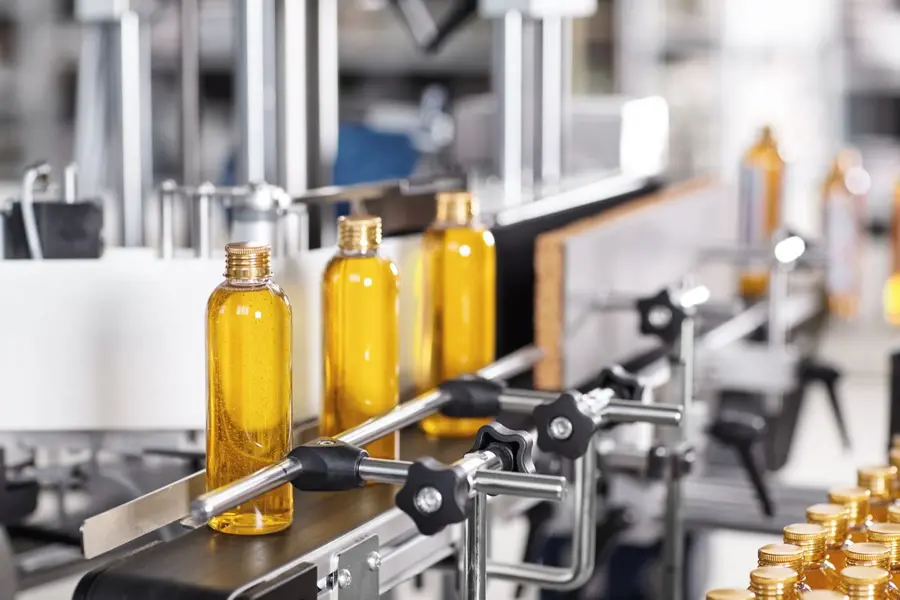
In a strategic move to curb rising prices, the Indian government has announced a reduction in import duty on edible oils. With the aim of providing relief to consumers and supporting the Fast-Moving Consumer Goods (FMCG) sector, the import duty has been slashed from 20 percent to 10 percent. This decision is expected to bring down the prices of key cooking oils such as soybean, palm, and sunflower, offering both economic and market-wide benefits.
Price surge and policy response
Over the past year, prices of edible oils, including palm oil, have witnessed a sharp increase. This upward trend was largely driven by a higher import duty imposed by the government in September last year. The aim was to protect domestic producers and promote regional farming.
For the first time, a basic customs duty of 20 percent was introduced, which, when combined with other levies, raised the effective import duty on crude oils to as much as 27.5 percent.
In addition, the basic duty on refined edible oils such as palm, sunflower, and soybean was increased from 12.5 percent to 32.5 percent. This led to a significant spike in retail prices, affecting households and industries alike.
Changing global landscape
India depends heavily on edible oil imports, fulfilling nearly 57 percent of its total requirement from international markets. However, global dynamics have shifted. An increase in global oilseed production has triggered a decline in international prices, resulting in a surge in oil imports to India.
Consequently, domestic prices began to fall sharply. To counter this trend and shield domestic producers, the government initially increased the import duty.
The National Mission on Edible Oils-Oil Palm (NMEO-OP), launched in October last year, was also aimed at encouraging domestic cultivation of oilseeds. Yet, the policy had some unintended consequences.
Did import duty hike backfire?
While the intent was to protect Indian farmers, the steep import duty hike had a ripple effect across various sectors. Leading manufacturers such as Adani Wilmar (now AWL Agri Business Limited) and Marico responded by raising the prices of sunflower and palm oils. This contributed to a 43 percent increase in palm oil prices alone.
FMCG companies, particularly those involved in biscuit production such as Britannia Industries, were compelled to increase the prices of their products, passing the cost burden onto consumers.
New duty structure and its implications
Effective from May 31, the central government has revised the duty structure. The basic import duty on crude edible oils has been reduced from 20 percent to 10 percent. Taking into account all applicable taxes, the effective import duty has dropped from 27.5 percent to 16.5 percent. However, the import duty on refined edible oils remains unchanged at 32.5 percent.
This change is expected to drive down the prices of key oils in the market over the next few weeks, offering significant relief to consumers. Moreover, it provides an opportunity for FMCG companies to restore margins and possibly roll back recent price hikes.
Beneficiaries of duty cut
The move is expected to directly benefit several major players in the edible oil industry. Companies such as Adani Wilmar, Cargill India, Marico Limited, Patanjali Foods, Emami Agrotech, Agrotech Foods, and BCL Industries stand to gain from reduced input costs.
In addition, larger FMCG corporations like Hindustan Unilever --which uses palm oil in soaps and detergents -- and biscuit manufacturers like Britannia, Nestlé, and ITC will likely see improved profitability.
With input costs declining, these companies may use the opportunity to increase production, stabilize prices, and potentially enhance market share.
Consumer relief on the horizon
From a consumer standpoint, the reduction in import duty offers timely relief. As prices fall, households will benefit from more affordable cooking oils. Industry experts predict that prices in retail markets will begin to decrease within a month, depending on inventory turnover and distribution dynamics.
FMCG firms, particularly those heavily reliant on edible oils, are expected to post improved margins and profits in the upcoming financial quarters. The ripple effects may also extend to the hospitality and food service sectors, further easing inflationary pressures.
The Bigger Picture: Soaring Demand and Supply Challenges
India's consumption of edible oil has grown threefold over the last two decades. Per capita consumption has risen from 8.2 kg in 2001 to 23.5 kg, nearly double the 12 kg level recommended by the Indian Council for Medical Research (ICMR).
Currently, India produces only about 11 million tonnes of the 26 million tonnes of edible oil it requires annually. This heavy dependence on imports has made the economy vulnerable to international price fluctuations and supply disruptions.
To address this, the government launched the National Mission on Edible Oils-Oil Palm (NMEO-OP), aiming to boost domestic production to cover nearly 72 percent of national demand in the long run. The program supports farmers with subsidies and infrastructure for oil palm cultivation.
Key import sources and market composition
India imports palm oil primarily from Indonesia and Malaysia, soybean oil from Argentina and Brazil, and sunflower oil from Russia and Ukraine. Palm oil accounts for the largest share of consumption at 37 percent, followed by soybean oil at 20 percent and sunflower oil at 13 percent.
Regional preferences also include mustard and coconut oils.
FMCG companies are among the largest consumers of edible oils, using them in a wide array of products, from packaged foods to personal care items.
Urbanization, changing food habits, and the rise of ready-to-eat products have fueled this growing demand.
Future Outlook
The government’s decision to reduce import duties reflects its commitment to balancing domestic producer interests with consumer welfare.
While the duty cut is a short-term measure aimed at addressing price volatility, long-term sustainability depends on increasing domestic production.
For investors and stakeholders in the FMCG sector, the development signals a potentially profitable period ahead. Lower raw material costs may boost operating margins, encourage innovation, and create space for price stabilization or even reductions.
As global markets remain unpredictable and food inflation continues to be a concern, policy moves such as this highlight the delicate balancing act that governments must perform.
Ensuring food security while supporting industry and maintaining price stability will remain a top priority in the years ahead.
In conclusion, the reduction in import duty on edible oils comes as a welcome move for both the public and the private sector. As prices ease and profitability improves, consumers and companies alike stand to benefit from a more stable and sustainable edible oil market in India.
Published: 05 Jun 2025, 01:21 pm IST
Disclaimer: Kindly avoid objectionable, derogatory, unlawful and lewd comments, while responding to reports. Such comments are punishable under cyber laws. Please keep away from personal attacks. The opinions expressed here are the personal opinions of readers and not that of Mathrubhumi.
