
Instead of asking why such a massive section of the electorate turned against them, many in the CPI-M appear to have settled on a far simpler explanation. The people, according to them, simply got it wrong!
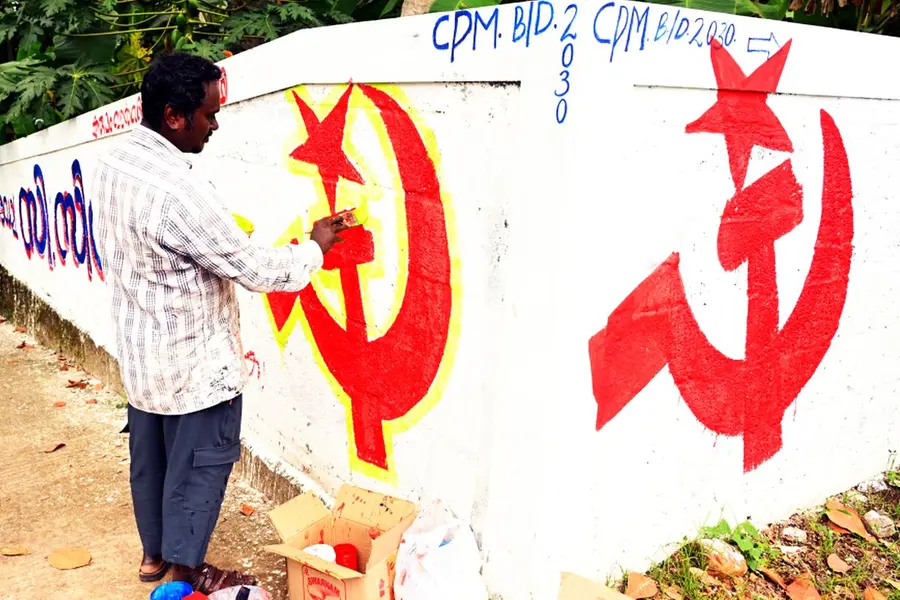
The most revealing part of the Left's crushing defeat in Kerala has not been the defeat itself. Elections are lost all the time, governments fall, and political moods change. What has truly stood out is the reaction of many leaders of the Communist Party of India-Marxist after the verdict. It has been a spectacle of denial, arrogance and wounded entitlement. Instead of asking why such a massive section of the electorate turned against them, many in the party appear to have settled on a far simpler explanation. The people, according to them, simply got it wrong!
M Swaraj, in his trademark pedantic style, almost seemed to suggest that the electorate lacked the political sophistication to appreciate what the government had supposedly achieved. MM Mani expressed essentially the same sentiment in his usual crass and unfiltered manner. John Brittas wrote an article in The Indian Express that read less like introspection and more like an elaborate exercise in rationalising defeat. The underlying tone in all these reactions was impossible to miss. The people had failed the Left and not the other way around.
Also Read: Satheesan takes power, Pinarayi takes position
That attitude itself explains a great deal about why the Left lost. This was not merely a vote against a particular government. It was a vote against a style of governance that had become increasingly arrogant, excessively centralised and hopelessly addicted to image management.
Over the past several years, Kerala witnessed the construction of a political personality cult around Pinarayi Vijayan that became impossible to ignore. Massive hoardings, endless newspaper advertisements, and carefully staged publicity campaigns.
Government communication increasingly became indistinguishable from political branding. Every welfare scheme, every administrative move, every press interaction was projected through the singular prism of the leader. The irony is that what was intended to project strength ended up producing fatigue and resentment.
Ordinary people are often far more politically perceptive than ruling establishments imagine. They can sense when governance slowly begins to transform into performance. They can recognise when governments start communicating through headlines instead of genuine public engagement. And, the Left, obviously, mistook media management for political consent.
Also Read: Kerala votes for a political reboot
Another factor also severely damaged the LDF's credibility during the campaign. The sheer aggression and toxicity of the CPM's social media ecosystem. A substantial portion of the party's online machinery seemed consumed not with defending the government's record but with trying to systematically discredit Opposition leader VD Satheesan.
The projection was relentless. Satheesan was (and still is) portrayed as incompetent, directionless, communal, opportunistic and politically lightweight. Yet the election results demonstrated how disastrously that strategy had misfired. The scale of the UDF victory itself showed that large numbers of voters simply did not believe the caricature that was being manufactured around him. In fact, the more the attacks intensified, the more they appeared insecure and orchestrated.
The Left also attempted to push another line aggressively during the campaign. That the Congress and the UDF were somehow enabling communal forces through their relationship with the Indian Union Muslim League. That is one argument that sounded increasingly absurd to many voters.
The Muslim League has been a long-standing constituent of Kerala’s democratic political structure for decades. One may agree or disagree with aspects of its politics, but to suddenly present it as some dangerous aberration while pretending that the Left alone represented secular virtue simply lacked credibility.
Also Read: 'Many betrayed and tried to pull him down, but Satheesan returned stronger'
The contradiction became even starker because the Left itself had shown no hesitation in aligning politically with figures such as Vellappally Natesan, whose rhetoric has often been accused of being openly sectarian and deeply polarising. Sitting inside that glass house and throwing stones at the Congress over its alliance with the Muslim League was politically comical.
Then came the attempts to invoke Jamaat-e-Islami and broader Islamist anxieties in order to corner the UDF. But this line too carried little moral force because the Left itself has long faced accusations of selective silence and political convenience when dealing with Islamist tendencies. The memory of incidents such as the murder of S Abhimanyu at Maharaja’s College in Kochi still lingers in Kerala's political consciousness. Many people continue to believe that the handling of Islamist radicalism under the Pinarayi government was often marked by hesitation, selectivity and political calculation.
The contradictions did not end there. The CPM repeatedly attacked others in the name of secular purity while simultaneously facing allegations of tactical understandings with the SDPI in multiple local body contexts. The party denied any formal alliance, and technically, that may well be true. But politics is not judged only by formal documents.
Public perception is shaped equally by political conduct. There were repeated controversies involving indirect support arrangements, local electoral cooperation, and situations in which SDPI backing appeared electorally convenient for sections of the Left.
That weakened the moral authority with which the CPM attempted to attack others on communalism. People noticed the double standards. And, ultimately, that may be well the central lesson of this election.
Kerala's voters were not rejecting welfare politics. Nor were they rejecting progressive politics. They were rejecting political arrogance masquerading as ideological superiority. They were rejecting the belief that an electorate must obediently validate the self-image of a ruling establishment forever. The Left stopped listening long before the people stopped voting for them.
What the election produced was not merely a change in government. It was the puncturing of an illusion. The illusion that media management could indefinitely substitute political humility. The illusion that constant propaganda could erase public frustration. The illusion that voters in Kerala could be endlessly lectured to while their intelligence was quietly insulted.
The people answered all of that in one election. And judging from the reactions that followed, much of the Left still does not understand what actually happened.
The author is a National Award winner for Best Narration and an independent political analyst. Views expressed are personal.
Published: 18 May 2026, 10:44 am IST
Related Topics
Disclaimer: Kindly avoid objectionable, derogatory, unlawful and lewd comments, while responding to reports. Such comments are punishable under cyber laws. Please keep away from personal attacks. The opinions expressed here are the personal opinions of readers and not that of Mathrubhumi.
