
An in-depth analysis of how Indian cinema, from `Saiyara` to `Ghajini`, often misrepresents mental illness, perpetuating stigma and misinformation. Exploring the dramatic use of disorders.
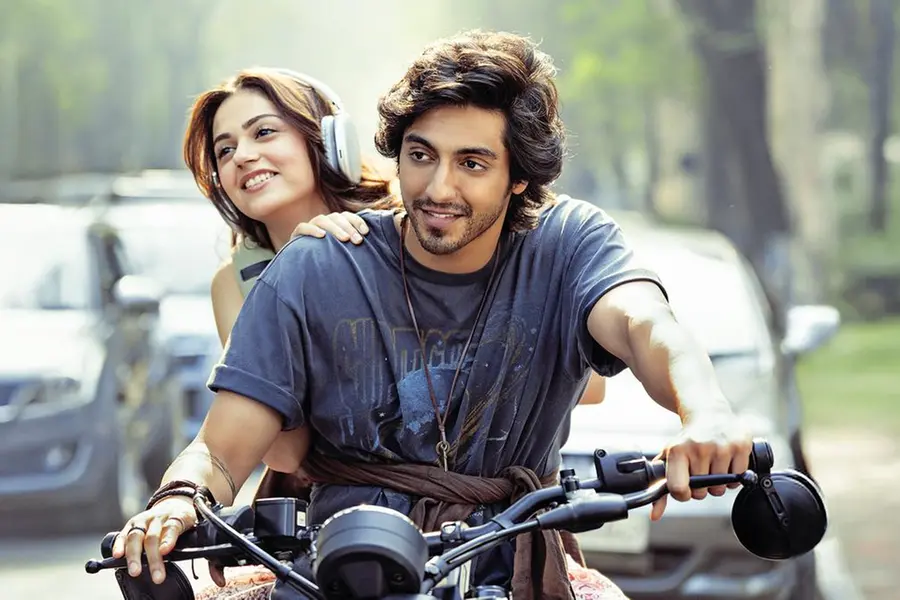
Mohit Suri’s recent film Saiyaara has turned the tables for Bollywood mainstream cinema by turning out to become a major box office success. This, though it features two newcomers in the romantic lead in this much-touted-as-a-young-romance story alternating with the leading lady turning out to be a victim of early Alzheimers’ – the incurable name for the medical trauma of forgetting – things, names, time, identities, relatives, places, people, friends, lovers, including oneself. Many reported that the film is about a young pair of deeply in love couple where the girl is diagnosed as an early Alzheimers’ patient.
The film is quite attractive for youngsters in the audience but if one closes in on the medical representation of Alzheimers’ it simply does not work. The logical lapses work towards the collapse of the film’s focus on early Alzheimers. The performances are classic but director Mohit Suri failed to decide on whether to make Saiyaara a film on young romance, or, on music, rap and poetry used as the major medium to narrate the love story or, whether to focus on a young girl suddenly discovering that she is losing her memory. But the film turned out to be a thumping hit so what are we complaining about? The complaint is about the misrepresentation of the medical symptoms and treatment of the disease despite knowing that it has no cure at all.
This drew this critic to look back on the representation of mental illness in Indian cinema. Mental ailments do not seem to be a hot favourite among producers, directors, actors, writers and even the audience. Why? Is it because mental sickness is introduced just as a masala to add to the spicy dish called mainstream cinema? Or, are the makers truly serious about using cinema as a medium to spread social awareness among the audience that knows little about mental illness which does not quite spell ‘entertainment’ for the audience? Or, are these makers trying to weave out a special genre dealing with mental sickness? Let us take a closer look.
Another film that dealt with a premature case of early Alzheimers’ is U, Me Aur Tum (2008) which marked the directorial debut of Ajay Devgn as director. But Devgn seems to have lost his way within a myriad of sub-texts to make the film attractive to the mass audience which fails. This film is said to be a hijacked plot of Nick Cassavetes' mushy-but-inspiring romance The Notebook.
Bollywood films dealing with mental illness are generously sprinkled with ignorance about mental illness, abuse of mental illness and even, failure to recognize mental illness when it happens in any character in a given film and suggest an absurd, almost comic solution to the problem to bring the story to its anticipated happy ending. Very few films suggest medical strategies to resolve the mental issue. They use mental illness as (a) a dramatic device, (b) highly emotional melodrama, (c) an additional commercial strategy to add to the entertainment value of the film.
The Alzheimer-afflicted Debraj Sahai (Amitabh Bachchan won the National Award for his performance) in Sanjay Leela Bhansali’s Black evoked the wrath of medical specialists for its misrepresentation of Alzheimers which, they insist is incurable.
This incurable, degenerative, and terminal disease was first described by German psychiatrist and neuropathologist Alois Alzheimer in 1906 and was named after him. The film drew inspiration from Helen Keller's life and struggle. Black was a commercial success, becoming the second highest grossing Indian film worldwide in 2005 and the highest-grossing Indian film overseas.

The same would apply to Amir Khan’s representation of Anterograde Amnesia in Ghajini. Ghajini is not a patch on what one expected it to be – a psychological thriller inspired/ motivated by the radically different Memento directed by Christopher Nolan based on his brother Jonathan’s short story. In simpler terms, Anterograde Amnesia stands for loss of memory of what happens after the event that caused the amnesia. It is different from 'Retrograde amnesia' where memories prior to the event are forgotten. Till date, anterograde amnesia remains a mysterious ailment a cure for which is yet to be found. In Ghajini, Sanjay Singhania does not remember anything that happened more than 15 minutes back.
Sanjay Singhania’s managers leave him alone in the hospital knowing that he is always in danger from himself. He does not refer to the reverse tattoos to jog his memory through his reflection in the mirror. Nor does he take the help of his detailed diaries while others find easy access to them. The 15-minute memory span fluctuates at the convenience of the script. And no one, including himself, ever thinks of going in for psychiatric counseling if not for a cure, at least for the safety and security for himself. Why? One does not expect this amateurish treatment of a serious mental ailment from a perfectionist like Aamir Khan who dealt so well with Dyslexia in Taare Zameen Par that is not a mental illness but a genetic learning disorder.
About his role in the film, Anupam Kher said, “The film opens with his memory fading slowly, considered a ‘natural’ phenomenon for ageing people. But his dementia leads to another crisis – it brings back memories of a lost past, a trauma where he recalls being accused of having assassinated Mahatma Gandhi. The guilt comes back and as his present memories begin to fade, the past images become sharper. The more his life is whitewashed, the stronger this one memory remains.” But this does not come across in the film.
Medical experts are far from happy. Dr. Harish Shetty, along with Maitri, a NGO, took the initiative of exposing through the Human Rights Commission (application no. 964/13, 2005-2006) the fraudulent depiction of both illness and treatment in cinema. Bangalore-based consulting psychiatrist Ajit Bhide was so angered by the misrepresentation of mental illness in the Ajay Devgn film Main Aisa Hi Hoon plagiarised from the Sean Penn film I am Sam, he wrote a scathing piece in the Karnataka edition of The Indian Psychiatric Society. “The director remains totally unclear about the condition of the hero, the exact handicap(s) he has, and does a great disservice by confusing autism with mental retardation,” he wrote.
Prof. Dinesh Bhugra's Mad Tales of Bollywood is an exhaustive study of the representation of mental disorder in Hindi cinema. Among other works are Psychoanalysis and Film and Psychiatry and the Cinema by Prof. Glen Gabbard.
Dr. Van Velsen, who produced the results of her research for World Mental Health Day on October 9, 1998, says: "In a lot of the films there is the underlying message that all the patient really needs is love and affection. There is a tendency in films to try and normalise mental illness by saying that patients don't need treatment, they need love. The audience gets the two extremes and what we are not getting are portrayals of people with chronic illness."
Screening Madness, a report written by psychiatrist and film expert Dr Peter Byrne reveals that film depictions of people with experience of mental health problems have become more damaging. “Mental health stereotypes have not changed over a century of cinema. If anything, the comedy is crueller and the deranged psycho killer even more demonic," Dr Byrne reveals in the report.
The Obsessive Lover within and without marriage, made its entry in Bollywood (to be quickly picked up by regional cinema) in the mid-’90s. Three Bollywood “copies” of the Hollywood film Sleeping with the Enemy are examples. The films are - Yaarana(1996), Agni Sakshi (1996), and Daraar(1997). These films portrayed the husband as the obsessive lover who will not let go of his wife even if this means killing her if she tries to escape. But within marriage, the same husband terrorises her with his manic suspicions, fetishes, emotional and physical abuse, and even rape.
The borders between who is normal and who is not are rather blurred today because even with modernization, globalization and the women’s movement having made long strides across the world, the social stigma against whatever we consider abnormal, remains and this stigma spills over into cinema of every genre. Even established directors have either turned the other way in dealing with mental disorders in some characters in their films or have deliberately and with designed intention, abused the said illness and therefore, spread misinformation about mental illness among their audience.
The best redefinition of the word “normal” in psychological terms is demonstrated in Aamir Khan’s beautiful film Sitaare Zameen Par which dispels our common misconceptions on people we consider as “mentally handicapped” but who are as normal as, or perhaps more ‘normal’ than we are. It is our coloured and preconceived notions of who is ‘normal’ and who is not that fails to give us the right picture. The sports coach (Aamir Khan) who is sent to this school as a basketball coach is himself not quite “all there” but he does not realise this. He cannot manage relationships, eve with his own mother, he loses his temper at the drop of a hat, is terrified of getting into escalators and is a misfit in any professional environment.
Adapted from the 2018 Spanish film Champions, the story revolves around a hot-headed basketball coach (played by Aamir Khan) who is sentenced to community service as punishment. His punishment is to train a team of neurodivergent adults for a tournament. What begins as a reluctant chore slowly evolves into a life-changing experience—for the coach much more than the team he came to train.
Sitaare Zameen Par is more than a film—it is a mirror to society. It challenges how we view “success,” how we define “normal,” and how deeply children’s mental well-being needs to be prioritized. The film is not just for entertainment but it also subtly teaches us values we know little about. The film subtly highlights how important it is to accept and support children/youngsters for who they are and not on how they are. It shows how rigid systems and unrealistic expectations can crush creativity and confidence. Yet, with the right encouragement, kids can truly become “sitaare” — stars on earth.
Published: 19 Oct 2025, 10:28 am IST
Related Topics
Disclaimer: Kindly avoid objectionable, derogatory, unlawful and lewd comments, while responding to reports. Such comments are punishable under cyber laws. Please keep away from personal attacks. The opinions expressed here are the personal opinions of readers and not that of Mathrubhumi.