

Sebastian Sawe became the first to officially run a marathon in under two hours, inspiring athletes by demonstrating the limits of human potential can be pushed further.
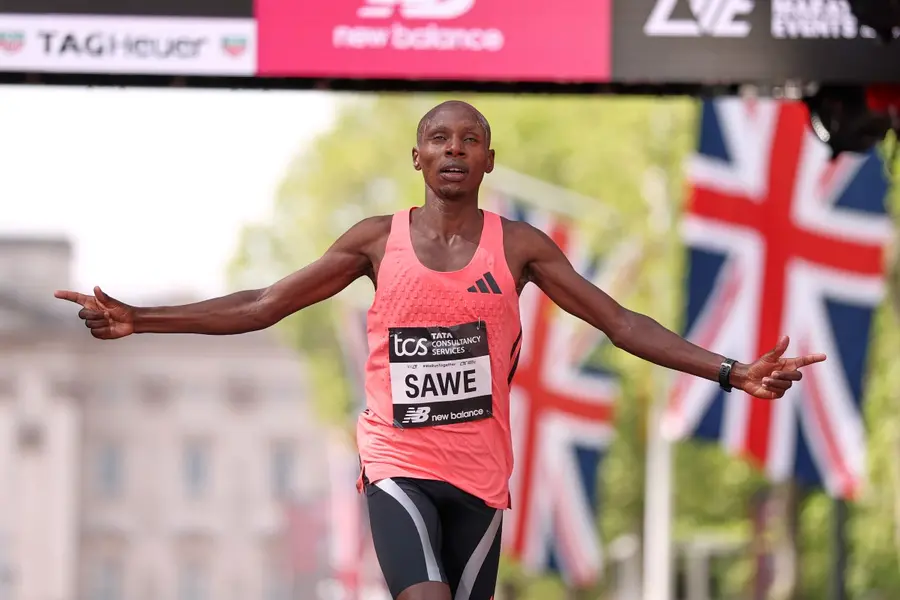
Human endeavours as they say can have no limits. What seems impossible once are easily attained or crossed over time and now the appropriate question is how much more can this be stretched. Perhaps the best area where this can be encountered is in sports and in particular athletics. The recent effort by the Kenyan Sebastian Sawe is a case in point. A seasoned marathon runner he became the first human officially to run the over 42 km distance under two hours to not just create a first but lift the spirits of sportspersons in general on how much one’s capabilities could be raised. We say officially because another Kenyan, considered a great marathoner, Eluid Kipchoge had broken the barrier in 2019 itself but his effort had come in an exhibition run and did not qualify as a record. What is notable is that experts believe the London course where Sawe achieved the feat was considered slower than Berlin and Chicago where a world record had never emerged since 2002. Who knows Sawe could just be the man to correct all that with even more splendid moments for the Kenyan believes that he could still run faster!
But the point here is not just his skill but as observers always believe, whether Sawe had a clean image to add lustre to the performance. Amid the spate of high-profile doping cases involving Kenyan athletes, Sawe was aware that he had to be extra careful to instil confidence in these classic performances. So he and his team decided on multiple dope tests to dispel any suspicions surrounding his performances including his victories last year in Berlin as also the previous London event. He did not want people to hold up his result with a strain of doubt. Besides, he was keen to prove that he was clean and fast. Adidas, the company which provided him the footwear, set aside 50,000 dollars for a 12-month period to frequently test him as per anti-doing requirements and that included even during the phase when he was out of competition. Sawe is confident that wherever he goes next, the world will watch him with great interest. That is the ultimate test of a great athlete.
It is clear performance is one thing but doing so with a clean image is the vital requirement in this world of sports now with drugs coming in to play a big role giving the anti-doping agents to be on their toes at all times. Haven't we heard of the sprint great Ben Johnson. The Canadian who scorched the track in the Seoul Olympics in 1988 winning the 100 m in a spectacular time of 9.79 s. It was a case of 48 strides to glory after he exploded from the blocks. Johnson’s key rival was the American ace Carl Lewis among others. But in no time, darkness set in for him because he was tested positive for a steroid, leading to his ban, cancellation of his record and more than anything, a career went down in a shambles. The world of sports had woken up to the ugly word doping.
It took a few more years before we came to know of the allegation of state-sponsored doping. The Russian Athletics Federation was felled by this allegation in 2015 and the country was suspended from participation in international athletics meet for eight years before the suspension was lifted. Though Russian athletes were allowed to participate in major events, as neutral participants. The embarrassment can only be imagined not only for the country but the talents seeking a place in the highest level of recognition. Stringent measures are in place now with a world level anti doping agency, WADA taking on the role of the ‘police’ to ensure clean and incident-free performances at all important meets.
It is in this background that one needs to look at the scene in India, where sports in general has not only shown signs of growing but has made every effort to catch the headlines on the international arenas. A major example is none other than our javelin champion Neeraj Chopra. Much is happening with the country even aspiring to host major meets like the Asian Games and the Olympics in the years ahead. But unfortunately where Indian sports is now coming more into focus is for the wrong reason, that of the issue of doping. In recent times, the Athletics Integrity Unit (AIU) , an independent body set up by World Athletics to manage all integrity issues, have raised the issue of growing doping cases in India with the Athletics Federation of India.
Statistics provide the sad picture. As of April this year, over 148 athletes had served suspensions and this number surpassed the situation in Kenya, considered one of worst offenders in this regard. Not that the AFI has been sitting quiet. It has advocated anti-doping reforms but as the situation stands, the country faces the prospects of its athletes being viewed with distrust all over the world. How much things have gone out of control can be judged from the one incident which happened late last year in the Khelo India University Games in Jaipur. A media report pointed out that in the 400 m hurdles race event there was just one participant because the remaining seven had vanished from the scene once word came in that an anti-doping team had landed to conduct tests!
At a time when the Government is spending several crores on fresh sports infrastructure all with an eye on hosting major international events, the doping issue could be a serious damper. India needs big infrastructure as it needs clean athletes to ensure performances matter. To walk with head held high as Sawe is currently doing there is much bigger effort needed in the country to convince the world. Hopefully Indian athletes will help this happen.
Published: 05 May 2026, 08:13 am IST
ABOUT THE AUTHOR
Related Topics
Disclaimer: Kindly avoid objectionable, derogatory, unlawful and lewd comments, while responding to reports. Such comments are punishable under cyber laws. Please keep away from personal attacks. The opinions expressed here are the personal opinions of readers and not that of Mathrubhumi.