

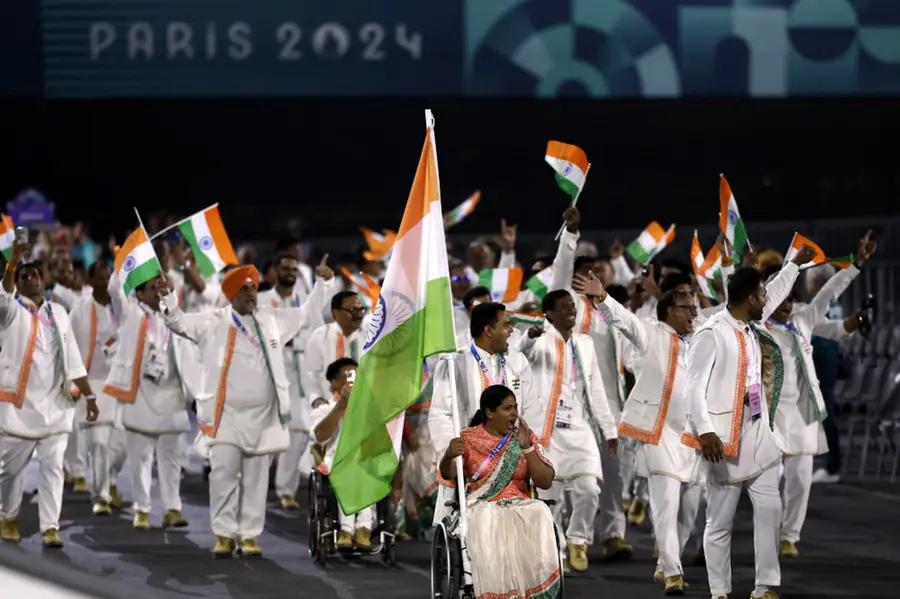
Whatever happened in the Paris Olympics nearly a month ago is now history. The emotions that ace wrestler Vinesh Phogat triggered after her disqualification virtually left India mourning no end. So much so that the lukewarm show in the games never quite got highlighted. All that is past as the Paralympic athletes have more than overshadowed that below-par show with a kind of performance that had resulted in a bumper crop in terms of medals. India finished with the best-ever 29 medals (seven gold, nine silver, and 13 bronze) for an 18th place standing. Curiously, at the Paralympics too, there was a disqualification issue, but that went on to help India’s Navdeep Singh upgrade his silver medal to gold in the javelin throw in the men’s short-statured category! The 23-year-old from Haryana, who hails from the same town as the javelin icon Neeraj Chopra, had finished fourth in Tokyo in 2020. Here, he had jumped to the second spot, but then came the twist when the actual winner, Iran’s Sadegh Beit Sayah, made the cardinal mistake of displaying an objectionable flag to get disqualified.
Never in history had things gone this well for India. From one medal in London 2012 to 29 now, including seven gold, it has been a stupendous rise. Four years ago in Tokyo 2020, the 19 medals won, including five gold, eight silver, and six bronze medals, were at that point the best ever show by India in this quadrennial Games. In a matter of four years, the transformation that had come about was phenomenal. When two days still remained for the Games to end, India had surpassed their best at Tokyo, and the good work had continued!
They are all a challenged lot who have known the meaning of struggle. Add to that the desire and ability to tone up their sporting skills, and the combination had brought out the best in them. No matter what had been denied to them by nature, the ability to be the best in whatever they did was what mattered, and the Games brought that out in good measure. Yes, they had the support. The government provided all the 84 athletes who had presented the country with exposure to schemes for their betterment, the highlight being the opportunity to participate in competitions abroad and also having international experts to guide them at each turn. There were, in all 77 coaches and support staff in Paris, way ahead of around 40 odd who were present in Tokyo. In addition, there was increased funding, up to Rs 74 crore, this time from the Rs 26 crore in Tokyo. Overall, it was a kind of return in keeping with the high expectations that the government had and the whole country too.
Yet, above all, what mattered was the show of grit, determination, and the will to excel. None personified this better than Sheetal Devi, the Indian archer. Not only did she gain world attention for competing without hands but just her legs. And still, the level of precision and resilience was just astounding. That she and Rakesh Kumar could capture a medal (bronze) in the mixed team compound archery event amid fierce competition from some of the world’s best para-archers was a testimony to their amazing abilities. Just 17 years of age, Sheetal already had a list of outstanding performances at the world and Asian level with medals to show. In Paris, she became the youngest Indian to win a medal. It was an extraordinary debut for this girl, who also happened to be the only female archer in the world who shot without arms. An inspiration to many others that physical limitations could be no barriers on the road to greatness.
Indeed, the Paralympic Games are all about not just the admirable athleticism but the extraordinary and unthinkable stories of grit and perseverance through and through. The challenges are beyond the known demands of elite sports. Almost each had a story of not just misery but also rise. Take Hokato Sema, the shot putter from Nagaland. Having lost his left leg below the knee in a mine blast, this army officer was encouraged to take to this sport, and Paris confirmed his rise with a bronze medal. Simran is another who showed a steely resolve. Visually impaired, she braved her odds to win a bronze in the women’s 200 m. The list goes on, but what remains is the sense of awe over the way each crosses the hurdles and brings pride to the fore. Amid this is also someone like shooter Avani Lakhara, who became the first Indian to defend her gold while another shooter, Manish Narwal, became the first male Indian to win back-to-back medals in different editions of the Paralympics.
India’s participation in the Paris Paralympics 2024 signified not just an increased number in the contingent but a jump in performance overall, not to forget the rise in the global standing within the Paralympic movement. While it may not be fair to compare the achievements of the para-athletes with the regulars in the Olympics, still it was undoubtedly a praiseworthy performance that should cheer and hope and attract more government support and corporations too. Paris 2024 is the beginning towards a new dawn for para-athletes in India.
Published: 10 Sept 2024, 09:59 am IST
ABOUT THE AUTHOR
Related Topics
Disclaimer: Kindly avoid objectionable, derogatory, unlawful and lewd comments, while responding to reports. Such comments are punishable under cyber laws. Please keep away from personal attacks. The opinions expressed here are the personal opinions of readers and not that of Mathrubhumi.