
In 2002, at the same venue, India had chalked out a memorable innings victory over England in a Test match that saw batting greats like Sachin Tendulkar, Saurav Ganguly and Rahul Dravid...
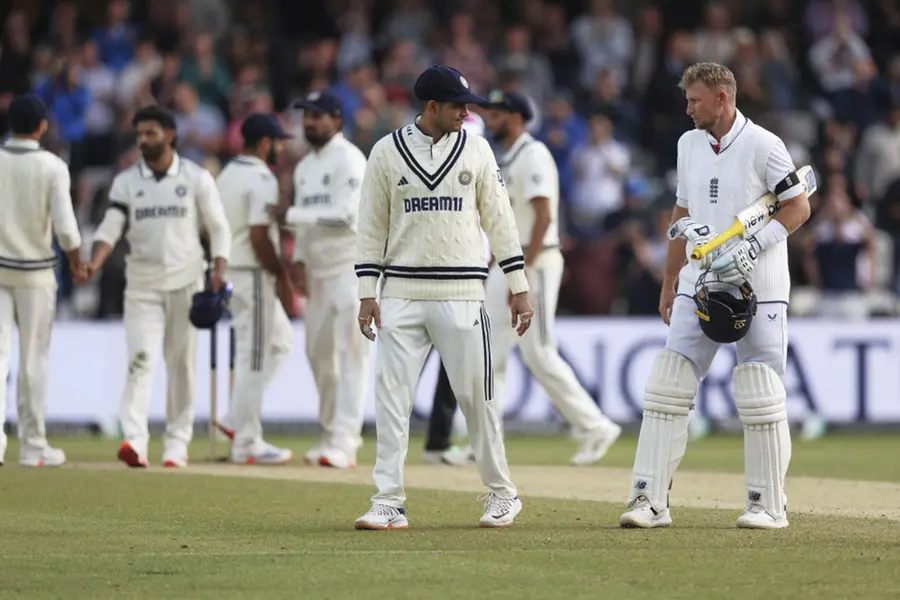
The Headingley Test is now history. It is doubtful if any Test match in recent times had such a dramatic twist as this involving a young Indian side and an experienced English lot.
To tell the truth, many cricket experts had the misgivings that this relatively inexperienced squad with a new captain in charge would prove easy meat for the rivals, known for their fighting skills.
But the story that unfolded was a fascinating contest of bat and ball that few would have predicted would end the way it did! True India lost, but how, almost after being in a position of advantage! Over two decades ago, in 2002, at the same venue, India had chalked out a memorable innings victory over England in a Test match that saw batting greats like Sachin Tendulkar, Saurav Ganguly and Rahul Dravid scoring centuries to help India post a huge score.
With spinning legend Anil Kumble then coming up with his wonted touch, England’s debacle had begun early then. A touch similarity came up this time with a collection of centuries, five in all, Rishab Pant scoring tons in each innings aside from debutant captain Shubman Gill, K.L. Rahul and Yashasvi Jaiswal. But there ended the bright spot, so to speak. True pacer Jasprit Bumrah did his best, but too many loose ends did India in.
Yet what stood out, at least from the point of cricket lovers, is that here was a Test that lasted the distance and brought memories of the past when Test matches were known for the intense contest between the bat and the ball, with time no reason to worry. There was never a dull moment, even if the scores did not move, for the batting was all of concentration and selection of balls, and bowling was all of outwitting the batsmen with clever variations in length and line.
Suffice it to say, the culture of one-day or T20 cricket that has become the essence of modern-day cricket excitement was hardly on view for much of the time. Yes, someone like Ben Duckett, the hero of England’s famous win, did employ the reverse sweep to good purpose, but there was little else of the modern cricket style. More importantly that the match went the distance and what is more the result came at the fag end of the contest provided the kind of thrill that old timers in particular would have savoured gleefully. Such scenarios have become very rare in contemporary times.
Yet for all this, an Indian loss seemed an anticlimax. A side that totals over 800 runs over two innings and sets a tidy 371 runs target, which seemed good enough to send the rival on the backfoot on a fifth-day pitch, India still managed to lose! Statistics say India became the first team in the history of first-class cricket to record five individual centuries in a match and yet lose.
The inexplicable collapse in the later part of both innings also contributed to the sad plight. Bowling and fielding, it seemed, were the weak areas for aside from Bumrah and perhaps Mohammed Siraj, the others, though they bowled their hearts out, could not sustain the pressure to evoke a kind of collapse that India had dreamed of. Catches too were dropped, and as they say in Test match situations, each life given meant so much more difficult it would become to regain composure for the team bowling. Duckett would testify to how chances given could benefit as he went on to score a big century and put England firmly on the path to victory.
For once, perhaps the focus was not as much on the way England won the Test as much as the fact that the Test went five full days with an edge-of-the-seat ending. Part reason, of course, was India’s inability to close the floodgates, so to speak, but the match proved that a good beginning need not necessarily have a happy ending. If anything, England would have realised that this Indian team may be short of iconic personalities, but yet is not low on abilities.
The batsmen have shown their mettle, and hopefully, they will continue in the same vein, but it is in the bowling area where Coach Gambhir and skipper Gill need to work on corrective measures. In any case, these are early days, the second Test at Edgbaston, Birmingham starts on July 2, and there are three more to go thereafter and so there is enough excitement around the corner.
Provided, of course, that the set standards of Headingley are maintained and the healthy rivalry rises to create closer finishes and grander batting and bowling. Test matches need to be competed that way to bring back the stories of all those stalwarts of the past who made their name and fame through their crafts, be it batting or bowling in Test cricket. Yes, the sport has evolved, but let there be a special place for Tests, and to that extent, the India and England series has started on the right foot.
Published: 01 Jul 2025, 07:00 am IST
Disclaimer: Kindly avoid objectionable, derogatory, unlawful and lewd comments, while responding to reports. Such comments are punishable under cyber laws. Please keep away from personal attacks. The opinions expressed here are the personal opinions of readers and not that of Mathrubhumi.
