
At the event, the company showcased its 4680 Bharat Cell and India’s first rare-earth-free Ferrite Motor.
Ola Electric announced a range of products and technology upgrades at its Sankalp 2025 event, held to mark the 79th Independence Day.
At the event, the company showcased its 4680 Bharat Cell and India’s first rare-earth-free Ferrite Motor. Ola also introduced its AI-powered intelligence system, MoveOS 6, and the Gen 4 Platform, which is lighter, faster, and scalable across 2W, 3W, 4W vehicles, drones, and humanoids, all designed and built in India.
"From our own 4680 Bharat Cell, Ferrite Motor, AI-powered MoveOS, Gen 4 platform - everything was imagined, engineered & built in India. This is our vision to secure India's energy sovereignty and make our nation a global leader in the energy and EV ecosystem," Bhavish Aggarwal, the founder and CEO of Ola Electric Mobility, wrote on X.
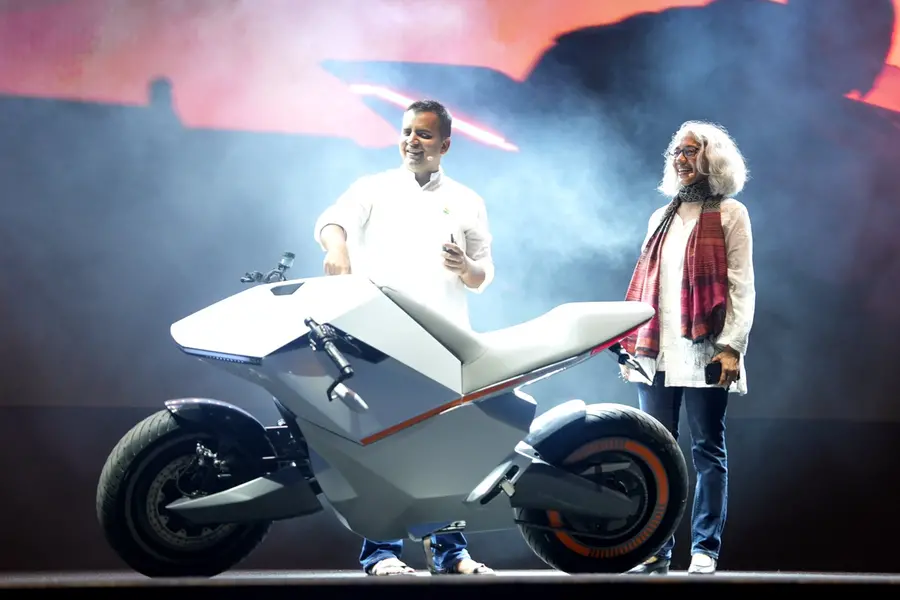
What is a Diamondhead electric motorcycle?
"The Diamondhead is more than engineering, more than innovation. It is a step towards singularity - where man and machine merge, to reach a level neither could achieve alone," Aggarwal wrote on X, without getting into specifics about the product.
He teased that they were targeting the launch of Diamondhead in 2027 at under Rs 5 lakh per unit.
Further, Ola also showcased S1 Pro Sport scooter, which has sports-oriented features such as gas-charged rear suspension and retuned front forks, carbon fibre detailing, and ADAS.
Deliveries of the S1 Pro Sport scooter are to start by January 2026.
On Friday, Ola also announced the integration of 4680 Bharat Cell, India's first indigenously developed Lithium-ion cell, in Roadster X+ and S1 Pro+. Deliveries to begin this Navratri, Bhavish Aggarwal said in the X post.
"Sankalp 2025 - with India Inside! This Sankalp was a showcase of products built with excellence, powered by vertical integration, and driven by technology created in India, ensuring complete supply chain sovereignty. More importantly, this vision reflected our commitment to creating solutions for India and the world, with everything made by Indians," he added in the X post.
India has set targets of 30 per cent electric vehicle penetration by 2030 and net-zero emissions by 2070. (ANI)
Published: 16 Aug 2025, 02:08 pm IST
Related Topics
Disclaimer: Kindly avoid objectionable, derogatory, unlawful and lewd comments, while responding to reports. Such comments are punishable under cyber laws. Please keep away from personal attacks. The opinions expressed here are the personal opinions of readers and not that of Mathrubhumi.
