
Key upgrades include segment-first ‘electric walk-in’ seating, enhanced cabin ergonomics, and an integrated dashcam. Safety is bolstered by seven standard airbags and Level 2 ADAS.
Hyundai Motor India on Monday launched the 2026 Verna, introducing a comprehensive mid-cycle refresh for its flagship sedan with a starting price of Rs 10.98 lakh (ex-showroom).
The updated model features more than 25 enhancements across its exterior design, safety suite, and interior technology, as the South Korean carmaker seeks to consolidate its position in the premium mid-size sedan segment against rivals like the Volkswagen Virtus and Honda City.
Aesthetic Refinement and Exterior Styling
The 2026 iteration adopts a more aggressive stance, headlined by a new black chrome radiator grille and redesigned front and rear bumpers. The sedan’s lighting signature has been sharpened with dual LED projector headlamps and a revised LED light bar that spans the width of the bonnet.
To complement the sharper body lines, Hyundai has introduced 16-inch diamond-cut alloy wheels. The colour palette has also been expanded to include ‘Classy Blue’ and ‘Titan Grey Matte’ finishes, catering to a growing demand for premium matte textures in the Indian market.
Segment-First Comfort and Technology
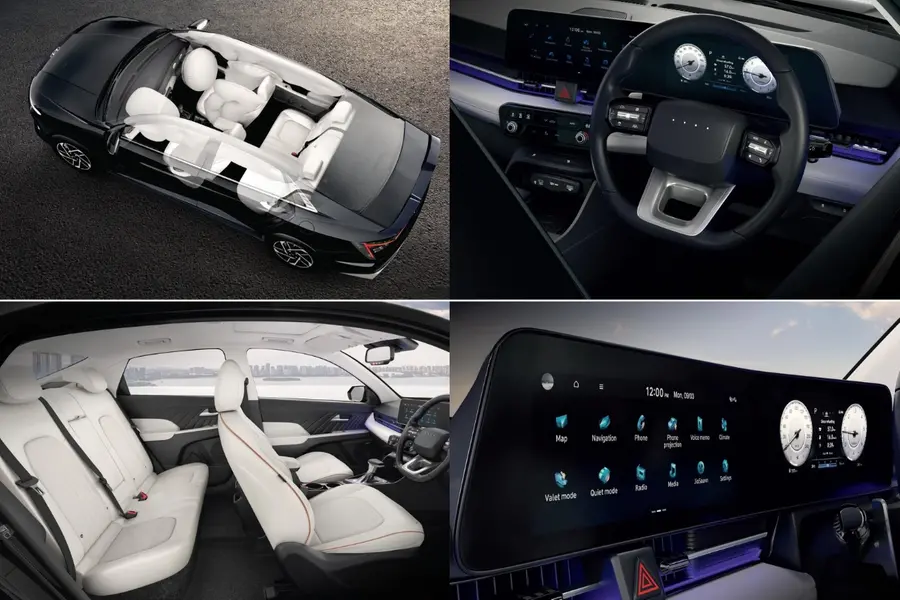
Inside, the Verna focuses on cabin ergonomics and chauffeur-driven comfort. A significant addition is the ‘electric walk-in’ device, a segment-first feature that allows rear passengers or the driver to adjust the front passenger seat electronically for increased legroom.
The driver’s cockpit now includes an 8-way power-adjustable seat with a memory function and a ‘welcome retract’ feature, which slides the seat back for easier ingress and egress. The dashboard retains its dual 10.25-inch integrated screens for infotainment and the digital cluster, but adds a switchable-type controller that toggles between media and climate settings to reduce button clutter.
Safety Standards and ADAS Integration
Safety remains a primary pillar for the 2026 Verna. The vehicle now comes equipped with seven airbags as standard across all variants, including a new centre-side airbag designed to prevent occupant-to-occupant collision during side impacts.
The Level 2 Advanced Driver Assistance System (ADAS) remains a core offering, featuring 20 autonomous functions such as forward collision warning, lane-keeping assist, and adaptive cruise control. Additionally, Hyundai has integrated a built-in dashcam into the rear-view mirror assembly, providing factory-fitted security for insurance and safety documentation.
Performance and Powertrain Options
Mechanically, the Verna retains its dual-engine lineup. The entry-level 1.5-litre MPi petrol engine produces 115 PS and 144 Nm of torque, paired with either a six-speed manual or an Intelligent Variable Transmission (IVT).
For enthusiasts, the 1.5-litre Turbo GDi petrol engine continues to lead the segment with 160 PS and 253 Nm of torque. This powertrain is available with a six-speed manual or a seven-speed Dual Clutch Transmission (DCT), ensuring the Verna remains one of the most powerful internal combustion engine (ICE) sedans in its price bracket.
Pricing Structure and Trim Levels
The 2026 Hyundai Verna introduces a revised variant nomenclature, now offering six distinct trims: HX2, HX4, HX6, HX6+, HX8, and the range-topping HX10. The entry-level 1.5-litre MPi petrol manual starts at an aggressive Rs 10.98 lakh, while the top-spec 1.5-litre Turbo GDi with the seven-speed Dual Clutch Transmission (DCT) is priced at Rs 18.25 lakh.
Published: 09 Mar 2026, 03:34 pm IST
Disclaimer: Kindly avoid objectionable, derogatory, unlawful and lewd comments, while responding to reports. Such comments are punishable under cyber laws. Please keep away from personal attacks. The opinions expressed here are the personal opinions of readers and not that of Mathrubhumi.
