National Space Day 2026: Date, theme, history, importance and Chandrayaan-3 Mission
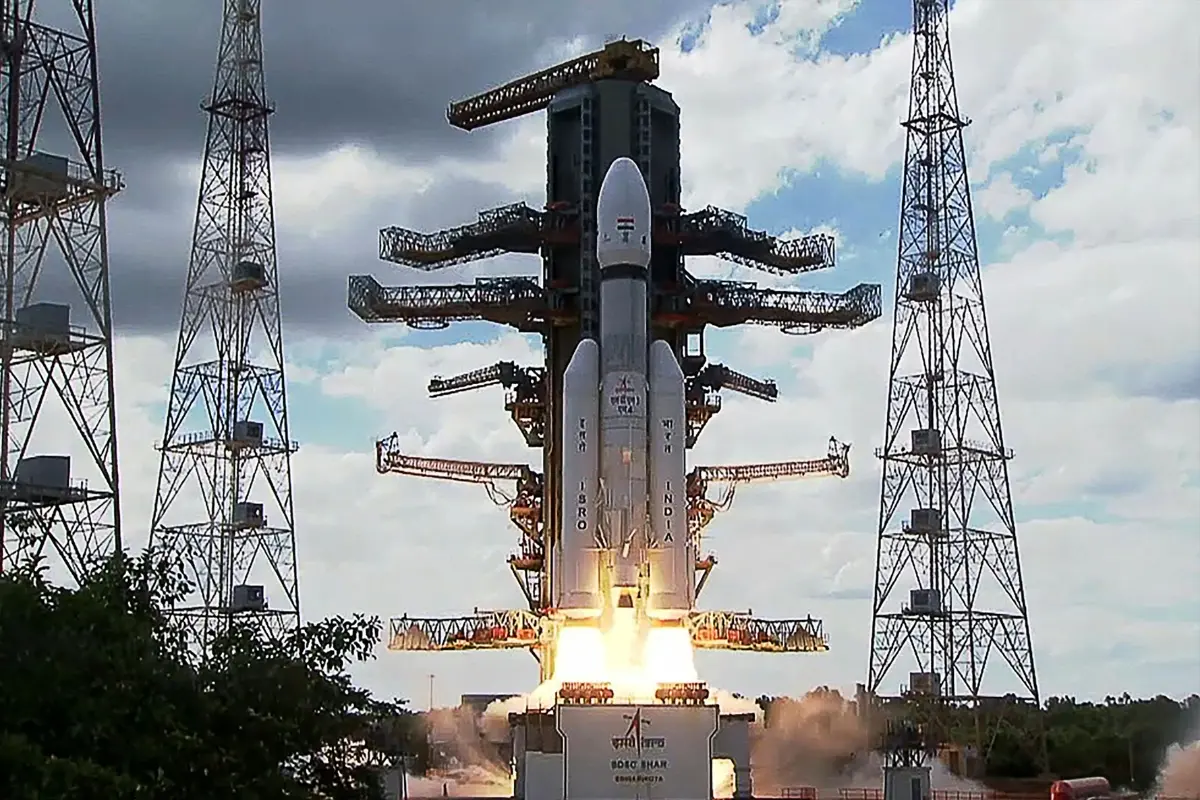
Three years after India made history by landing on the Moon's south polar region, August 23 continues to stand as a reminder of how far the country's space programme has travelled, and how much further it intends to go.
India observes National Space Day on Sunday, August 23, 2026, commemorating the successful soft landing of the Vikram lander of Chandrayaan-3 at the Shiv Shakti Point on the lunar surface on August 23, 2023.
The achievement made India the fourth country to successfully land on the Moon and the first to reach the lunar south polar region.
The day is not simply a celebration of a historic mission. It honours the scientists, engineers, researchers and countless professionals whose work turned an extraordinarily difficult lunar landing into a defining moment for India's space programme.
It also serves as a platform to inspire students and young innovators to pursue science, technology, engineering and mathematics.
National Space Day 2026 theme
The 2026 celebrations are centred on the theme, 'Towards Viksit Bharat - Innovating, Collaborating and Aspiring Global Space Leadership.'
The theme reflects India's larger ambition to build a self-reliant and globally competitive space ecosystem.
It places innovation and collaboration at the heart of the country's next phase of space development, bringing together young innovators, startups, educational institutions, researchers and industry.
This focus also reflects the expanding role of space technology beyond exploration.
Satellite-based applications are increasingly being used across areas including agriculture, water resources, communication, infrastructure, disaster management, health and governance.
ISRO has been working with government departments to expand the use of space technology for data-driven decision-making and societal applications.
Why is National Space Day celebrated on August 23?
The date is directly linked to one of the biggest milestones in India's space history. On August 23, 2023, Chandrayaan-3's Vikram lander successfully touched down on the Moon.
The mission subsequently deployed the Pragyaan rover, enabling India to conduct scientific exploration on the lunar surface.
The Government of India later declared August 23 as National Space Day to commemorate the achievement and encourage the younger generation to engage with space science and technology.
Prime Minister Narendra Modi announced the annual observance in 2023 and named the Chandrayaan-3 landing site 'Shiv Shakti Point'.
The milestone was particularly significant because the lunar south polar region remains scientifically challenging and comparatively less explored.
India's successful landing there gave the Chandrayaan-3 mission a distinction that extended well beyond the country's own space programme.
Chandrayaan-3 achievement that changed India's space story
Chandrayaan-3 was more than another lunar mission. Its successful landing demonstrated India's ability to execute a highly complex soft landing after the lessons of the Chandrayaan-2 mission.
The achievement placed India in an elite group of nations that have successfully landed spacecraft on the Moon.
More significantly, India became the first nation to successfully land near the lunar south pole. The mission also became a symbol of scientific perseverance.
The journey from the setback of Chandrayaan-2 to the successful landing of Chandrayaan-3 underscored the importance of learning from failure, refining technology and returning with greater precision.
From Chandrayaan-3 to India's next space frontier
National Space Day 2026 also looks beyond the achievement of 2023.
India's space programme is now moving towards increasingly ambitious missions, including Gaganyaan and Chandrayaan-4.
ISRO's broader Space Vision 2047 includes next-generation launch vehicles, successive Gaganyaan and Chandrayaan missions, the planned Bharatiya Antariksh Station by 2035 and an ambition for a crewed Indian Moon landing by 2040.
At the same time, the country's space ecosystem is expanding beyond traditional government-led programmes.
Startups, academic institutions and private industry are increasingly becoming part of India's space ambitions, helping develop technologies and applications for an expanding space economy.
The focus on young innovators is visible in initiatives such as ISRO's Robotics Challenge.
The 2026 edition challenges students to develop autonomous systems inspired by the demands of future planetary exploration, reinforcing the connection between classroom innovation and real-world space missions.
Why National Space Day matters
The significance of National Space Day lies as much in the future as in the past.
It celebrates a moment when India reached the Moon, but it also asks what the country can accomplish next.
From lunar exploration and human spaceflight to satellite applications, robotics and deep-tech innovation, space is increasingly becoming an important part of India's scientific and economic ambitions.
The second National Space Day in 2025, for instance, brought together policymakers, researchers, industry leaders, startups, students and space enthusiasts, while outreach activities across the country reached around 1.5 lakh students and 15,000 teachers.
As India marks National Space Day 2026, the message is therefore larger than a single lunar landing. Chandrayaan-3 proved that India could reach a difficult destination on the Moon.
The challenge now is to turn that achievement into a sustained culture of innovation, collaboration and scientific ambition, with the next generation at the centre of India's journey towards becoming a global space leader.