Investigation exposes safety lapses before fatal DC air collision
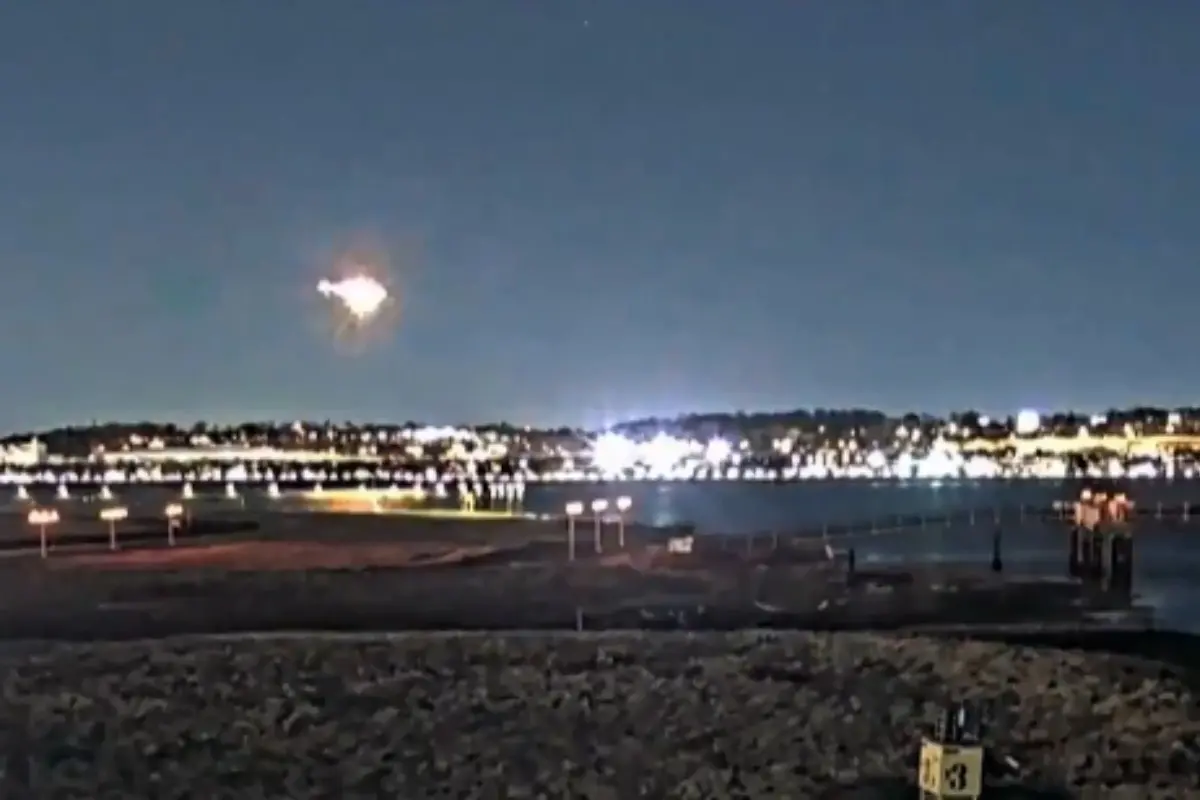
A new investigation by CBS 60 Minutes has revealed a series of alarming near-miss incidents and long-standing safety concerns in the airspace over Washington, D.C., just hours before a tragic midair collision in January 2025 that claimed 67 lives.
The report includes newly released footage of the crash, which involved a Bombardier CRJ701ER operating as American Airlines Flight 5342 and a Sikorsky UH-60 Black Hawk helicopter operated by the US Army. The collision took place over the Potomac River near Arlington, Virginia, killing everyone on board both aircraft.
According to the investigation, warning signs had appeared just a day earlier. On January 28, two Army helicopters entered restricted airspace near Ronald Reagan Washington National Airport at a higher altitude than expected, creating confusion for air traffic controllers. Around the same time, a commercial flight arriving from Norfolk was descending when its onboard collision warning system was activated. The pilots had to quickly climb to avoid a possible accident.
Later that day, another close call occurred when a second Army helicopter approached the same airspace as a passenger flight arriving from Connecticut. The aircraft received a collision alert and was forced to abort its landing. Both flights eventually landed safely, but the incidents raised serious concerns about safety in the area.
Despite these warnings, tragedy struck the following day, January 29. A Black Hawk helicopter on a training mission entered the same congested airspace and collided with Flight 5342, leading to the fatal crash.
An air traffic controller, Emily Hanoka, who was on duty during the incidents, told the programme that safety risks had existed for years. She pointed to ‘obvious cracks’ in the system and said that aircraft were often flying too close to each other. Reflecting on the situation, she said, “It worked until it didn’t.”
The investigation also found that air traffic controllers had repeatedly warned the Federal Aviation Administration over more than a decade about the dangers of managing heavy commercial air traffic alongside frequent movements of military, police, and medical helicopters in the same airspace.
The findings have raised fresh questions about airspace management and safety oversight in one of the busiest and most sensitive aviation corridors in the United States.