US bombs Iranian island; Tehran launches attacks across Gulf
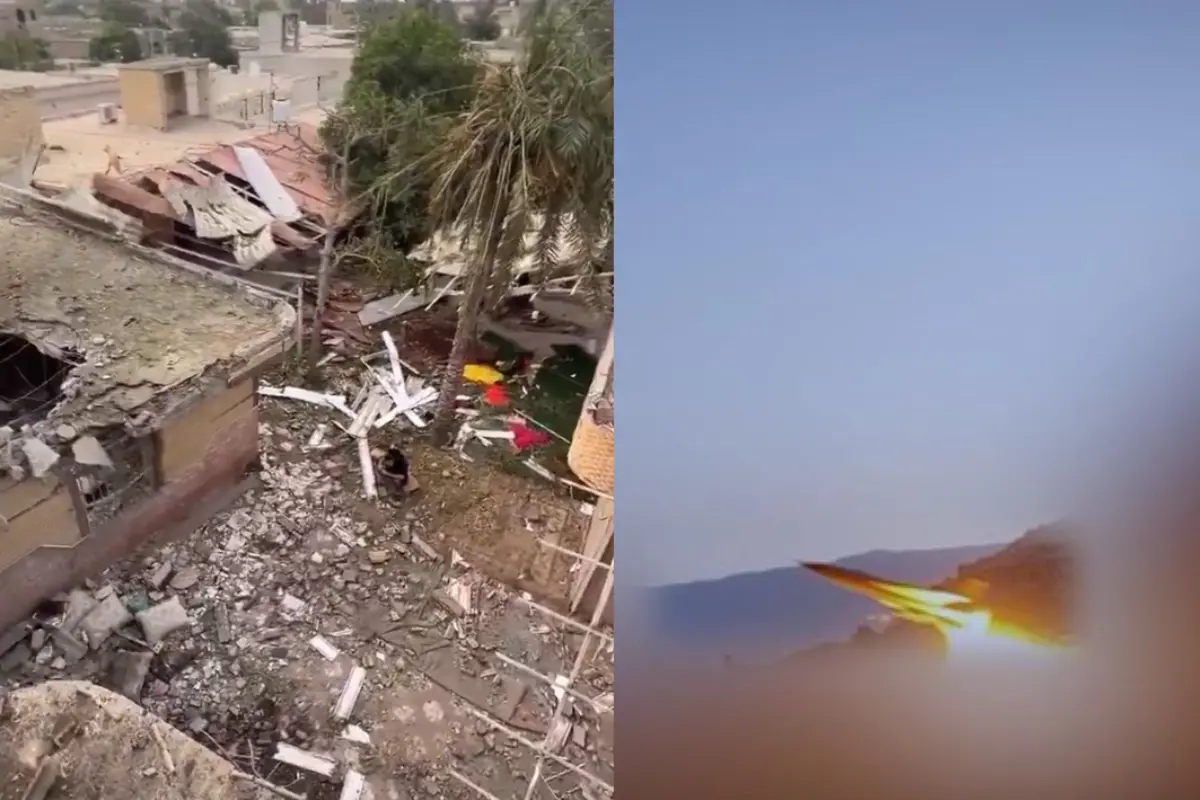
The US-Iran conflict has sharply escalated across the Gulf after American strikes on Iranian military targets killed at least 11 people, including five at a wedding gathering, according to Iranian officials.
Tehran subsequently launched missile and drone attacks towards Bahrain, Jordan and Kuwait, with the countries reporting interceptions of incoming fire.
US launches fresh strikes on Iranian targets
The United States carried out a new wave of strikes against Iranian military positions in southern Iran, according to US Central Command (CENTCOM). The US military said the operation targeted air-defence sites, radar systems, maritime assets, mine-laying capabilities and communications infrastructure.
CENTCOM said the strikes came after the Islamic Revolutionary Guard Corps (IRGC) attempted to target US troops and commercial shipping in the Strait of Hormuz.
Iranian media reported attacks in several locations, including Sirik, Konarak, Bandar Abbas, Jask, Asaluyeh and Ahvaz, as well as Qeshm Island.
Iranian Foreign Ministry spokesman Esmaeil Baghaei said one US strike hit a residence in Kuhestak while families were gathered for a wedding. Iranian officials said at least five people, including a child, were killed and dozens were wounded.
Iranian state media also reported seven additional deaths and eight injuries in US missile attacks on three other locations in Khuzestan province.
The US military said it was aware of reports that civilians had been killed but maintained that it does not target civilians.
Iran retaliates against US-linked targets
The IRGC said it launched ballistic missiles at Camp Titin, a US Marine Corps facility near Jordan's Gulf of Aqaba, following the strike on the wedding gathering.
Iran also claimed to have targeted Prince Hassan airbase in Jordan, where it said US drones were stationed. Tehran claimed that aircraft and US personnel were hit, although these claims could not be independently verified.
Jordan's military said it intercepted 10 of 13 missiles fired towards the country, while the remaining missiles landed in open areas. A US official told Al Jazeera that there were no injuries or significant damage at Camp Titin.
Bahrain intercepts Iranian attack
Bahrain, which hosts an important US naval facility, also reported an Iranian aerial attack.
Iran's army said it launched drones against radar installations and parts of Sheikh Isa airbase, where US forces are stationed. Bahrain's authorities issued repeated warnings instructing residents to take shelter.
Bahrain said its air-defence systems intercepted incoming Iranian fire and accused Tehran of attacks targeting civilians.
Iran later claimed attacks against US facilities in Iraq's Erbil province, saying it had struck a repair centre and technical equipment warehouses and caused fires at fuel tanks. The claims have not been independently verified.
Kuwait also reports Iranian attack
Kuwait said its air-defence systems responded to hostile drones and missiles launched by Iran.
Iran had not immediately commented on Kuwait's claim. The reported attack came amid a broader series of Iranian strikes and interceptions across the Gulf.
The United Arab Emirates had also reported intercepting an Iranian drone over its waters earlier in the week.
Strait of Hormuz stays central to escalation
The latest military exchange is closely linked to the Strait of Hormuz, a crucial route for global energy supplies.
Before the war, roughly one-fifth of the world's traded oil passed through the waterway. The conflict has severely disrupted shipping, with only a limited number of vessels reportedly making the passage each day.
The confrontation has also pushed energy prices higher. Brent crude rose above $95 a barrel, according to the AP report cited above, representing an increase of more than 30% since the beginning of the war.
The disruption has raised concerns about further pressure on global energy markets if attacks on ships or attempts to restrict navigation through the strait continue.
Trump rejects claims of pushing Iran back to talks
US President Donald Trump rejected reports that the latest strikes were intended to force Iran back to negotiations.
Trump said he was satisfied with the current situation and argued that the US had gained substantial control over the Strait of Hormuz while Iran's economy was under severe pressure.
He also warned that any Iranian retaliation could trigger a stronger US military response.
Iranian officials, meanwhile, signalled that further attacks could follow. Supreme Leader Mojtaba Khamenei said the Iranian armed forces had "unforgettable lessons" in store for Washington.
Iranian military spokesman Colonel Ebrahim Zolfaghari warned that attacks against US forces would continue and threatened broader responses against countries cooperating with the American military.
Why the latest escalation matters
The latest exchange represents a significant widening of the US-Iran conflict because the fighting is no longer confined to Iranian territory and US-Iranian positions. Bahrain, Jordan, Kuwait and Iraq have now been drawn into the immediate security crisis through attacks or reported interceptions.
The Gulf states are particularly exposed because several host US military facilities and are located close to the Strait of Hormuz. Any sustained Iranian campaign against those facilities could increase the risk of further US retaliation and broaden the geographical scope of the war.
The Strait of Hormuz remains the biggest economic pressure point. Continued disruption to shipping could keep oil prices elevated and increase costs for fuel, transport and other energy-dependent sectors worldwide.
The diplomatic situation also remains fragile. With Washington signalling that it is comfortable maintaining military and economic pressure, and Tehran threatening heavier retaliation, the immediate risk is that individual attacks trigger successive rounds of escalation rather than a return to negotiations.
For Gulf countries, the central concern is the possibility that military exchanges involving US bases could increasingly affect civilian areas and critical infrastructure. For global markets, the key risk is further disruption to oil and shipping through one of the world's most important energy corridors.