Morgues full, bodies piling up; Nepal begins mass burials after devastating floods
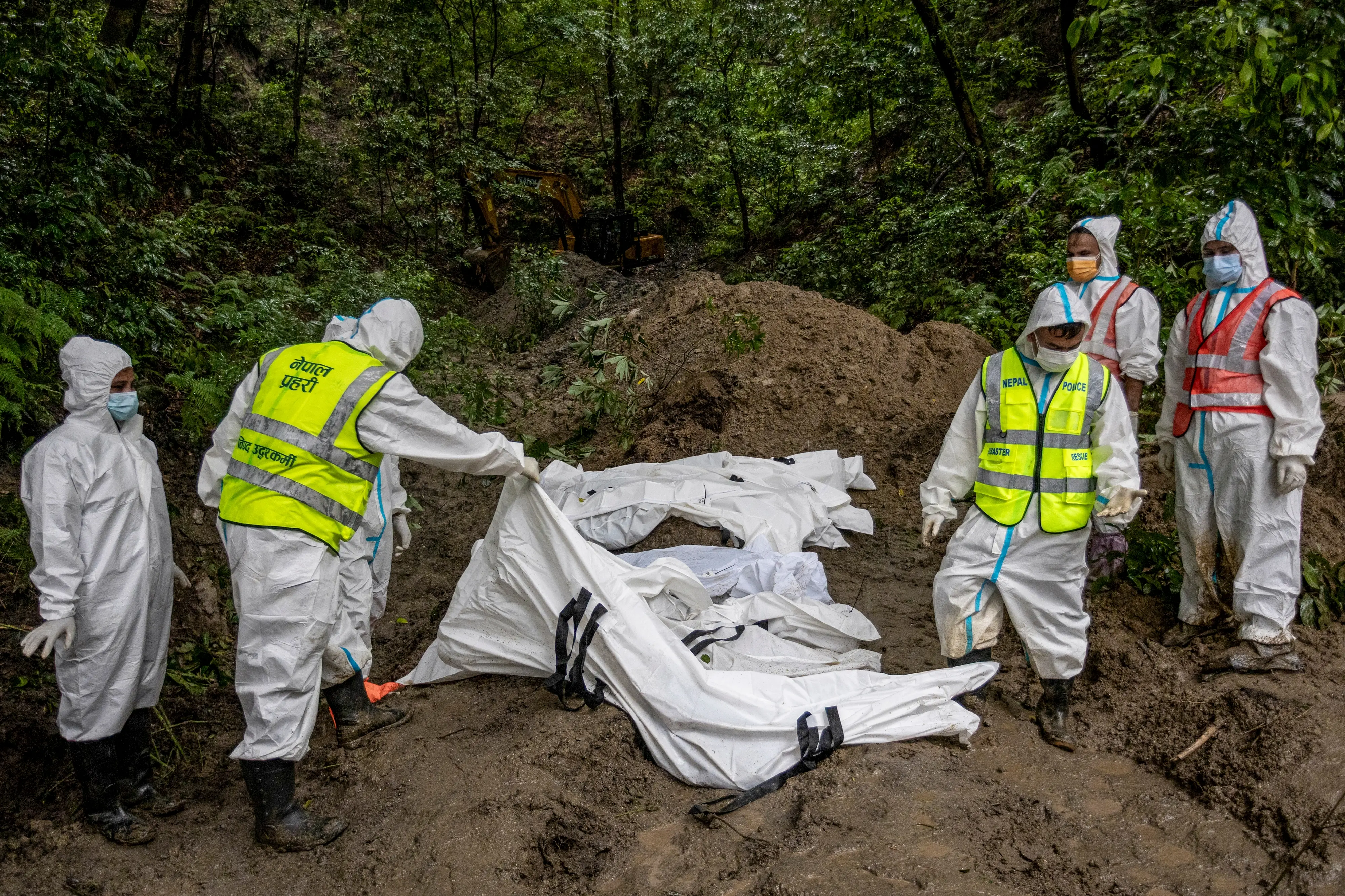
Kathmandu: Nepal has begun temporarily burying unidentified flood victims in Kathmandu after morgues ran out of space, with authorities preserving DNA samples and identification markers so bodies can later be matched with families.
Mass burial operations have begun at the Gorkarna forest area on the outskirts of Kathmandu after the country's morgue capacity was overwhelmed by bodies recovered following the devastating floods.
Security personnel wearing protective equipment have been transporting bodies in bags and placing them in designated burial locations. Identification tags are being attached so that the remains can be located and exhumed if relatives are later identified.
DNA samples preserved for identification
Authorities are collecting and preserving DNA samples from unidentified bodies before they are temporarily buried.
The samples can later be compared with samples from relatives to establish identities. The procedure is intended to ensure that temporary burial does not prevent families from eventually identifying and claiming the remains.
Nepal has limited morgue capacity
Nepal reportedly has capacity to store only about 350 bodies across morgues nationwide.
The number of bodies being recovered after the floods has placed considerable pressure on hospitals and mortuaries, leaving authorities with limited options for storing remains while identification procedures are completed.
Chitwan has reportedly recorded the highest number of recovered bodies, with 321 remains brought to the district after being swept downstream from flood-hit areas including Rasuwa and Nuwakot.
With existing morgues reaching capacity, authorities have established temporary facilities to manage the remains.
Government changes rules for disaster victims
The Nepal government has amended its Unidentified and Unclaimed Body Management Guidelines, 2021 to deal with the unprecedented number of disaster-related remains.
The revised provisions allow authorities to temporarily manage unidentified bodies underground at locations designated by the District Disaster Management Committee.
The changes also require necessary identification samples, including DNA, to be collected and retained before the bodies are temporarily managed.
The amended guidelines provide a mechanism for relatives or rightful heirs to claim a body if its identity is established later.
Authorities are required to hand over the remains to the rightful family when identification is confirmed and the family wishes to take custody.
The revised rules distinguish temporary body management from final cremation or burial.
This allows authorities to deal with the immediate shortage of morgue space while preserving the possibility of future identification and recovery of the remains.
Why the disaster has overwhelmed the system
The floods have caused widespread destruction and swept victims downstream across several districts. As bodies continue to be recovered away from the original disaster sites, hospitals and local authorities are facing the additional challenge of identifying and storing remains.
The situation has exposed the limitations of Nepal's existing mortuary infrastructure during a disaster involving large numbers of fatalities.
The mass burials are primarily a response to an urgent capacity and identification problem rather than an abandonment of efforts to identify victims.
Preserving DNA samples and attaching identification markers creates a record that can allow families to locate and claim remains later. The amended guidelines also establish a formal process for handling bodies when conventional morgue storage is no longer possible.
The immediate challenge for Nepal is therefore twofold: managing the large number of recovered bodies safely while ensuring that identification procedures remain possible. Maintaining accurate records, DNA samples and burial locations will be critical as rescue and recovery operations continue.
The disaster has also highlighted the importance of adequate mortuary capacity and disaster-response systems capable of handling large numbers of unidentified victims following major floods.