
This latest cargo delivered blankets, sleeping bags, heavy-duty tarpaulins, plastic sheeting, and hygiene kits.
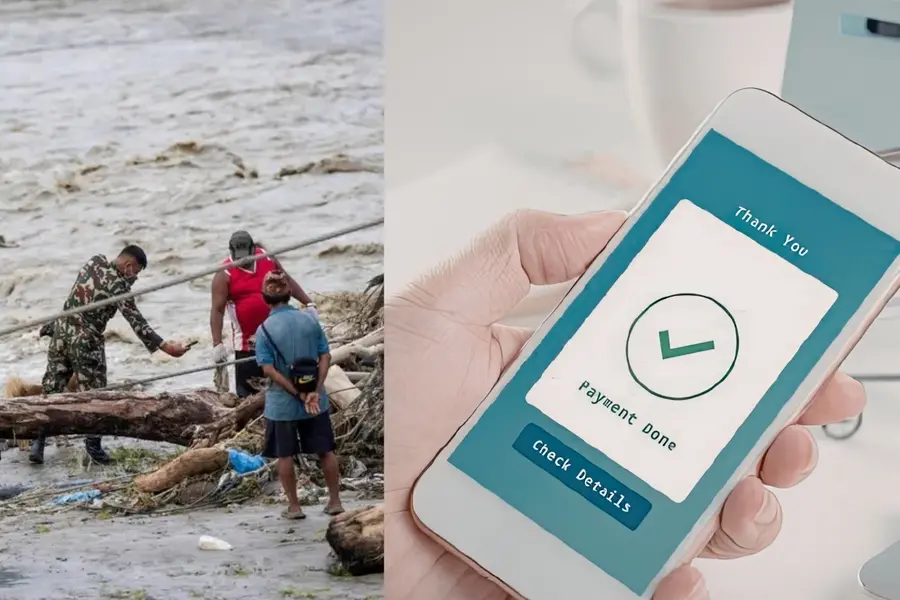
India has stepped up its humanitarian support for flood-hit Nepal, while authorities have issued vital guidance for donors trying to send money across the border.
Many people in India trying to donate to the Prime Minister Disaster Relief Fund of Nepal through QR codes have faced unexpected technical difficulties. To solve this, the Nepal Embassy in India has explained a simple step that donors must take on their mobile phones.
How to donate to Nepal using UPI
Friends and well-wishers in India who are encountering difficulty while contributing to the Prime Minister Disaster Relief Fund of the Government of Nepal by scanning the designated QR codes are kindly requested to take action. Specifically, the Nepal Embassy on Monday requested them to "activate “UPI International” in their UPI/banking application before proceeding with the payment."
Once this feature is turned on, donors can "rescan the QR code and complete the contribution as an international UPI transaction." The embassy also noted that "The exact activation process and validity period may vary depending on the bank or UPI application."
For those who still face technical difficulties, another option remains open. Contributions may also be made directly through the official online gateway at http://pmdrf.nchl.com.np. The Embassy stated that it "deeply appreciates the solidarity, compassion and support extended by friends of Nepal in India during this difficult time."
Indian rescue squads brave bad weather on the ground
Meanwhile, India's physical search and rescue operations have intensified. Yesterday, the Ministry of External Affairs announced that 158 Indian citizens have been safely evacuated from Nepal following catastrophic flooding that struck the Himalayan nation during the preceding week.
But the assistance goes far deeper than evacuations. Indian forensics experts and specialized tunnel rescue squads are currently spearheading search, relief, and excavation efforts.
In Kathmandu, the specialized forensics team from India discussed how to optimize protocols and paperwork with their local counterparts. The MEA noted, "The specialised forensics team from India continued its work in Kathmandu today in coordination with counterparts from Nepal Police's Forensic Science Laboratory. They discussed the optimisation of various protocols and documentation." These experts arrived after being briefed on Sunday by Naveen Srivastava, the Indian Ambassador to Nepal, before holding consultations with local police and university hospital professionals.
At the same time, Indian tunnel rescue teams are working in coordination with the Nepali Army at the Chilime and Langtang hydropower sites. Despite heavy rain and terrible access conditions at Chilime, the Indian team successfully established a foothold and set up safety ropes inside the tunnel. In Langtang, rescuers successfully probed down to a depth of 185 metres.
Detailing these operations, Ambassador Srivastava stated on X: "Our technical team for tunnel rescue worked in both Chilime and Langtang sites today in coordination with the Nepali Army. Despite inclement weather and difficult access conditions at Chilime, the team successfully established a foothold at the tunnel and set up safety ropes inside the tunnel. In Langtang, the team, along with Nepali forces, was able to probe to a depth of 185 metres. Rescue efforts will continue tomorrow."
Tonnes of emergency relief arrive by air
To keep these operations moving, India is flying in massive amounts of aid. A fourth flight arrived in Kathmandu on Sunday carrying 11 tonnes of emergency cargo. The MEA stated, "The fourth flight carrying 11 tonnes of relief supplies has arrived in Nepal, with the materials handed over to the concerned authorities as part of ongoing support following the devastating floods,".
This latest cargo delivered blankets, sleeping bags, heavy-duty tarpaulins, plastic sheeting, and hygiene kits. It also carried advanced search-and-rescue apparatus and molecular forensics experts for DNA profiling.
Published: 01 Sept 2026, 11:34 am IST
Related Topics
Disclaimer: Kindly avoid objectionable, derogatory, unlawful and lewd comments, while responding to reports. Such comments are punishable under cyber laws. Please keep away from personal attacks. The opinions expressed here are the personal opinions of readers and not that of Mathrubhumi.
