Most powerful storm of 2025 batters Philippines as Hong Kong, Taiwan, China brace for Typhoon Ragasa
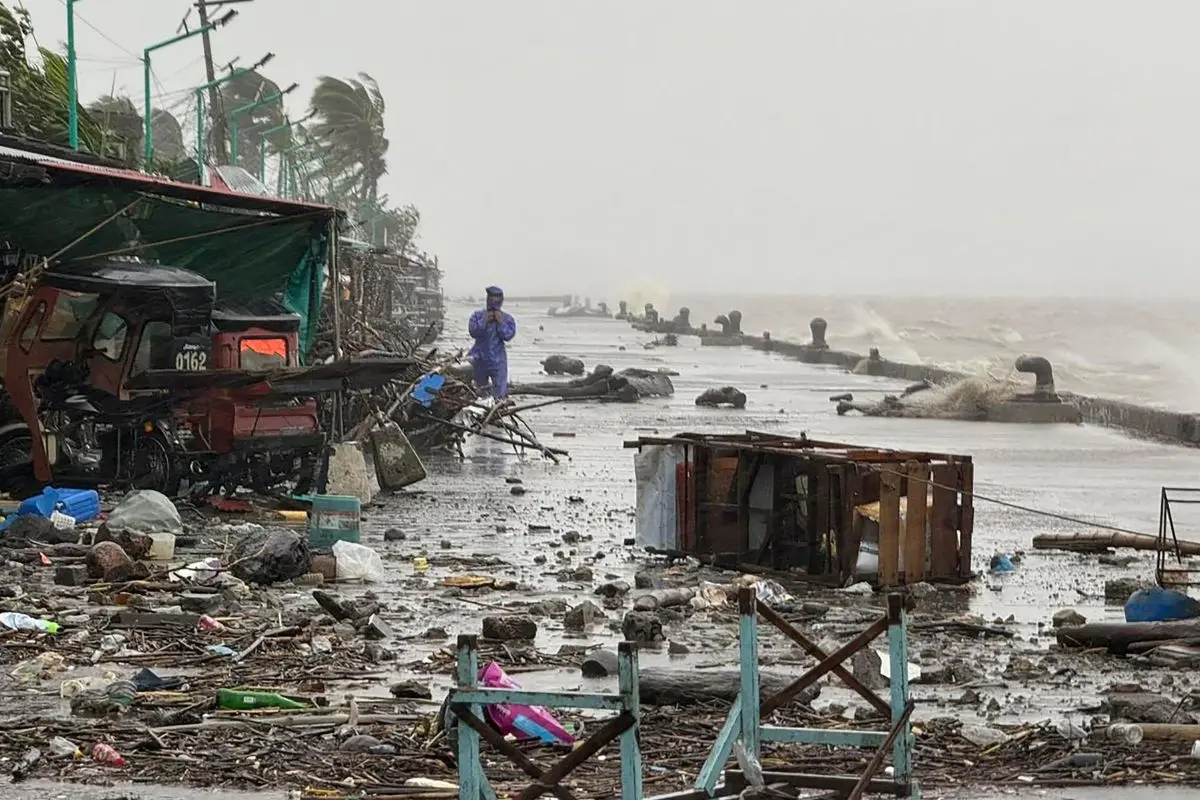
Manila: Super Typhoon Ragasa, known locally as Nando, has hit the northern Philippines with destructive winds and torrential rains, forcing thousands of evacuations while putting Hong Kong, Taiwan and southern China on high alert for its next landfall.
Rapid intensification into a Category 5 storm
The system underwent explosive strengthening over the Philippine Sea, evolving into a massive super typhoon with sustained winds topping 267 kph (165 mph), the equivalent of a Category 5 hurricane. At its peak, Ragasa’s outer circulation unleashed gusts over 315 kph (195 mph), placing it among the most powerful storms recorded globally this year.
According to the Philippine weather bureau PAGASA, “Life-threatening conditions persist over the northern portion of northern Luzon as ‘Nando’ approaches the Babuyan islands.”
The storm made landfall on Calayan Island in the Babuyan group on Monday afternoon, with its wide circulation already affecting much of northern Luzon.
What is a super typhoon?
A typhoon is classified as a super typhoon when its sustained surface winds reach 240 km/h (150 mph), roughly equivalent to a strong Category 4 or Category 5 hurricane. Some meteorological agencies use lower thresholds: the Hong Kong Observatory considers storms with sustained winds of 185 km/h (115 mph) as super typhoons, while the Japan Meteorological Agency labels storms with sustained winds of 194 km/h (120 mph) as violent typhoons.
Philippines: Evacuations and closures
Authorities issued the highest tropical cyclone wind signal No 5 for the Babuyan Islands, warning of “potentially very destructive” winds and a “high risk of life-threatening storm surges.” More than 10,000 people were moved to safety across northern and central Luzon, including over 8,200 in Cagayan and 1,200 in Apayao province.
The Department of the Interior and Local Government urged compliance with evacuation orders, reminding residents, “Homes and property can be rebuilt, but lives lost can never be replaced.”
Power outages were reported across Calayan and Apayao. Video from Camiguin Island showed waves surging into residential streets. Government offices and schools were suspended across 29 provinces, including Metro Manila, while hospitals in Cagayan were placed on high alert.
Rainfall totals in some northern areas could exceed 400 millimetres (15 inches), raising the threat of flash floods and landslides. Storm surges of up to three metres (10 feet) are expected to inundate coastal stretches of Batanes, Babuyan and parts of Ilocos.
Wider regional impact
Ragasa’s circulation is so vast that it is also enhancing monsoon rains, worsening flood risks in low-lying areas of Luzon. The Philippines, struck by an average of 20 storms annually, has seen storms intensify unpredictably in recent years as global heating drives more extreme weather events.
In Taiwan, warnings have been issued for land and sea areas, with closures in southern Taitung and Pingtung counties as well as ferry service suspensions. Nearly 300 residents in Hualien are on standby for evacuation as mountainous regions brace for possible landslides. Officials cautioned of a risk of “extremely torrential rain” in the east.
Hong Kong braces for disruption
Hong Kong International Airport, one of the busiest in Asia, is preparing for major disruptions. From 6 p.m. on September 23 until 6 am on September 25, all passenger flights will be halted, according to Bloomberg. While the airport itself will remain operational, schedules will be slashed.
Cathay Pacific, which handles nearly half of the city’s air traffic, will cancel more than 500 flights, resuming operations only on Thursday. The airline has waived ticket change fees for affected passengers. HK Express, another local carrier, has cancelled more than 100 flights between Tuesday and Thursday.
The Airport Authority said preparations were under way to ensure apron safety, ground transport, staff rest areas and passenger services.
All schools in Hong Kong and Macao will shut for two days, with sandbags distributed in flood-prone districts.
Southern China evacuation plans
In China’s Guangdong province, multiple coastal cities are preparing for Ragasa’s arrival, expected between Wednesday and Thursday. Shenzhen, a megacity of 17.5 million, has drawn up plans to relocate 400,000 people from low-lying and coastal zones.
Ferry routes in Fujian province have been suspended, while other cities in Guangdong — including Jiangmen, Yangjiang, Zhongshan and Zhuhai — announced closures of schools, offices and factories, along with transport suspensions.
China’s weather agency expects Ragasa to potentially make landfall more than once, between Huizhou in Guangdong and Wenchang in Hainan. Authorities are urging residents to stockpile supplies, reinforce homes and prepare to evacuate from underground or flood-prone areas.
Climate concerns and past storms
The Philippines, the first landmass in the Pacific cyclone belt, is among the most disaster-prone nations. Scientists warn the climate crisis is fuelling stronger and less predictable storms, hitting impoverished communities hardest.
Last year, Typhoon Saola forced a 20-hour suspension of flights at Hong Kong airport, while in 2013, Typhoon Wipha shut down services for 13 hours.
(With inputs from AP)