‘Operation Midnight Hammer’ revealed: US calls Iran strike ‘bold and beautiful’
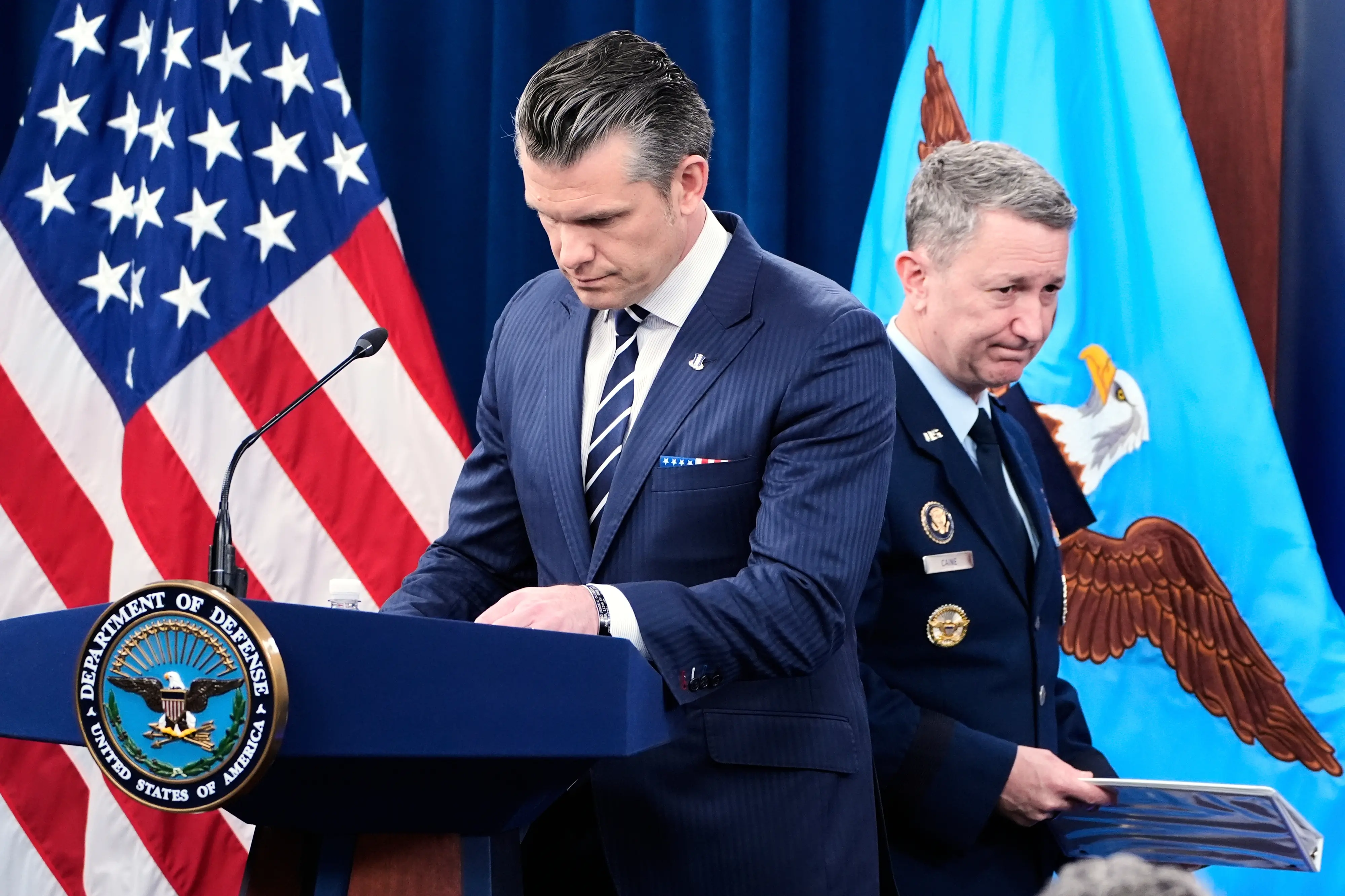
Washington: The United States has revealed new details about its high-stakes airstrikes on Iranian nuclear facilities, with top officials declaring the mission a sweeping success.
The Pentagon briefing, led by Defence Secretary Pete Hegseth and General Dan Caine, outlined how “Operation Midnight Hammer” struck key sites at Fordow, Natanz, and Isfahan.
Gen. Caine, Chairman of the Joint Chiefs of Staff, said all three targets “sustained extreme damage and destruction,” and described the operation as “complex and high risk,” but executed with “exceptional skill and discipline.”
“No other military in the world could have done this,” Caine stated, emphasising the operation’s scope across “multiple domains and theatres.”
The B-2 stealth bombers, which delivered the massive GBU-57 bunker-buster bombs, reportedly returned before global media or governments could respond. According to Hegseth, this precise timing was key. “B-2s were in and out and back without the world knowing at all,” he said.
Hegseth also reiterated President Trump's position: “The United States does not seek war. The president seeks peace, and Iran should take that.” He described the strikes as “bold and beautiful,” claiming Iran’s nuclear ambitions had been “obliterated.”
“This was a plan that took months and weeks of positioning and preparation,” Hegseth added. “It involved misdirection, secrecy, and discipline. Every American involved performed flawlessly.”
He made a pointed remark that past administrations had dreamed of halting Iran’s nuclear programme, but “none could – until President Trump.”
The mission did not target Iranian troops or civilians, both Hegseth and Caine confirmed, and they framed the operation as a deterrent measure to prevent the further advancement of Iran’s nuclear weapons capabilities.
Further briefing reporters, Gen. Caine said that approximately 75 precision-guided weapons were used during the operation, involving over 125 aircraft. “Our forces remain on high alert and are fully postured to respond to any Iranian retaliation or proxy attack, which would be an incredibly poor choice,” he warned. “We will defend ourselves.”
Caine also said the US maintained the element of surprise. “We are unaware of any shots being fired at US bombers on the way in or out. Iran’s fighters did not fly and it appears their surface-to-air missile systems did not see us.”
Revealing operational details, he said B-2 bombers left the US at midnight, with part of the fleet heading west into the Pacific as a decoy. Meanwhile, seven B-2s proceeded quietly to the East with minimal communications. Once over Iran, they linked up with escort and support aircraft in a “complex, tightly timed manoeuvre.”
At around 5 PM EST, a US submarine launched over two dozen Tomahawk cruise missiles targeting Iran’s nuclear site in Isfahan. The strike group used deception tactics, including decoy aircraft and high-altitude sweeps by fourth and fifth-generation jets, to divert Iranian air defences.
While the US has hailed the mission’s success, Iran has denounced the strikes as a “criminal act” and has hinted at strategic retaliation. The international community has urged both sides to avoid further escalation.