Flight trackers show airspace over Iran, Israel turned into ghost zones after missile strikes
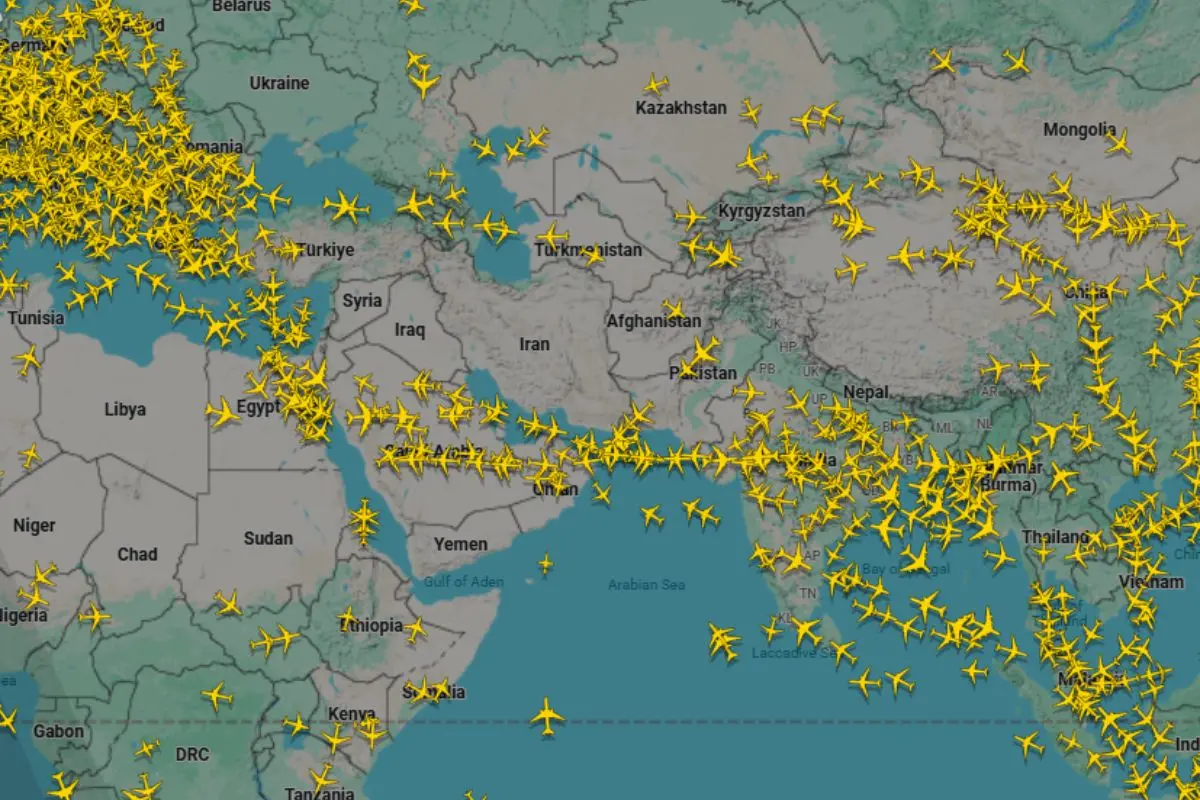
As the Middle East continues to reel from escalating conflict, commercial airlines are steering clear of vast swathes of regional airspace, creating striking gaps in the global flight map. Following US airstrikes on Iranian nuclear facilities over the weekend, flight tracking data shows a continued avoidance of skies above Iran, Israel, Iraq and Syria.
According to real-time data from FlightRadar24, commercial aircraft are rerouting to avoid the region, instead flying north via the Caspian Sea or south through Egypt and Saudi Arabia—choices that increase flight times, fuel consumption and crew costs.
“Following US attacks on Iranian nuclear facilities, commercial traffic in the region is operating as it has since new airspace restrictions were put into place last week,” the platform said in a post on X.
Holes in the sky
Live global flight tracking reveals massive blank zones over the Middle East, particularly above Iran and Israel. These “holes in the sky” are the result of mounting missile and drone attacks tied to the Israel-Iran conflict, which has intensified since Israel launched its first strike on Iran on June 13. Aviation analysts warn that expanding global conflict zones are increasingly posing threats to commercial airline safety.
Carriers have suspended direct flights to several countries in the affected area, instead focusing on evacuating foreign nationals or operating limited repatriation services. Some airlines have operated rescue flights for stranded Israelis, while others have focused on neighbouring countries.
Evacuations underway
Japan’s foreign ministry reported that it successfully evacuated 21 people from Iran on Sunday, including 16 Japanese nationals, via a land route to Azerbaijan. It marked the second such evacuation since Thursday. The ministry said it would continue to evacuate its citizens as needed.
New Zealand also announced plans to stage an evacuation. On Sunday, the government confirmed that a C-130J Hercules military transport aircraft would depart from Auckland on Monday, headed for the Middle East. The journey would take several days, officials said. The aircraft will be accompanied by government personnel and positioned on standby for evacuation operations. The New Zealand government added that it was also in discussions with commercial airlines to explore additional evacuation support if needed.
A special flight carrying 290 Indians stranded in conflict-hit Iran landed safely in New Delhi on Saturday night, bringing the total number of evacuees under Operation Sindhu to 1,117. This marked the fifth batch of Indians to be repatriated from Iran as part of the ongoing evacuation mission.
A costly detour
The rerouting of flights due to airspace restrictions is already taking a financial toll on airlines. Longer routes, additional fuel costs, and delays in logistics chains are among the operational challenges facing carriers. The growing number of conflict zones worldwide, from Eastern Europe to the Middle East, continues to push airlines into more complicated, expensive flight paths.
With no immediate signs of de-escalation, airspace over Iran, Israel and their neighbours remains off-limits for much of the world’s commercial traffic.
(With inputs from Reuters)