F-35 components sent for repairs ended up in Hong Kong: US probes mystery
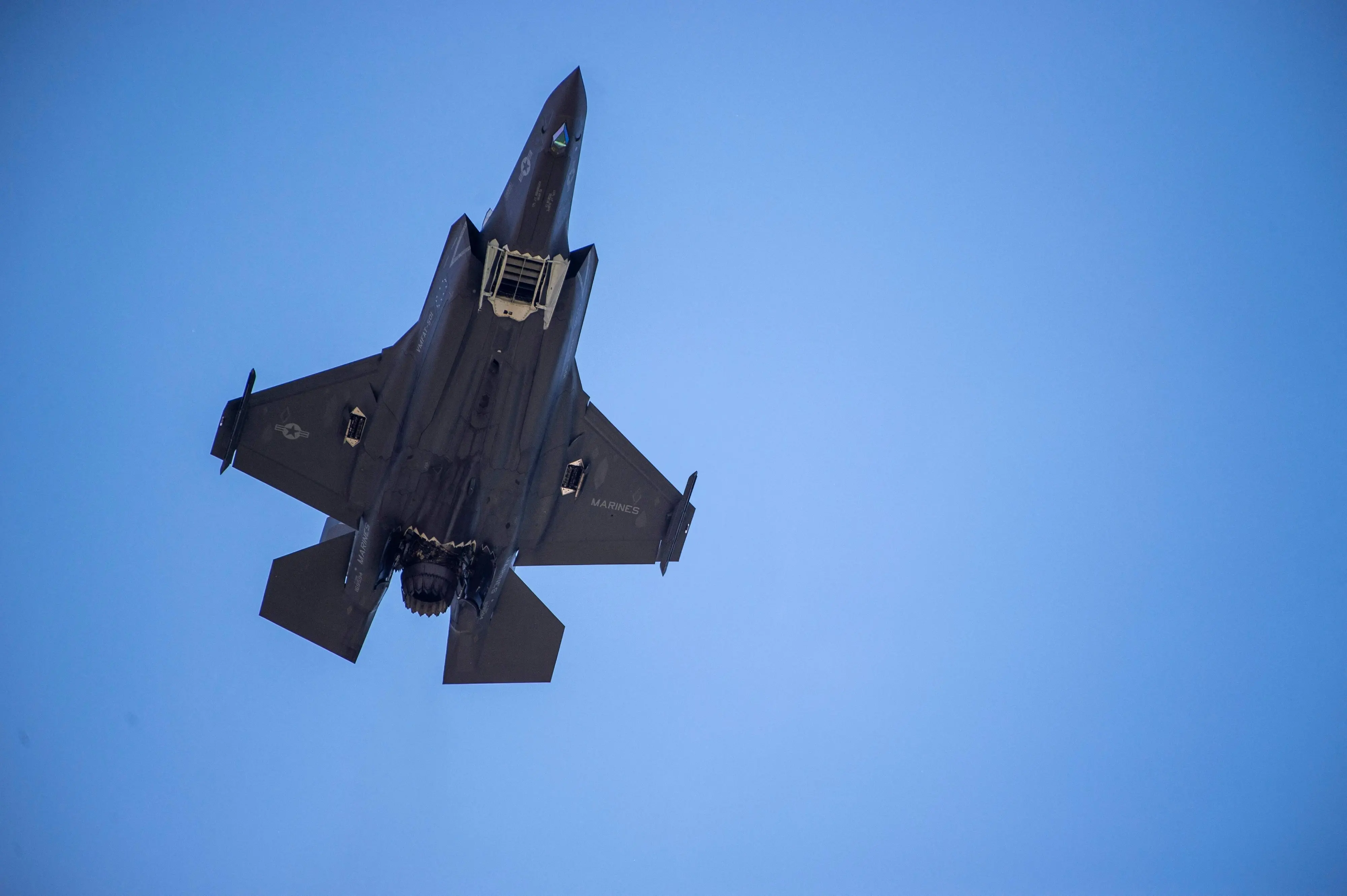
Sensitive F-35 components sent from Australia to the United States for repairs were unexpectedly diverted to Hong Kong and have not been publicly accounted for, prompting Pentagon and congressional scrutiny over the possibility of unauthorised access to stealth technology.
A shipment of F-35 Lightning II components travelling from Australia to the United States for repairs was unexpectedly rerouted to Hong Kong during its journey across the Pacific, according to reporting by Politico cited by multiple outlets. The Pentagon's F-35 Joint Program Office has confirmed that it is investigating a "shipment issue" involving unserviceable F-35 components.
The current whereabouts of the components and the reason for the diversion have not been publicly established. US authorities and industry partners are working to retrieve the equipment and investigate how the shipment ended up in Hong Kong.
One of the components reportedly included an F-35 cockpit canopy. The canopy forms part of the aircraft's low-observable design and incorporates specialised technology intended to reduce radar detection.
Why the canopy matters
The F-35 canopy is more than a conventional cockpit enclosure. Its specialised coating contributes to the aircraft's radar-signature management.
Former House Armed Services Committee staff member and aviation analyst J.J. Gertler told Politico that physical possession of such a component could potentially help an adversary verify or refine information already obtained through other intelligence-gathering methods.
However, there is currently no public evidence establishing that Chinese authorities obtained, inspected or exploited the components. The diversion to Hong Kong has raised the possibility because Hong Kong is a Chinese special administrative region, but the responsible party and current custody remain unclear.
Pentagon and Congress investigate
The F-35 Joint Program Office said it was aware of the shipment problem and was working with US authorities and industry partners to recover the components, investigate the incident and introduce safeguards against a repeat occurrence.
Congressional national-security committee staff were reportedly briefed on the incident in June, with further briefings expected.
The incident has therefore moved beyond a routine shipping problem into a broader examination of the security of the F-35's international logistics network.
Lockheed Martin's role
Lockheed Martin manages the F-35 programme's wider supply chain and uses commercial shipping providers to move components between locations.
The company said it could not discuss the specific shipment because of security considerations but stated that it follows US regulations governing aircraft-component shipments and applies safeguards to protect the F-35 programme and allied partners.
The F-35 programme involves the United States and multiple international partners, creating a large cross-border maintenance and supply network.
A longstanding supply-chain issue
The Hong Kong incident comes against the backdrop of previous concerns about F-35 spare-parts accountability.
A 2023 Government Accountability Office report found that more than one million F-35 spare parts had been recorded as missing over a five-year period. The report also said the Pentagon lacked an independent system for tracking the parts because contractors maintained the relevant information.
That finding does not establish a connection between the earlier inventory discrepancies and the Hong Kong diversion. It does, however, provide context for why the latest incident has prompted questions about supply-chain oversight.
Why Australia sends parts overseas
Australia operates the F-35 but does not currently have the capability to repair certain specialised components, including the canopy referenced in the reporting.
That means damaged components can travel long distances to specialised repair facilities, creating additional points where sensitive equipment passes through commercial logistics networks.
The multinational sustainment structure allows F-35 operators to share repair infrastructure and spare parts, but it also means that sensitive components can cross borders and pass through multiple contractors and transport providers.
The central unanswered question is how the shipment was diverted and who currently has custody of the components.
Several possibilities remain open, including an administrative or logistics error, an unauthorised intervention, or deliberate diversion. The available reporting does not establish which explanation is correct.
The potential security implications depend heavily on the chain of custody. Investigators would need to establish whether the shipment was opened, whether the components were accessed or examined, how long they remained in Hong Kong and whether tracking or shipping records reveal an unauthorised change.
The incident also highlights a broader challenge for advanced weapons programmes: sophisticated aircraft can still depend on commercial transportation networks to move individual components.
For the F-35 programme, the investigation could therefore focus not only on recovering the missing equipment but also on how shipment routes are authorised, monitored and changed, and how quickly deviations involving sensitive components trigger alerts.
What remains unknown
- Who changed the shipment's route.
- Why the components were diverted to Hong Kong.
- Who currently has custody of them.
- Whether the components were opened or examined.
- Whether Chinese authorities had access to them.
- Whether any technical information was extracted.
- Whether the components have been recovered.
Whether the incident resulted from human error, a systems failure or deliberate interference.
As of September 19, 2026, the publicly available reporting does not establish that China obtained F-35 technology. The confirmed issue is the unexplained diversion of sensitive components and the resulting US investigation.