Two airlines, 90% market; is competition at risk in Indian aviation?
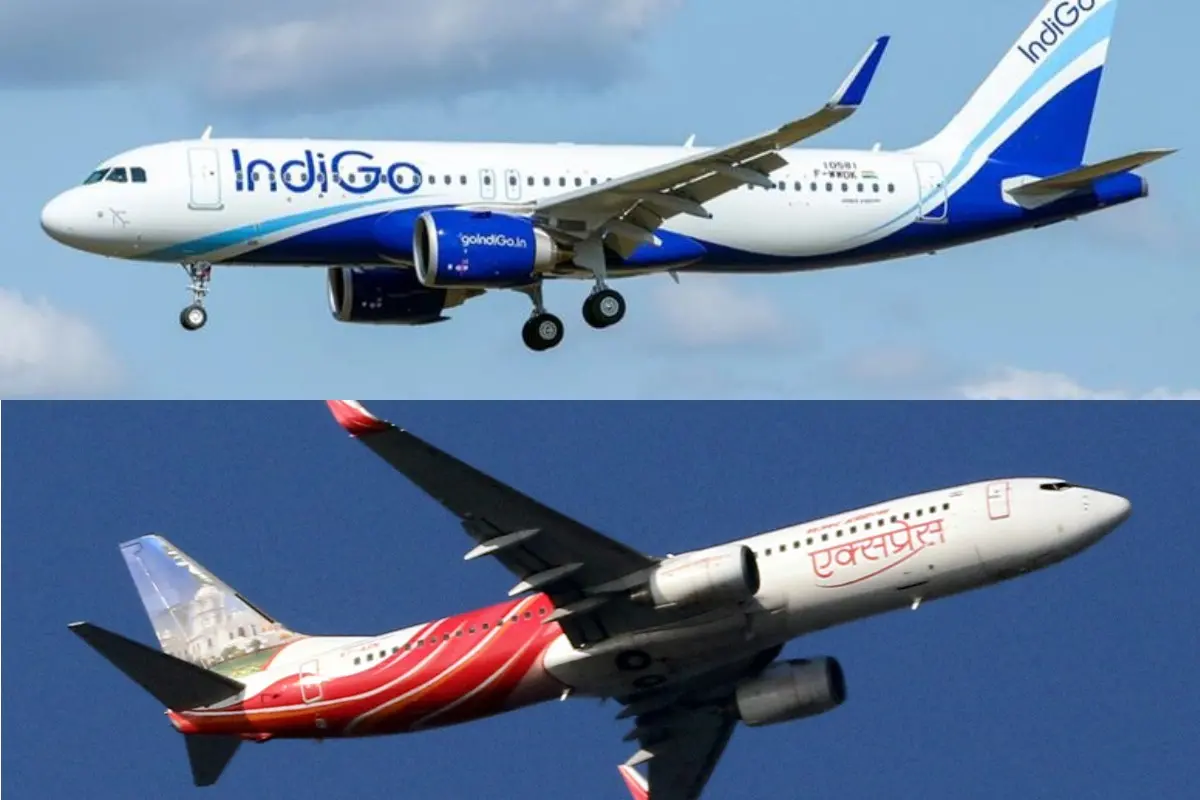
India’s domestic aviation market is increasingly being dominated by two major airlines, with the Union government acknowledging in Parliament that IndiGo and the Air India together account for more than 90 percent of the total market share.
In a written reply in the Rajya Sabha, Minister of State for Civil Aviation Murlidhar Mohol cited data from the Directorate General of Civil Aviation (DGCA) for 2025.
According to the data, IndiGo alone holds nearly 64 percent of the domestic aviation market, while the Air India Group accounts for around 27 percent.
“Together, these two airlines hold 91 percent of the domestic market,” the minister said, highlighting the high level of concentration in the sector.
The remaining market is shared among a few smaller airlines. As of January 2026, government data shows that Alliance Air has a market share of 0.4 percent, Akasa Air holds 4.8 percent, and SpiceJet accounts for 3.9 percent.
Among regional carriers, Fly91 has a 0.2 percent share, IndiaOne Air holds just 0.01 percent, and Star Air accounts for 0.6 percent.
This sharp gap between the top two airlines and the rest has led to concerns about limited competition in the market. Reacting to the data, Trinamool Congress MP Sagarika Ghose described the situation as “effectively a duopoly,” even if it has not been officially termed as such.
The issue of market dominance comes at a time when IndiGo also faced major operational challenges. In December 2025, the airline experienced large-scale flight disruptions that affected passengers across the country.
According to DGCA data shared in Parliament, IndiGo cancelled a total of 5,689 scheduled domestic flights during the month. Between December 3 and 5 alone, around 3,64,933 passengers were impacted due to cancellations and delays.
The disruptions coincided with the peak wedding travel season, making the situation more difficult for passengers. IndiGo, which typically operates over 2,200 flights daily, had to cancel more than 1,000 flights nationwide during those three days.
The government informed Parliament that as of March 23, IndiGo has paid ₹4,620.5 lakh as compensation to affected passengers. The airline has also stated that all refunds for cancelled flights have been processed and credited to passengers.
However, the government noted that it does not maintain airline-wise data on financial losses caused by such cancellations.
The disruptions were largely linked to crew shortages, which were influenced by the implementation of revised Flight Duty Time Limitation (FDTL) rules. These rules were introduced to ensure better rest and working conditions for pilots and cabin crew.
IndiGo was criticised for not planning adequately for these changes, which led to a shortage of available crew and forced the airline to ground a significant portion of its fleet.
While the DGCA issued a show cause notice to the airline, IndiGo reportedly said it could not identify a single specific reason for the disruptions.
In response to the situation, the Ministry of Civil Aviation ordered a high-level inquiry and warned of possible action. At the same time, certain rules were temporarily relaxed to help the airline stabilise operations.
Passengers took to social media to express their frustration over the cancellations and delays, with some linking the issue to the airline’s dominant position in the market.
The matter also drew political attention, with opposition parties raising questions about corporate practices. This included scrutiny of electoral bond purchases by IndiGo’s parent company, InterGlobe Aviation, in 2023.
The government’s admission of the market share held by IndiGo and Air India has renewed debate over competition in India’s aviation sector. While the strong presence of these airlines reflects their operational scale and network strength, the limited share of smaller carriers raises concerns about market balance, pricing power, and passenger choice.
As India’s aviation sector continues to grow, the challenge for policymakers will be to ensure that expansion is supported by healthy competition, operational resilience, and a level playing field for all airlines.