Air Taxis: The future of urban mobility takes off, can India catch the skyway?
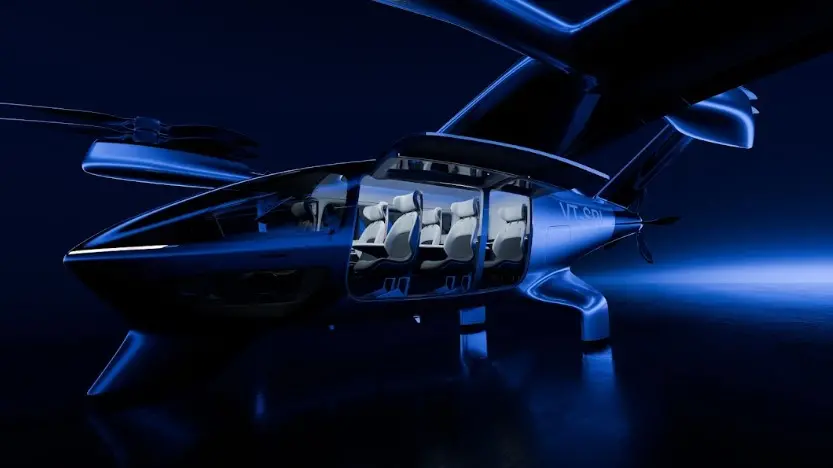
New York City is preparing for a new kind of commute, one that bypasses its traffic-choked streets altogether. In a futuristic leap, United Airlines and Archer Aviation, a US based electric aircraft developer, have announced plans to launch air taxi services connecting key Manhattan locations to major airports like JFK, LaGuardia, and Newark.
Their vehicle of choice is ‘The Midnight’, a fully electric eVTOL (electric vertical take-off and landing) aircraft that can travel up to 100 miles at 150 mph. The Midnight carries four passengers and a pilot, and promises to slash hour-long commutes to a breezy 5–10 minutes, all while producing zero emissions in flight.
The first operational goal? To be live by the 2028 Los Angeles Olympics.
While this might sound like sci-fi, the air taxi revolution is very real and India is watching closely.
What are air Taxis?
Air taxis are compact, electric aircraft designed to shuttle people short distances within and around cities. They operate much like helicopters but are quieter, cleaner, and more cost-efficient. Unlike conventional aircraft, they don't need runways, they can take off and land vertically, using small landing pads called vertiports.
These aircraft are part of the broader Urban Air Mobility (UAM) ecosystem and are often autonomous or semi-autonomous. Companies like Archer Aviation, Joby Aviation, Volocopter, and Lilium are at the forefront of this booming industry.
Why is the world betting on Air Taxis?
The global air taxi market is estimated to grow to $30 billion by 2030, driven by:
- Rising urban congestion
- Advances in battery and electric propulsion technologies
- Environmental pressure for low-carbon transport solutions
- Increasing demand for premium, time-saving mobility options
Cities like Dubai, Singapore, Paris, and now New York are rolling out pilot programs and infrastructure to prepare for aerial ridesharing. In some countries, regulatory authorities are already in advanced stages of airworthiness certification for eVTOL aircraft.
Is India Air Taxi-ready?
India may not be far behind.
Earlier this year, reports emerged that Archer Aviation is considering India for early air taxi trials, targeting New Delhi and Bengaluru as potential launch zones. India's aviation regulator, DGCA, has also been exploring regulatory frameworks to govern electric vertical mobility. Several homegrown startups like The ePlane Company and Vertiplane are working on indigenous designs and prototypes.
The Government of India, through initiatives like Drone Shakti, make in India, and the push for clean mobility, is creating a conducive environment for electric aviation. Electric air taxis could complement India’s regional air connectivity scheme (UDAN) by offering last-mile and point-to-point premium travel.
Challenges in India
Despite the promise, air taxis face several challenges like congested urban airspace alongside drones, helicopters, and commercial aircraft which will need sophisticated traffic management systems, building vertiports or urban heliports necessary for air taxi services, safety concerns, affordability and battery performance in India’s high-temperature zone might pose a risk hazard.
But none of these are insurmountable. Much like the rapid evolution of mobile tech or fintech in India, urban air mobility could leapfrog traditional barriers, especially with private-sector innovation.
Air taxis represent more than just luxury travel, they could fundamentally alter how we connect urban and regional India, reduce road congestion, and promote cleaner skies. For a nation where cities like Mumbai, Bengaluru, and Delhi lose billions annually in lost productivity due to traffic, air taxis could be a game-changer.
As India becomes the world’s third-largest aviation market, the skies above may soon belong not just to jets, but to electric air cabs, soaring over city skylines, offering a new frontier in mobility.
Would you take an air taxi from Kochi to Thiruvananthapuram in 20 minutes? The future may be closer than you think.