AC, TV prices set to rise: How the Iran-US war could make your festive shopping costlier
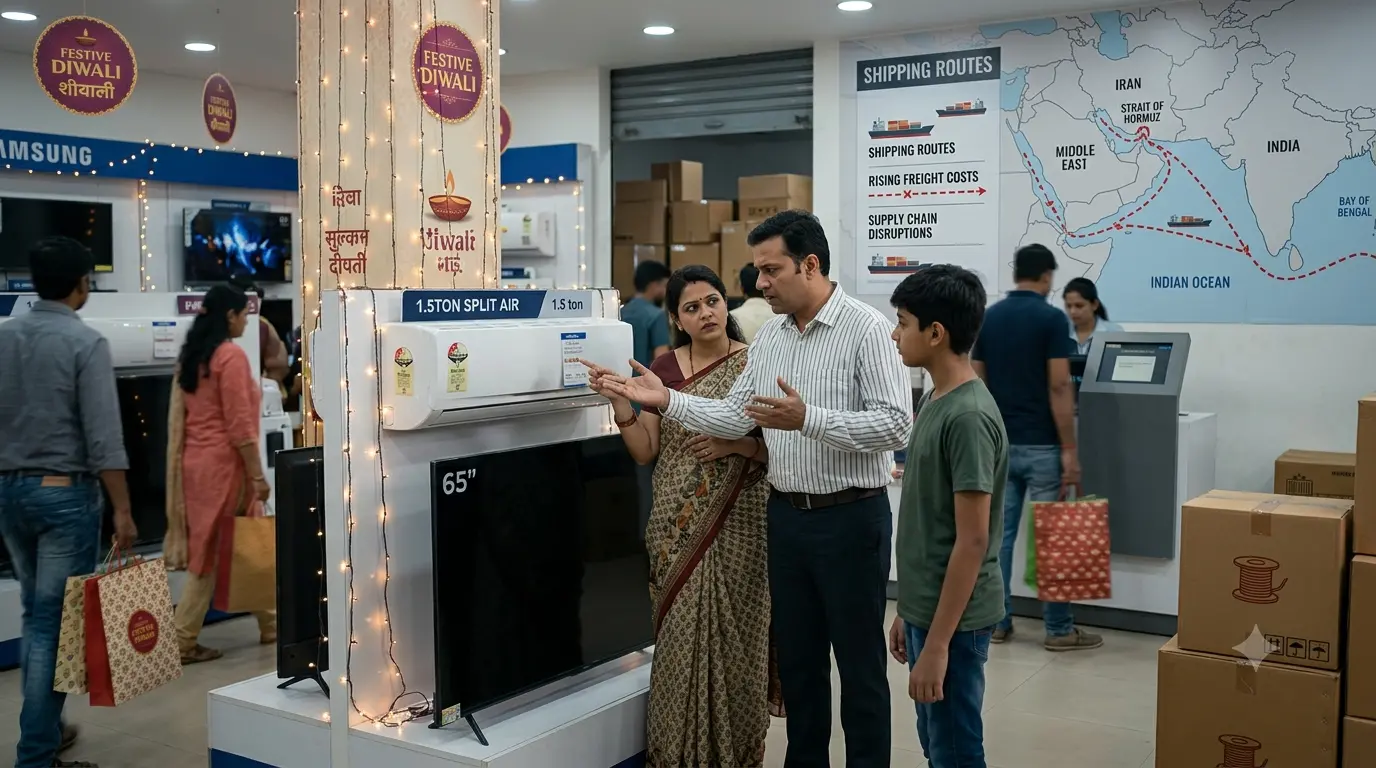
Mumbai: Planning to buy an AC, TV or home appliance this festive season? Consumers could face higher prices as manufacturers pass on some of the rising costs of components, commodities and freight. The Iran-US conflict is adding pressure to global commodity prices, shipping routes and supply chains, with the impact being felt by consumer durable manufacturers in India.
Consumer durable companies in India are raising prices or preparing further increases as higher input costs and supply-chain disruptions squeeze their margins.
Blue Star has raised air-conditioner prices by 8%, according to managing director B Thiagarajan. Thomson India plans to increase prices by around 10% across categories after October, while Intex Technologies has decided against a broad-based hike for now to support festive-season demand.
Haier and Daikin have also raised prices or are preparing further increases.
The latest price changes come after several manufacturers had already increased prices earlier this year.
Why are ACs becoming more expensive?
Manufacturers are facing higher costs for commodities and key components used in air-conditioners.
Copper is a particularly important input. An air-conditioner can require around 3–4 kg of copper, making manufacturers sensitive to movements in copper prices.
Blue Star's Thiagarajan said commodity prices had risen amid the war and added that growing demand for copper from electric vehicles and data centres was also contributing to pressure.
Companies have also cited currency movements and changes in energy-efficiency requirements among factors affecting AC prices.
TVs face a different set of pressures
Television manufacturers are dealing with rising costs for memory chips, open-cell panels, plastics and other electronic components.
Thomson India CEO Avneet Singh Marwah said the consumer durables industry was facing pressure from both higher input costs and supply-chain disruptions.
According to the company, shipments are experiencing port delays of around 20–30 days, making inventory planning and production more difficult.
Marwah said manufacturers had absorbed much of the additional cost so far but that maintaining those levels was becoming increasingly difficult.
How much could prices increase?
| Category | Reported/expected increase | Main cost pressures |
|---|---|---|
| Air-conditioners | Around 5–10% in the market | Copper, metals, compressors, freight |
| Televisions | Varies by manufacturer and model | Memory chips, panels, plastics, PCBs |
| Refrigerators and washing machines | Varies by manufacturer | Steel, plastics, components and freight |
Some manufacturers are choosing to absorb part of the additional costs rather than immediately pass the entire increase on to consumers.
Intex holds prices during festive season
Intex Technologies is taking a different approach for now.
Director Keshav Bansal said the company was not planning a broad-based price increase at this stage, citing the importance of festive-season demand.
Instead, the company is using Smart TV bundles, extended panel warranties on selected large-screen models, retailer schemes and financing options to encourage purchases.
Bansal said consumers were still willing to spend but were paying closer attention to the value offered with a product.
What this means for shoppers
The price increases could make festive purchases of ACs, TVs and other appliances more expensive, particularly when existing dealer inventory is replaced by stock manufactured at higher input costs.
Older inventory may continue to be sold at earlier prices for a limited period. Once that stock is exhausted, products reflecting the latest manufacturer price revisions could become more common.
For shoppers, the final price will depend on the brand, model, retailer, existing inventory and any festive-season discounts or financing offers.
Why the Middle East conflict is affecting appliances
The latest price pressure shows how geopolitical disruptions can reach Indian consumers through global commodity and supply chains.
Consumer electronics and appliances depend on imported components and globally traded raw materials. Higher metal prices can increase manufacturing costs, while shipping disruptions can raise freight expenses and delay the arrival of components.
For manufacturers, the challenge is balancing these higher costs with festive-season demand. Passing the entire increase to consumers could affect sales, while absorbing the costs can put pressure on margins.
The impact is therefore unlikely to be identical across all products. ACs are particularly exposed to metals such as copper, while televisions can be more affected by panel, semiconductor, memory and electronic-component costs.
The result for consumers could be a combination of higher list prices, shorter periods of old-stock pricing and more emphasis on retailer discounts and bundled offers during the festive shopping season.