New Indian Railways ticketing system will handle over 1.5 lakh bookings a minute
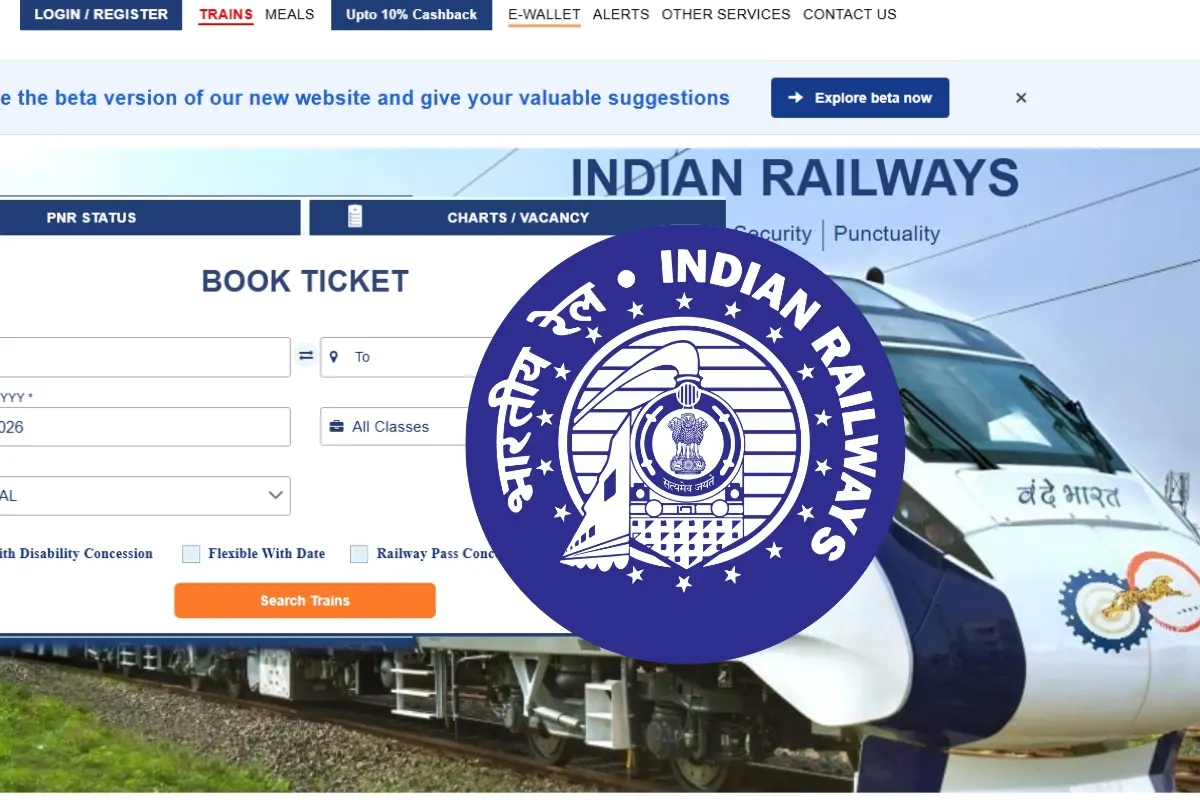
New Delhi: Indian Railways is set to roll out a vastly upgraded Passenger Reservation System (PRS) that can process over 1.5 lakh ticket bookings per minute, a quantum leap from the current capacity of about 32,000 bookings a minute, as the national transporter moves to a cloud-enabled, next-generation platform to cope with surging digital demand.
The new system, which will replace the existing PRS deployed in 2010 on Itanium servers and the OpenVMS platform, is designed to handle over 40 lakh enquiries per minute, up from around 4 lakh at present, while offering a multilingual, user-friendly interface for both booking and enquiries.
Railway officials say the upgrade will deliver greater scalability, flexibility and reliability to support future passenger growth and reduce failures during peak booking windows such as Tatkal.
Why the overhaul was needed
The present PRS, developed and maintained by the Centre for Railway Information Systems (CRIS), is one of the world’s largest online railway booking platforms.
It serves over 20.5 lakh passengers daily through counters, the IRCTC website and mobile apps, with around 73% of transactions cashless. In the 12 months between June 2025 and June 2026 alone, passengers booked 65.08 crore reserved tickets through PRS, of which 57.90 crore (89%) were booked online, underlining the rapid shift to digital channels.
But the system, whose roots go back to a computerised reservation platform introduced in 1986, was originally built for a different scale of digital traffic.
Peak periods -- especially during Tatkal reservations -- have increasingly stressed the legacy infrastructure, leading to slow responses, failed payments and user complaints.
To meet growing demand, Railways needed a booking engine capable of handling much higher transaction volumes while delivering faster, more reliable and more secure services.
What the new PRS will change
The upgraded PRS will sit at the heart of India’s reserved ticketing ecosystem, managing everything from booking, modification and cancellation to seat allocation, waitlists, Reservation Against Cancellation (RAC), reservation charts and passenger enquiries.
By connecting reservation centres with online booking channels, the system has already made railway reservations more efficient, transparent and accessible; the new version aims to make that experience smoother and more resilient.
Key features of the next-gen PRS include:
* Capacity jump: From about 32,000 bookings/minute to over 1.5 lakh bookings/minute.
* Enquiry surge handling: From roughly 4 lakh enquiries/minute to over 40 lakh/minute.
* Multilingual interface: Support for multiple Indian languages to make booking and enquiries easier for non-English users.
* Cloud-enabled architecture: Designed for elastic scaling during festivals, holidays and special booking windows.
* Improved reliability: Reduced downtime and better handling of concurrent users, especially during Tatkal opens.
Railways officials say the new architecture will also allow easier integration of future features, such as advanced analytics, dynamic pricing experiments, and tighter fraud detection, without disrupting live operations.
Redesigned IRCTC website to smooth the booking journey
Passenger facilities are being strengthened in tandem through a redesigned IRCTC website. The beta version, launched in July 2026, features a simplified interface, fewer booking steps and the ability to view seat availability across all classes in a single screen.
The new portal will be integrated with the next-generation PRS, creating a smoother end-to-end booking experience from search to payment.
Beyond railway ticketing, IRCTC also operates a tourism platform offering hotel bookings, retiring rooms, lounge access, tour packages, flight tickets and bus tickets, positioning itself as a one-stop travel services provider for rail passengers.
Recent reforms to clean up the booking process
The technology upgrade comes alongside a series of passenger-centric reforms aimed at improving fairness and curbing misuse by automated bots and unauthorised agents.
* Advance Reservation Period (ARP) cut: Reduced from 120 days to 60 days to better align with actual passenger booking patterns and free up capacity for genuine travellers.
* Aadhaar-authenticated Tatkal: Introduced in July 2025 to improve transparency and reduce speculative bookings.
* OTP-based verification: Added later to further curb bot-driven bookings and agent-led misuse during high-demand windows.
These measures have been layered on top of the existing PRS, but officials acknowledge that a structural technology upgrade was essential to sustain them at scale.
What it means for train passengers
For the average traveller, the combined effect of the new PRS, redesigned IRCTC portal and CRIS-built apps is expected to translate into:
* Fewer “payment failed but ticket not booked” incidents during Tatkal and festival rushes.
* Faster search and booking, with multilingual support and fewer steps on the new IRCTC site.
* More stable experience on IRCTC’s app and website, especially when millions log in simultaneously.
* Better decision-making through tools like AI-based waitlist prediction on RailOne.
* A platform that can more easily absorb future innovations without repeated large-scale disruptions.
Railways officials stress that the new PRS is not just about handling today’s volumes, but about creating a resilient online infrastructure that can grow with India’s travel demand over the next decade.
With the legacy system having served for nearly four decades in various forms, the shift to a cloud-native, high-capacity PRS marks one of the most significant technology upgrades in Indian Railways’ digital journey—aimed at ensuring that the country’s largest public-facing online platform can finally keep pace with the speed and scale of its users.