Nobel Prizes 2026: Who was the youngest winner? 5 facts you may not know
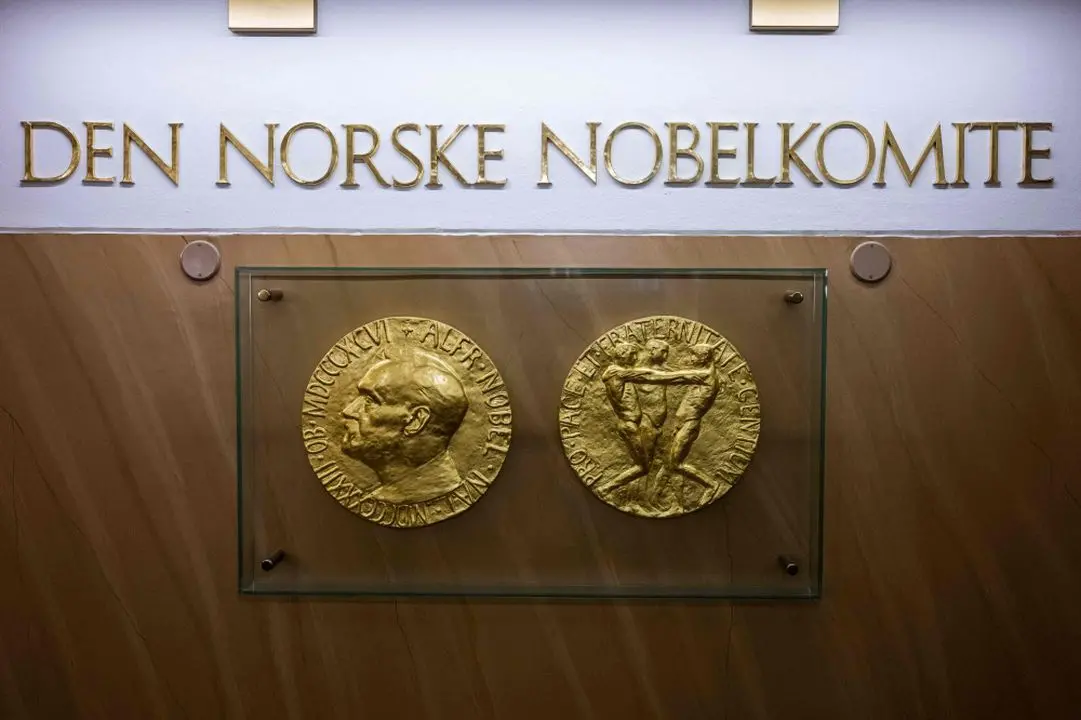
The 2026 Nobel Prize announcements begin on Monday, October 5, with the Medicine prize, kicking off a week of announcements recognising individuals and organisations whose work has advanced humanity.
The winners will be announced between October 5 and 12, with the Nobel Prize in Physiology or Medicine due to be announced from 11.30 am IST (9.30 am GMT) on Monday.
Established in accordance with the wishes of Swedish inventor Alfred Nobel, the prizes have been awarded since 1901. Here are five things to know about the Nobel Prizes and their founder.
Five Nobel Peace laureates unable to attend ceremony
Five Nobel Peace Prize laureates have been unable to attend the awards ceremony in Oslo since the prizes were first awarded.
German journalist and pacifist Carl von Ossietzky was detained in a Nazi concentration camp when he won the prize in 1936.
Myanmar opposition leader Aung San Suu Kyi was under house arrest when she received the award in 1991. Although the military junta allowed her to travel to Norway, she chose not to leave Myanmar over fears that she might not be allowed to return.
Chinese dissident Liu Xiaobo was in prison when he won the Nobel Peace Prize in 2010. His absence was symbolised by an empty chair at the ceremony.
Belarusian human rights campaigner Ales Bialiatski was imprisoned when he won the prize in 2022 and was represented at the ceremony by his wife, Natalia Pinchuk.
Iranian activist Narges Mohammadi was also imprisoned at Evin prison when she was awarded the Nobel Peace Prize in 2023.
From 17 to 97: Nobel laureates across generations
The Nobel Prizes have been awarded to people across a remarkably wide age range.
Pakistani education and human rights activist Malala Yousafzai became the youngest Nobel laureate when she won the Nobel Peace Prize in 2014 at the age of 17.
Australian physicist Lawrence Bragg was 25 when he jointly won the 1915 Nobel Prize in Physics with his father. His award recognised research he had carried out at the age of 21.
Iraqi Yazidi activist Nadia Murad was also 25 when she won the Nobel Peace Prize in 2018 for her efforts on behalf of the Yazidi community.
At the other end of the spectrum, American chemist John Goodenough became the oldest Nobel laureate when he won the Chemistry prize in 2019 at the age of 97 for his work on lithium-ion batteries.
A year earlier, fellow American Arthur Ashkin had won the Physics prize at the age of 96.
Nobel Prizes are rarely awarded posthumously
Nobel Foundation rules have prohibited posthumous awards since 1974. However, a laureate can still receive the prize if they die after the announcement in October but before the formal ceremony in December.
Before the rule change, only two people had been awarded Nobel Prizes posthumously.
UN Secretary-General Dag Hammarskjöld was killed in a plane crash in 1961 and was awarded the Nobel Peace Prize later that year. Swedish poet Erik Axel Karlfeldt received the Nobel Prize in Literature posthumously in 1931.
In 2011, the Nobel Committee for Physiology or Medicine selected Canadian scientist Ralph Steinman, unaware that he had died three days before the announcement. The Nobel Foundation allowed the award to stand.
Women remain under-represented
Women have received only 68 of the 633 Nobel Prizes awarded since 1901, accounting for around 10 per cent of the total. Their share has increased steadily since the early 2020s, but women remain particularly under-represented in the sciences.
Of the 230 Physics laureates, only five have been women. There have been three women among 99 Economics laureates, eight among 200 Chemistry laureates and 14 among 232 Medicine laureates.
Nobel committees have repeatedly rejected calls for quotas, instead encouraging more nominations of women scientists.
Marie Curie became the first woman to receive a Nobel Prize when she won the Physics prize in 1903. She remains the only woman to have won two Nobel Prizes — Physics in 1903 and Chemistry in 1911.
Alfred Nobel was also a poet
Alfred Nobel is best known as the inventor of dynamite, but he also had a strong interest in literature and poetry.
He admired English poets Percy Bysshe Shelley and Lord Byron and wrote poetry throughout his life, mainly in English and Swedish.
In a letter to a friend, Nobel modestly described his writing as something he did to relieve depression or improve his English, rather than as serious poetry.
At 29, while questioning his literary abilities, he wrote to a young woman in French: “Physics is my field, not writing.”
Yet Nobel continued to write. In the final year of his life, 1896, he produced Nemesis, a four-act tragedy inspired by Shelley's The Cenci. The play centred on a woman in 16th-century Rome who murders her incestuous father.