Who’s really in charge in Iran? The power struggle shaping global oil routes
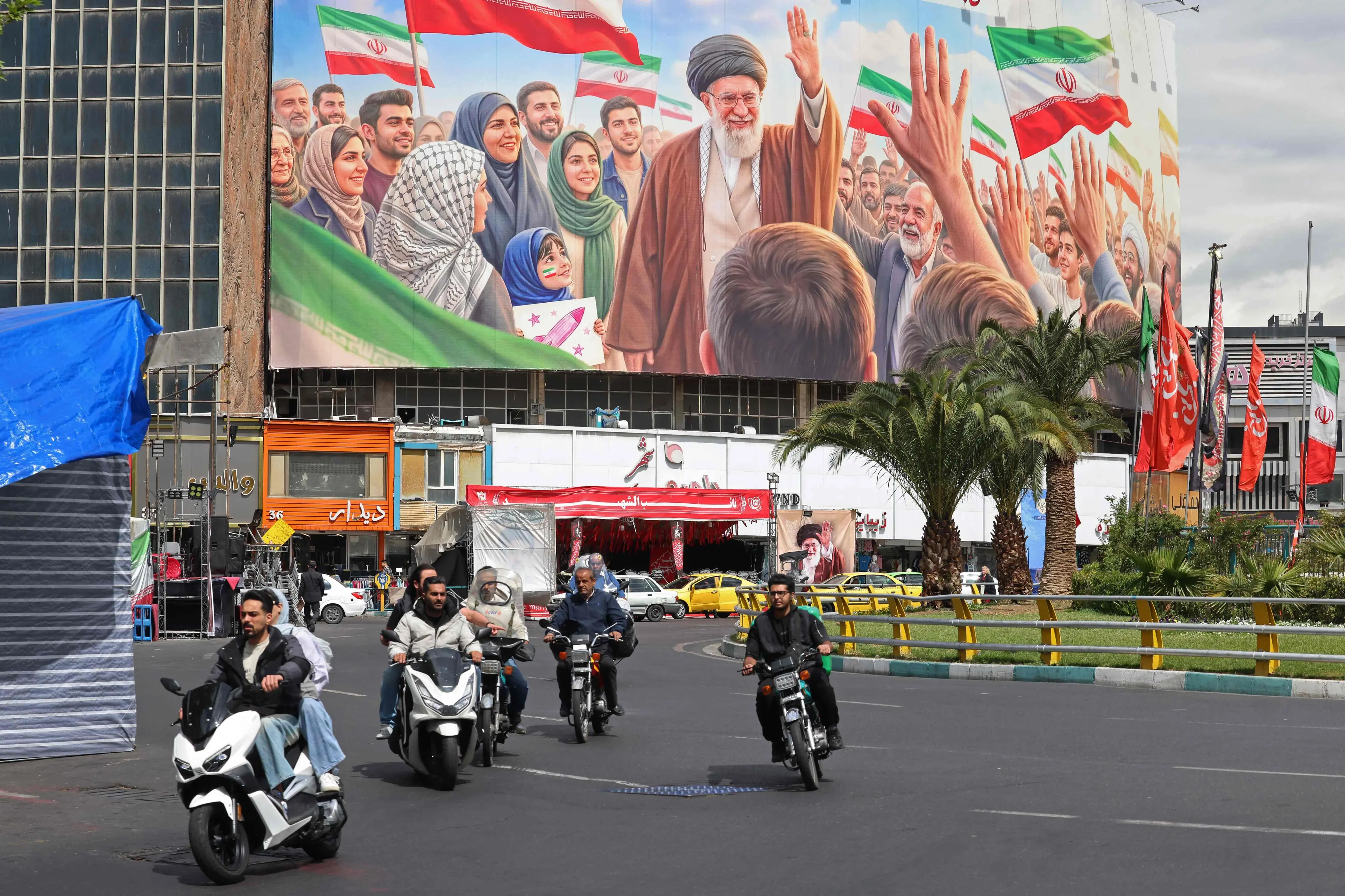
The Middle East these days feels like a fast ping-pong match, with news flipping from one side to the other almost every few hours. On April 17, US President Donald Trump announced that the Strait of Hormuz, the world's busiest oil shipping route, was open again for ships to pass through. On the very same day, media linked to Iran's Islamic Revolutionary Guard Corps (IRGC), the country's most powerful military force, hit out at Foreign Minister Araghchi for not clearly explaining under what conditions the Strait was reopened.
Just one day later, an Iranian military spokesperson said the Strait had been closed once again, and some ships were even attacked while trying to cross. Trump made fun of the decision, saying America's own blockade had already kept Iranian ships out of the water anyway. Then on April 19, Trump said an American team would again travel to Islamabad, Pakistan's capital, for fresh talks with Iran — while also warning that the US could strike Iran's civilian infrastructure, like power plants, if talks collapse.
Trump's flip-flop statements are nothing new. But the confusing mixed signals coming out of Iran point to something far deeper — a serious power struggle inside the Islamic Republic, which is now without a strong supreme leader for only the second time in its 47-year history. One observer called it a "jungle of power", very similar to the chaotic days of Iran's 1979 revolution. This makes things tricky for the American team heading to Islamabad, because nobody is sure who they are actually negotiating with on the other side of the table.
The first round of talks on April 11 and 12 already showed these cracks. Normally, Iran sends small, disciplined, and well-briefed teams. But this time around 80 Iranians turned up, with about 30 being actual decision-makers. They included seasoned diplomat Majid Takht-Ravanchi, who helped shape the 2015 nuclear deal, and hardliner Mahmoud Nabavian, who believes any agreement with America equals surrender. Their internal fights became so loud that Pakistani mediators spent more time controlling arguments among the Iranians than actually talking to the Americans.
The main reason behind this mess is a leadership vacuum at the top. Seven weeks after an American-Israeli airstrike killed Ali Khamenei — who ruled for 37 years as supreme leader — his successors have not even decided on a funeral date. His son Mojtaba, expected to take over, is reportedly either unwell or too weak to hold control. Israel's targeted attacks during the war have also killed many senior army commanders loyal to the old system, and those who replaced them are not ready to give up the freedom they gained when Iran spread out its command during the war.
Since the ceasefire on April 8, the wartime unity has started cracking fast. Officially, power now lies with the Supreme National Security Council, which includes the president, the parliament speaker, and heads of security agencies. Parliament speaker Mohammad-Bagher Ghalibaf has been made chief negotiator, with Araghchi working under him. But the IRGC, a 190,000-strong force that protects the Islamic system, is strongly against any talks. This clash is what has been creating the confusing open-closed-open story around the Strait of Hormuz.
Inside Iran, the military is clearly getting bolder. Pro-government crowds organised every night by IRGC-linked networks openly attack Araghchi and Ghalibaf by name. Official announcements are now coming from soldiers in uniform, instead of religious clerics, a big signal of who is really in charge. Even strict rules are loosening. At a recent rally, a woman without a veil led slogans, breaking a 40-year-old ban on women singing alone before men. IRGC-linked media have even suggested postponing the municipal elections planned for May 1.
Some believe all this noise is a strategy to pressure America for a better deal. But divisions inside Iran are not new. Leaders have always been split — nationalists, who think in terms of the country's practical benefit, versus Islamists, who stick to revolutionary ideology. Money makes things worse. Many generals have become experts at dodging US sanctions and earn huge profits from it. Groups around Mojtaba Khamenei and Ghalibaf are also said to control large foreign property assets, now under media scrutiny.
Each group has its own stand on the big issues, the nuclear programme, control over Gulf waters, and Iran's proxy militias. Nationalists are ready to cut support for proxy groups in return for sanctions relief. Islamists see these proxies as the backbone of their "resistance".
Nationalists fear heavy nuclear activity will invite American strikes, while Islamists want a nuclear bomb, following North Korea's model. Pakistan's army chief, Asim Munir, visited Tehran on April 15 to bring everyone on one page. Iran also needs to rebuild war damage worth about $270 billion (around ₹25 lakh crore). But even if Iran returns to Islamabad, these deep internal fights may block any real deal, and even if one is signed, it may not last very long.
The author is an science communicator and a defence, aerospace & geopolitical analyst.