How India's new top-attack Nag Mk-II missile will hunt tanks
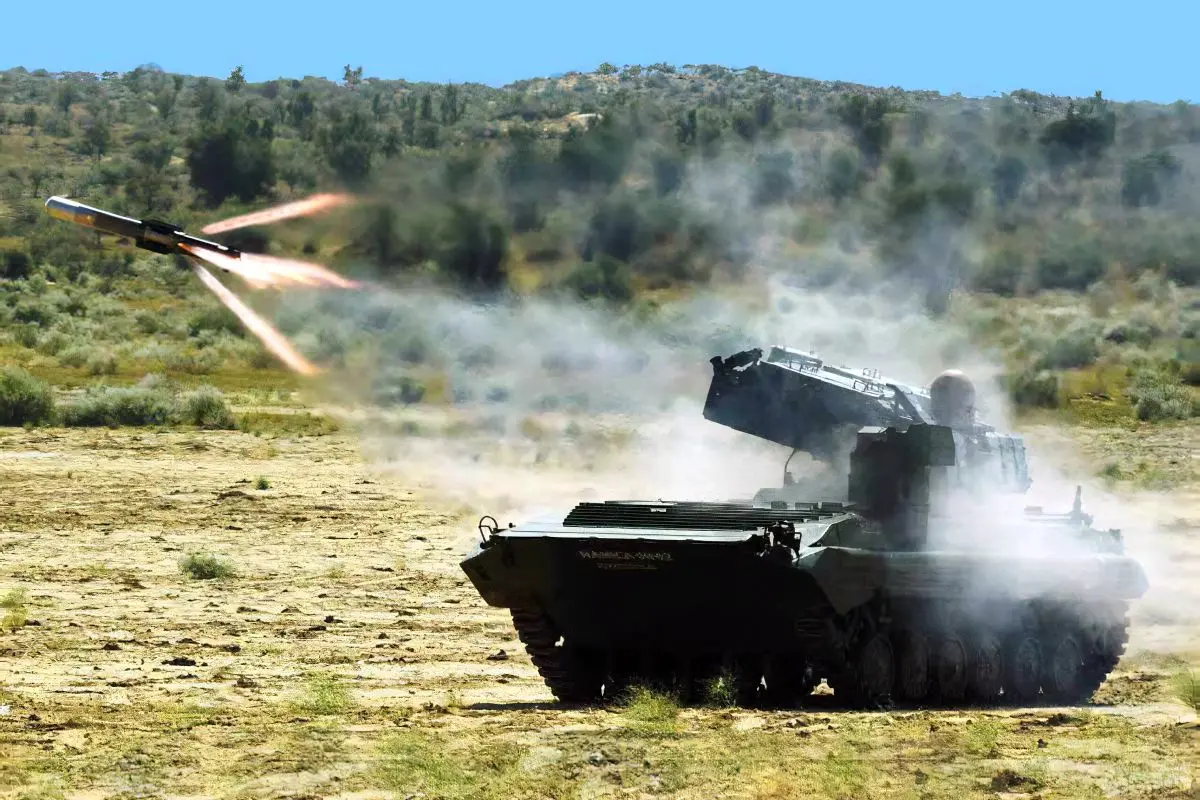
India has taken a decisive step toward strengthening its armoured warfare capabilities. The Ministry of Defence has approved the Nag Mk-II missile system for induction, marking a major milestone in anti-tank and anti-armour warfare. This move not only enhances India's frontline readiness amid growing tensions with China and Pakistan but also underlines the country’s push for self-reliance in defence production.
In a Press Information Bureau release on October 23, 2025, the Defence Ministry confirmed the Defence Acquisition Council's approval for the Nag Mk-II missile system, paving the way for its induction into the Indian Army.
According to The Economic Times, the Army will procure 2,408 Nag Mk-II missiles along with 107 NAMICA 2 tracked carriers -- armoured vehicles designed to carry, aim, and launch the missiles directly on the battlefield. The system is completely indigenous, developed and produced by Bharat Dynamics Limited (BDL), the country's lead missile manufacturer.
Battle-tested and ready for action
At the heart of this programme is the Nag Mk-II, a third-generation, fire-and-forget missile that requires no further guidance once launched. It was successfully tested at Pokhran in January 2025, where it was fired at both short and long ranges under Army observation.
The tests also validated the performance of the new NAMICA carrier, after which the Defence Ministry declared the system ready for induction.
The land-launched Nag family combines smart sensors and advanced flight logic to destroy modern armoured vehicles. The Nag Mk-II, effective from 500 metres to 4 kilometres, improves on the earlier variant with better accuracy, range, and reliability.
At its core lies an imaging infrared seeker -- a heat-detecting sensor that locks onto targets like a thermal camera, even through smoke, dust, or darkness.
The missile uses top-attack flight logic, striking from above, where tank armour is weakest. Its tandem high-explosive anti-tank (HEAT) warhead uses two explosive charges -- the first to break through protective tiles, and the second to pierce the main armour.
These protective tiles are known as explosive reactive armour (ERA) -- thin plates on tanks that explode outward on impact to disrupt incoming attacks. The Nag's dual-charge design defeats ERA effectively, ensuring the missile can destroy even the most heavily armoured targets. Together, its seeker, flight logic, and warhead create a deadly and precise anti-tank weapon system.
Smart design, powerful mobility
Data from Bharat Dynamics shows the land-based Nag weighs 42 kilograms (all-up weight), has a 150 mm diameter, flies at a speed of 220–230 metres per second, and works in all weather, day or night. These features provide commanders with a reliable and predictable performance standard as the Mk-II enters full service.
The NAMICA 2, built on the Indian BMP-2 Sarath chassis, is a tracked armoured vehicle that serves as the missile’s launch platform. It includes a retractable, armoured launcher that can fire multiple canisterized missiles -- each missile stored and launched safely from its sealed tube. It also features thermal imagers (to spot targets using heat signatures even at night), a laser rangefinder (to measure target distance for precision), and an auxiliary power unit (to power systems quietly when the main engine is off).
Most importantly, it offers NBC protection, shielding the crew from nuclear, biological, and chemical threats in war zones.
Upgraded Engineering and Tactical Advantage
The Mk-II carrier has been redesigned with an improved fire-control system and a new launcher layout, allowing it to fire missiles faster after short halts. It also enables smoother hunter-killer coordination between the commander’s sight (for spotting) and the gunner's sight (for firing).
In simple terms:
Fire-control system: A computer network that detects targets, aims the launcher, and times the shot.
Launcher layout: How missile tubes are arranged for faster reloads.
Salvo employment: Firing several missiles in quick succession to overwhelm targets.
Hunter-killer handoff: When the commander identifies a target and passes control to the gunner to engage it.
The vehicle also boasts amphibious mobility, allowing it to move through shallow water or flooded terrain, and low ground pressure, meaning it won't sink into soft desert sand or marshy soil. These capabilities make it equally effective across India's varied battle zones -- from Punjab's canal belts to Rajasthan's deserts.
Symbol of self-reliance
This large-scale indigenous order not only reduces India's procurement risks but also strengthens domestic production lines under Aatmanirbhar Bharat. It helps build long-term expertise at BDL and its partner industries, ensuring that spare parts, seeker maintenance, and logistics remain under Indian control and not dependent on any foreign nation.
In essence, the Nag Mk-II and NAMICA 2 represent far more than just new military hardware. They are strategic assets -- industrial and deterrent tools that embody India's growing defence independence and readiness to counter real-world threats from its borders.
With this, India is not merely buying weapons -- it is building confidence, strengthening sovereignty, and sending a clear message: the nation’s security and innovation will move forward on its own terms.
The author is a defence, aerospace & geopolitical analyst.