SPECIALSWhy IAF sees Rafale and Su-30MKI fighters working as a team, not as rivals
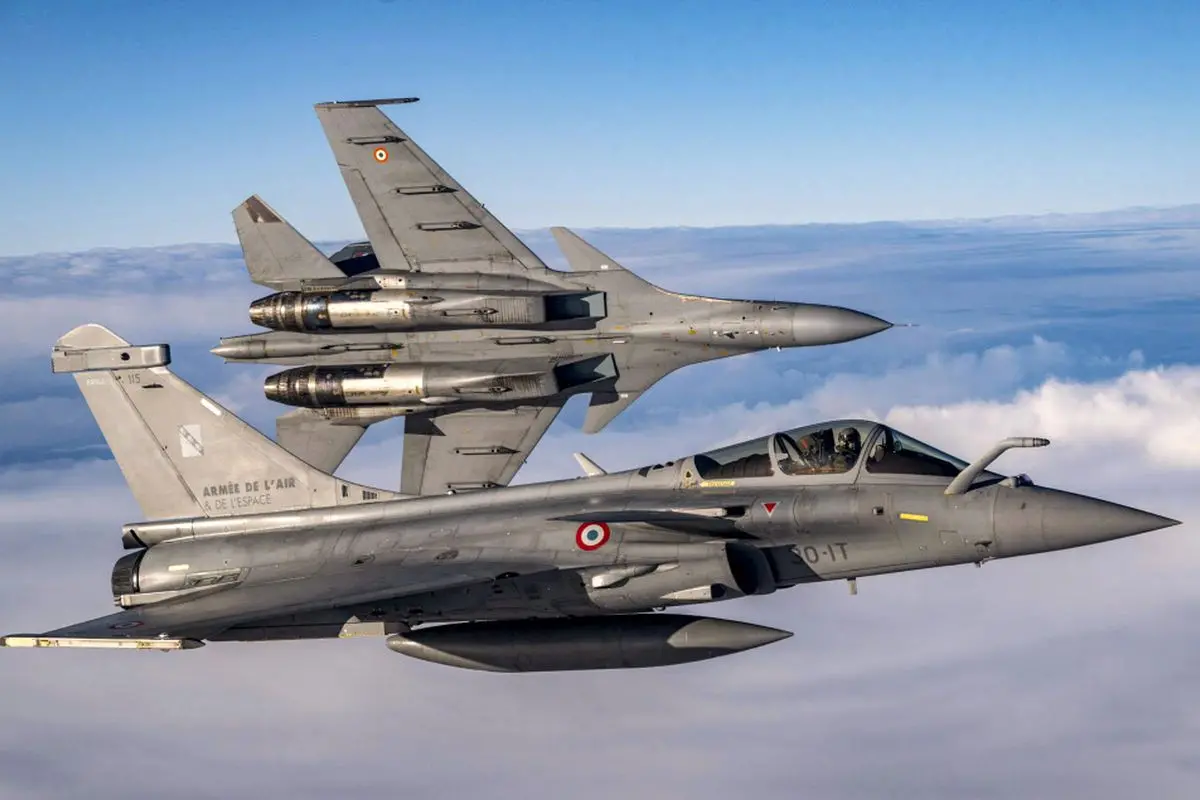
In the Indian Air Force's cockpit, the future of air combat will be shaped less by sheer size and more by who sees whom first. As New Delhi bets on a mix of heavy Su-30MKI "Flanker" squadrons and sleek Dassault Rafale omnirole jets, a quiet revolution is underway in how India plans to fight beyond visual range.
The Rafale is much smaller than the Su-30MKI. Because of this, enemy radars find it harder to spot, track, and lock on to the Rafale. The Su-30MKI is a big, powerful, all-weather fighter. It was mainly built for long-range air superiority missions, meaning it can control the skies from a distance. Picture it as a strong guardian that watches over vast areas. On the other hand, the Dassault Rafale is a medium-sized jet that has become famous as one of the world's best omnirole fighters. This means it can do many different jobs in a single mission. It can fight enemy jets in the air, drop bombs on ground targets, strike deep inside enemy land, protect its own planes, gather information through reconnaissance, and even help in naval operations.
Also Read: AMCA project: India's largest fighter jet programme moves to partner selection phase
When it comes to close air combat, the Su-30MKI shines with its amazing ability to change direction quickly. It can make sharp turns fast and keep turning smoothly during long dogfights without losing control. Its smaller turning circle lets it stay right behind enemy aircraft. This jet is "supermaneuverable". Even at low speeds, it can point its nose almost anywhere. It does this with special 3D thrust vectoring technology, where the engine nozzles move to help steer the plane. So, the Su-30MKI does not always need high speed for tough moves -- it dances in the sky with power.
The Rafale, however, holds a clear edge in sensors and detection. Although the Su-30MKI has a powerful radar in terms of electricity, the Rafale uses a modern AESA radar. This radar is more advanced, quicker, and tougher for enemies to jam or detect. The Rafale's front design also gives it a much smaller radar cross-section, so enemy radars see it as a tiny object. In easy words, the Rafale can often find enemy planes first while staying hidden longer. This gives it the famous "see first, shoot first" advantage -- it detects, locks on, and fires before the other pilot even knows there is danger.
The Rafale was the first European fighter to get an advanced AESA radar, the Thales RBE-2AA, which started service in 2012. It tracks many targets fast, works accurately, and fights enemy jamming better than old systems. For ground attacks, the Rafale performs better because of its smart electronics and precise targeting. It can find targets clearly, hit them accurately, and share information quickly with friendly planes. It works like a smart team player in the sky, making attacks more successful and reducing mistakes.
Also Read: 5 reasons mega Rafale fighter aircraft buy will reshape India's air power
The Su-30MKI, being larger, can carry more bombs and missiles. But sometimes it may need to fly closer to the target to attack properly. One big reason India bought the Rafale was its advanced missiles like the powerful MBDA Meteor for long-range air-to-air fights and the MICA system. These give the Rafale strong reach and accuracy, helping it fight better and survive longer.
On the money side, the Su-30MKI is much cheaper to buy and maintain over the years. This makes it a smart choice for carrying heavy loads on long missions. Yet both jets are valuable for the Indian Air Force. Future wars will need them to work together as a team. Each has its own strengths -- the Su-30MKI's power and size, and the Rafale's smart technology and flexibility. When used side by side, they create a much stronger force in the sky.
Also Read: Rafale or Su-57: How Vietnam’s fighter jet decision could reshape Indo-Pacific power balance?
In the end, these two fighters show how different designs can help protect the nation. Their combination brings balance, power, and smart fighting ability to India’s defence.
The author is a Defence, Aerospace & Geopolitical analyst