Indian Air Force faces a fighter shortage today, what needs to change
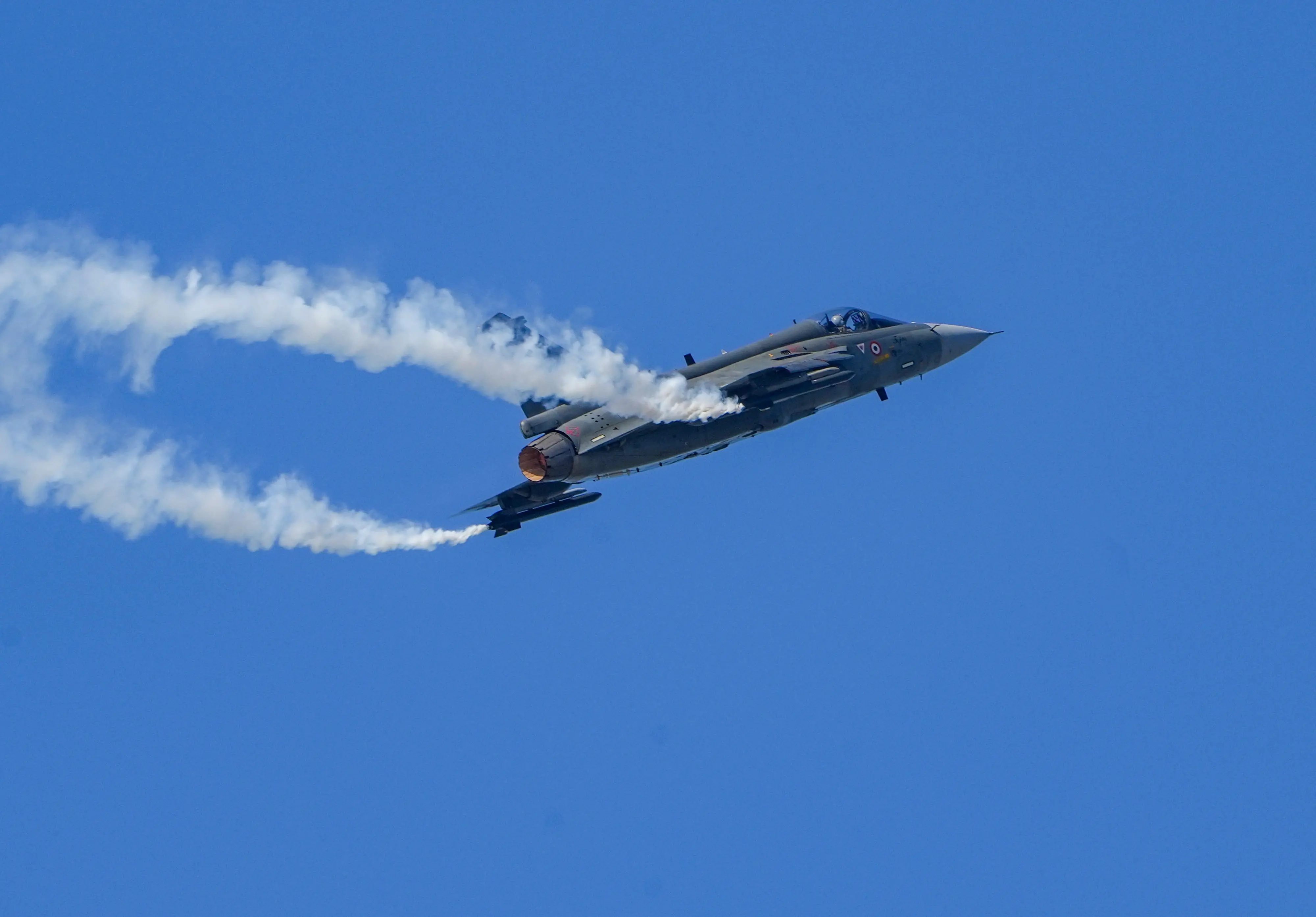
The Indian Air Force is facing a problem that cannot be solved by buying one new aircraft or signing one large defence contract. Its fighter fleet is shrinking, new aircraft are not arriving quickly enough, and several major programmes that are expected to strengthen India's air power are still some years away from delivering aircraft in meaningful numbers.
The warning from Air Chief Marshal A.P. Singh is therefore important. Speaking at his final annual press conference before retiring on October 31, the Air Chief said the IAF needs to induct 36 to 40 fighter aircraft every year for the next few years simply to prevent its fighter strength from declining further. The IAF currently has around 29 fighter squadrons, against an authorised strength of 42.
The numbers tell only part of the story. Behind them is a larger question, Can India build and maintain the air power it needs at the speed required?
The gap between what India has and what it needs
For decades, the IAF has operated with a fighter fleet built around several generations of aircraft. But many of those aircraft are now reaching the end of their service lives.
The retirement of the MiG-21 has further reduced the fighter fleet, while other aircraft, including the Jaguar and MiG-29, will also eventually require replacement or retirement. Earlier assessments have already pointed to the challenge created by the gap between aircraft leaving service and new aircraft entering the fleet. This creates a simple but serious problem.
If an old aircraft is retired today but its replacement arrives several years later, the IAF temporarily loses combat capacity. If that happens repeatedly across different aircraft types, the gap becomes structural rather than temporary.
That is why the Air Chief's requirement for 36 to 40 new fighters every year is significant. It is not simply a target for expansion. It is also a requirement for replacing ageing aircraft at a rate that prevents further decline.
Tejas was supposed to be a major part of the answer
The indigenous Tejas fighter programme is central to India's plans to rebuild the IAF's fighter strength.
India has placed orders for 180 Tejas Mk1A aircraft, 83 aircraft under the first contract and another 97 under a subsequent order. The Mk1A is intended to bring improved radar, electronic warfare capabilities and other enhancements compared with the earlier Tejas Mk1. But the programme has faced delays.
The first deliveries were originally expected much earlier, but the aircraft programme has been affected by delays involving the supply of engines, integration, testing and certification.
The latest warning from the Air Chief makes clear why this matters operationally.
“There is some extra delay, and there is no doubt that it is going to hurt us,” Singh said about the Tejas Mk1A delays. For the IAF, the issue is not simply whether the Tejas is eventually delivered. The bigger issue is when the aircraft arrive and at what production rate.
An aircraft delivered several years later than planned cannot immediately fill a gap that is already affecting the force today.
Production speed is now as important as aircraft design
India has made considerable progress in developing its own military aircraft. But developing an aircraft and producing it in large numbers are two very different challenges. The IAF needs a production system capable of delivering dozens of fighters every year consistently.
That means HAL and its wider supplier network must be able to secure engines, avionics, radar systems, weapons, components and other equipment without repeated disruptions.
The lesson from the Tejas delays is therefore bigger than one aircraft programme. India needs to ask whether its defence manufacturing system can move from project-based production to sustained industrial-scale production.
The country cannot afford to build a sophisticated fighter programme but struggle to produce the aircraft in the numbers and timeframes required by the armed forces.
The 114-fighter MRFA programme
The proposed acquisition of 114 multi-Role fighter aircraft is another major part of the IAF's plan. Air Chief Marshal Singh said he hoped the deal could be signed within the current financial year, which ends in March 2027, although he stressed that negotiations are a two-way process.
The programme is expected to provide a significant boost to the fighter fleet, with the Dassault Rafale currently associated with the proposed acquisition.
But even a signed contract will not solve the problem overnight.
Large fighter programmes take years from contract signing to full operational deployment. Training pilots and ground crews, establishing maintenance infrastructure, integrating weapons and creating an adequate supply chain all take time.
This means India needs to think about the MRFA programme not as a single purchase but as part of a long-term fighter induction plan.
The AMCA question
At the other end of the spectrum is India's Advanced Medium Combat Aircraft, or AMCA.
The programme represents India's ambition to develop a fifth-generation fighter domestically. But an indigenous stealth fighter will take time to develop, test, certify and produce in significant numbers. That creates a potential capability gap.
The IAF needs aircraft now, while some of the most advanced indigenous platforms are programmes for the future. Singh has indicated that if AMCA faces further delays, the IAF may need to consider another option. Russia has offered its Su-57, although Singh made clear that no decision has been taken.
The underlying issue is not necessarily which foreign fighter India should choose.
It is whether India can ensure that there is no long gap between the retirement of existing aircraft and the arrival of their technologically relevant replacements.
More aircraft are not enough
There is another part of the problem that receives less attention, the serviceability factor. Having aircraft on paper does not necessarily mean having the same number available for operations.
The IAF has previously highlighted the importance of improving the serviceability of existing fleets, particularly the Su-30MKI. Better availability of aircraft, faster access to spares and stronger maintenance arrangements can provide additional operational capacity while new aircraft are being inducted. This is where India's MRO and defence manufacturing ecosystem becomes critical.
A fighter sitting on the ground because a component is unavailable is not contributing to operational strength. India therefore needs to strengthen domestic capabilities for maintenance, repair and overhaul, component manufacturing, repair development, testing and certification.
The objective should be simple, keep more aircraft available for longer while reducing dependence on uncertain overseas supply chains.
Engines remain a critical vulnerability
The Tejas experience has also highlighted a broader issue in India's aerospace industry, the importance of aircraft engines. India has developed aircraft, but it does not yet have an indigenous fighter engine ecosystem capable of powering its entire future combat-aircraft programme. The Air Chief has stressed the need for India to develop fighter jet engines domestically.
An aircraft can be designed and manufactured in India, but if a critical component such as its engine depends heavily on an external supplier, production can still be disrupted by supply constraints, geopolitical developments or technology restrictions. For future programmes such as AMCA, engine development therefore needs to be treated as a core national aerospace capability rather than a supporting requirement.
The weapons gap must also be addressed
Modern air power is not simply about the number of fighters in a squadron. A combat aircraft is effective only when it is supported by the right weapons, sensors, electronic warfare systems, communications networks, targeting systems and intelligence.
This means India's air power strategy has to look beyond aircraft acquisition.
The IAF needs adequate stocks of modern air-to-air and air-to-ground weapons, electronic warfare capabilities, airborne early-warning systems, tankers, surveillance assets and unmanned systems. A fighter fleet without sufficient weapons or supporting systems does not provide the same capability as a fully equipped and networked force.
Drones are becoming part of the equation
Singh has described drones as evolutionary rather than revolutionary for the IAF, arguing that unmanned systems should increasingly work alongside manned combat aircraft rather than necessarily form a completely separate force. That approach points towards a future in which a fighter may operate as part of a larger network of manned and unmanned platforms.
For India, this means investment in drones should not be seen as a replacement for fighters. Instead, unmanned aircraft can provide additional surveillance, electronic warfare, strike and support capabilities while helping manned aircraft operate more effectively.
India needs a production roadmap, not isolated programmes
Perhaps the most important lesson from the current situation is that India's fighter requirement cannot be addressed through isolated procurement decisions. The country needs a clear 10- to 20-year fighter roadmap. That roadmap should answer several basic questions like how many fighters does India need each year? how many can domestic industry realistically produce? when will older aircraft retire? when will Tejas Mk1A, Tejas Mk2 and AMCA become available in meaningful numbers? how will foreign aircraft fit into the fleet? where will the engines come from? what weapons will accompany the aircraft and how will India maintain these aircraft for 30 to 40 years?
Without answers to these questions, individual contracts can continue to move forward while the overall fleet still struggles to maintain its strength.
Industry needs predictable demand
The answer also lies partly with India's private aerospace industry. A sustained fighter production programme requires hundreds of suppliers working to aerospace standards. It requires investment in precision manufacturing, composites, electronics, avionics, machining, testing and quality assurance.
But companies are more likely to make those investments when they can see long-term and predictable demand. India therefore needs to create an environment in which defence companies are not merely suppliers for individual contracts but long-term partners in building an aerospace ecosystem. This is particularly important for engines, components and MRO.
A stronger domestic supply chain would reduce the risk that a shortage of one component can slow down an entire aircraft programme.
Faster decisions are equally important
The IAF's current situation also raises questions about the time taken to move from requirement to contract and then from contract to delivery. Defence acquisition is necessarily complex because aircraft are expensive and technologically sensitive. But long procurement cycles can become a problem when the operational requirement is urgent.
India needs a system in which urgent capability gaps can be identified early and addressed before they become crises. At the same time, contracts should be based on realistic production schedules. If an industry partner cannot deliver a particular quantity by a particular date, that reality needs to be understood when the contract is signed.
The objective should not be to announce an ambitious delivery timeline. It should be to deliver operational capability when the military needs it.
MRO can buy India valuable time
While new fighters are being ordered and built, India can also strengthen what it already has. Improving the availability of the existing fleet can provide an important bridge until new aircraft arrive.
This requires better access to spares, domestic component repair, engine maintenance, upgrades, life-extension programmes and stronger relationships between the armed forces, OEMs and Indian MRO companies. The growth of India's defence MRO sector therefore has implications beyond the commercial aviation industry.
Every additional capability developed domestically to repair, maintain and upgrade military aircraft contributes to India's ability to sustain air power during prolonged operations.
The real challenge is time
India does not lack plans. It has the Tejas Mk1A, Tejas Mk2, AMCA, MRFA and several other aerospace programmes at different stages. It also has a growing defence manufacturing base and an increasingly capable private-sector aerospace industry. The challenge is time.
Aircraft that are needed today cannot be replaced by aircraft that may arrive many years later. The IAF's fighter shortage has therefore become a test of India's ability to connect three things namely military requirements, industrial capacity and procurement speed.
Air Chief Marshal A.P. Singh's call for 36 to 40 fighters a year provides a clear measure of the scale of the challenge. But the answer will require more than simply reaching that number.
India needs aircraft that arrive on time, engines that are available, weapons that are ready, maintenance systems that keep them flying and an industrial ecosystem capable of sustaining them for decades.
The immediate priority is to stop the decline in fighter numbers. The longer-term objective must be to build an Indian aerospace system capable of delivering and sustaining combat capability continuously.
For the IAF, the next few years will therefore be critical. The decisions taken now will determine not only how many fighters India has, but how quickly the country can build the air power it needs for the decades ahead.