3.29 lakh hectares of paddy fields gone in 30 years, leaving Kerala with fewer flood buffers
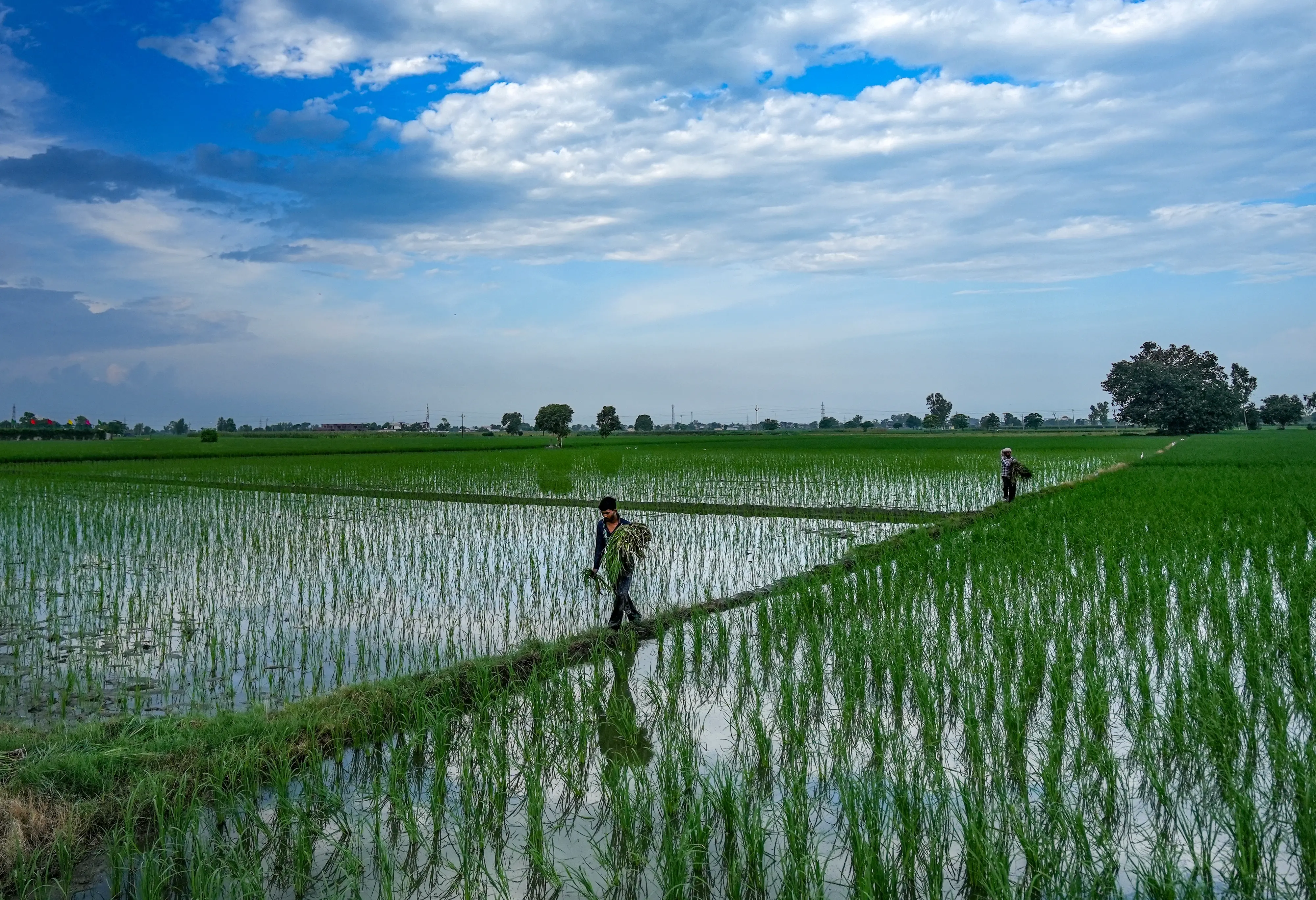
Kozhikode: Over the past 30 years, Kerala has lost paddy fields capable of storing at least 32,900 crore litres of water. As floodwater rushing down from the highlands overwhelms low-lying areas, the importance of these lost fields is becoming increasingly evident.
Since 1994, 3.29 lakh hectares of paddy fields have been reclaimed across Kerala. Of this, 60,650 hectares were reclaimed after 2008, when the Kerala Conservation of Paddy Land and Wetland Act came into force.
On average, one hectare of paddy field can hold around 10 lakh litres of water. With these fields disappearing, the state has fewer natural areas to absorb and retain the water flowing down from the hills, environmental scientists say.
Paddy field area has fallen sharply
The scale of the decline can be seen in the state's paddy field area over the years.
Kerala had 5,03,300 hectares of paddy fields in 1994-95. The area fell to 3,49,774 hectares by 1999-2000 and 2,89,974 hectares by 2004-05.
It declined further to 2,34,013 hectares in 2009-10 and 2,02,267 hectares in 2019-20. By 2023-24, the area had fallen to just 1,73,465 hectares.
This steady loss has also reduced the land available to temporarily hold large volumes of rainwater before it flows further downstream.
Thousands of water bodies are unusable
The condition of Kerala's water bodies is another concern. A large number are no longer capable of being used effectively for storing or managing water, adding to the state's flood-related problems.
According to the Irrigation Department, Kerala has 55,734 water bodies, of which 51,007 are ponds.
However, 9,184 water bodies are currently not in use for various reasons. These include water bodies that have dried up, become filled with silt or deteriorated beyond repair.
The loss of their storage capacity means there are fewer places available to retain excess rainwater during periods of intense rainfall.
Natural flood-control system has been destroyed
“Water coming down from the hilly areas is first held back by the trees and small forests adjoining them. They absorb some of it. The water that reaches the lowlands is then collected and retained by paddy fields, wetlands and rivers. The remaining water flows into rivers, backwaters and eventually the sea. Deforestation, the disappearance of paddy fields, the narrowing of rivers and encroachment into backwaters have together destroyed this natural flood-control system,” said Sreedhar Radhakrishnan, an environmental scientist.
Even drains are being built without regard to water flow
“The major problem we are facing now is that more rain is falling within a shorter period. The areas capable of holding back and absorbing the water that arrives all at once are shrinking. When drains are concreted, water can no longer seep into the soil,” said M.V. Shashilal, retired specialist in hydrogeology with the Department of Land Use.