
Donald Trump’s intervention, Elon Musk’s backing and assurances from US officials helped Jensen Huang return as Nvidia CEO just 11 days after his resignation.
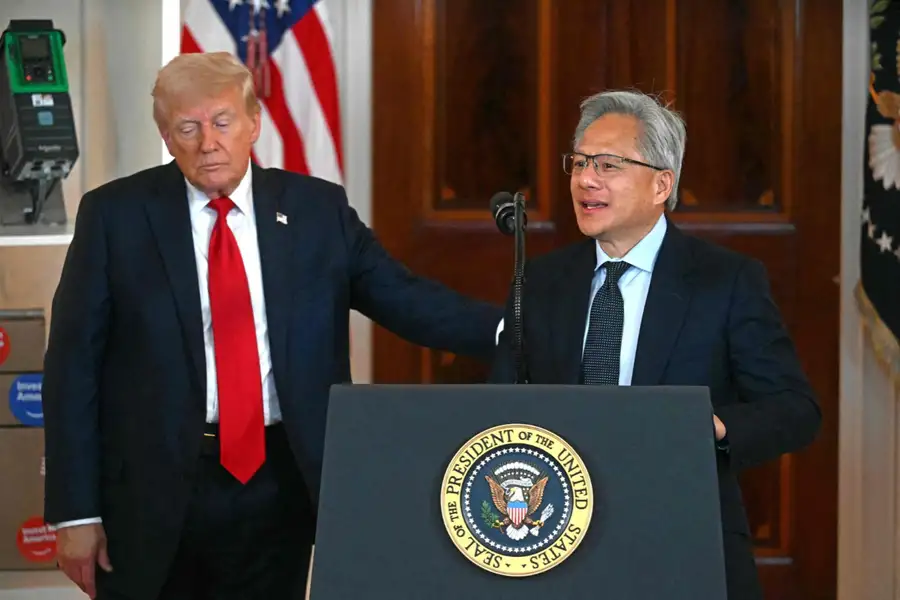
New Delhi: Eleven days after stepping down amid a controversy involving alleged extramarital affairs and a suspected Chinese intelligence link, Jensen Huang is back at the helm of Nvidia.
His dramatic return as chief executive marks an extraordinary reversal for the world's most valuable chipmaker, particularly after its board had publicly ruled out reinstating him just days earlier.
So, what changed between November 12, when Huang resigned, and November 23, when Nvidia announced his return?
A combination of political backing, support from influential technology leaders, employee pressure and assurances from US government officials appears to have helped turn the tide in his favour.
Here are five factors that helped bring Huang back.
1. Donald Trump's backing proved crucial
US President Donald Trump emerged as one of the most influential voices backing Huang's return.
Even as the controversy unfolded, Trump publicly expressed confidence in the Nvidia co-founder, calling him an important figure in the American technology industry.
On November 16, Trump said he would not object to Huang's reinstatement.
He subsequently urged Nvidia's board to bring him back, arguing that the decision would benefit both the company and the United States.
Trump later revealed that he had also lobbied the board privately. Following Huang's reinstatement, the President claimed that the directors had ultimately acted in accordance with what his administration wanted.
2. Elon Musk and Silicon Valley rallied behind him
Huang also found support among some of the biggest names in the technology industry. Tesla and SpaceX chief Elon Musk criticised Nvidia's decision to part ways with its co-founder, arguing that replacing someone with Huang's experience and industry relationships would be extremely difficult.
A 'Stand with Jensen' petition also gathered momentum, attracting support from current and former Nvidia employees, investors and prominent technology figures.
The campaign called on the board to reconsider its decision and allow Huang to return while the company continued its investigation.
3. Huang signalled he was ready for a second chance
Huang did not immediately rule out returning. On November 17, he publicly said he would be honoured to resume his position if the board believed it was in Nvidia's best interests. He also acknowledged making serious mistakes in his personal life. However, the board initially appeared unwilling to reconsider. Chairman Harvey Jones said Nvidia had unanimously accepted Huang's resignation and had no intention of reinstating him. That position would change within six days.
4. US government assurances addressed national security concerns
One of the biggest obstacles to Huang's return was not simply the controversy over his personal life, but national security questions about his alleged association with Alice Huang, a businesswoman linked to Singapore-based Megaspeed.
US intelligence officials reportedly suspected Alice Huang of having links to China's intelligence apparatus. Investigators were also examining concerns about the possible diversion of advanced Nvidia chips to China.
The allegations placed Nvidia under greater scrutiny in Washington, particularly because of the company's importance to the global artificial intelligence industry and US technology policy.
In its November 23 announcement, Nvidia said its board had received input from senior US government officials.
Based on that input, the directors concluded that Huang's reinstatement posed no national security risk.
This assurance helped address a major concern about his return, although it did not end the wider investigations.
5. Nvidia's dependence on its co-founder
Huang's importance to Nvidia also made his departure a difficult decision for the company. He co-founded Nvidia in 1993 and has led its transformation from a graphics chipmaker into a global powerhouse in artificial intelligence computing.
His technological expertise, longstanding relationships with industry leaders and role in shaping the company's business strategy have made him central to Nvidia's growth.
The support he received from employees, investors and influential technology executives reflected the belief that finding an immediate replacement for a founder so closely associated with the company's success would be challenging.
What happens next?
On November 23, Nvidia announced that its board had unanimously reinstated Huang as president, CEO and board director with immediate effect.
The decision also ended the interim leadership arrangement under chief financial officer Colette Kress, who had taken charge following his resignation and will now return to her CFO responsibilities.
However, Huang's return does not mean the controversy is over. Nvidia's internal investigation is continuing, while US authorities are examining the allegations involving Alice Huang and possible violations of restrictions on advanced chip exports to China.
For now, Huang has reclaimed the leadership position he held for more than three decades.
His return in just 11 days highlights how political backing, corporate interests and the influence of a company's founder can converge to produce a dramatic boardroom reversal.
Published: 24 Nov 2026, 08:36 am IST


ABOUT THE AUTHOR

Related Topics
Disclaimer: Kindly avoid objectionable, derogatory, unlawful and lewd comments, while responding to reports. Such comments are punishable under cyber laws. Please keep away from personal attacks. The opinions expressed here are the personal opinions of readers and not that of Mathrubhumi.