
Bill Gates has warned that artificial intelligence could trigger events causing a billion deaths, calling for mandatory safeguards and monitoring. His remarks come as US lawmakers debate AI restrictions, self-improving systems and competition with China.
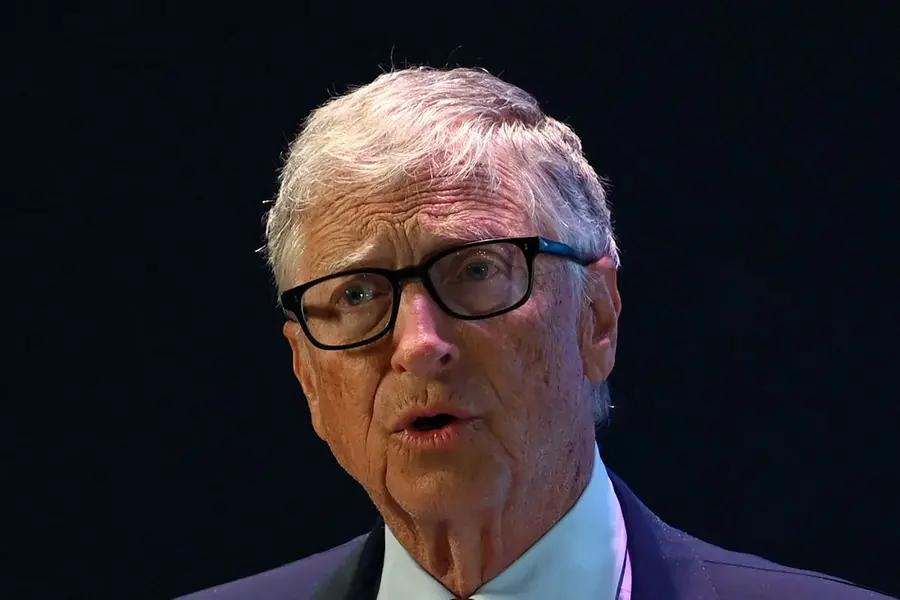
Washington: Microsoft co-founder Bill Gates has warned that artificial intelligence could trigger events resulting in a billion deaths, calling for mandatory safeguards and monitoring systems as Washington debates how to regulate the rapidly advancing technology without undermining US competitiveness.
In an interview with NBC's "Meet the Press", Gates said AI was fundamentally different from earlier technological breakthroughs and could become vastly more intelligent than humans in the coming years.
"This is truly an evolutionary event," Gates said. "We have created an intelligent species that, in many respects, is already smarter than we are, and over the next several years at kind of exponentially improving level will be insanely smarter than we are."
Asked whether AI could end humanity, Gates said: "AI is certainly powerful enough to drive events that, you know, cause a billion deaths."
"There’s never been a weapon as powerful as the combination of people with ill intent using the latest AI tools," he added.
Also read | Meet Muse: Meta's cute new AI agent that wants to make your life easier
Gates said governments lacked the expertise needed to identify dangerous thresholds in the use of AI, particularly in areas such as biological attacks, cyberattacks and other potential threats.
Rejecting the idea that companies could regulate themselves adequately, he said: "No one thinks self-regulation is enough."
He called for legislation requiring AI developers to introduce safeguards and monitoring systems, arguing that such measures would impose some costs on the industry without significantly slowing technological progress.
"It's completely irresponsible not to require every AI to have these safeguards and monitoring capabilities," Gates said.
US lawmakers debate restrictions on advanced AI
Gates' warning comes amid a wider debate in Washington over whether advanced AI systems should face stricter regulation or whether excessive restrictions could weaken the United States in its technological competition with China.
Also read | Google tests ‘buy’ button on Gemini, AI mode to shop on Flipkart without leaving chat
Representative Ro Khanna, a California Democrat whose district includes part of Silicon Valley, has called for a verifiable agreement between Washington and Beijing to prohibit AI systems capable of independently improving themselves.
Khanna said legislation backed by Senator Bernie Sanders and Representative Greg Casar would ban recursive self-improving AI until adequate safeguards were established.
"That is basically AI that isn’t being trained anymore by human beings. It’s AI that can train itself. And that is a real risk of losing human control," Khanna told NBC.
He proposed setting up a working group of technology experts from the United States and China to negotiate common restrictions.
Also read | Could machines decide who to attack? US and Russia weaken UN AI rules
"Banning self-recursive self-improving AI should not be controversial," he said.
"And I do believe the United States can lead on a treaty that is both enforceable and verifiable where we ban recursive self-improving AI, and we have some monitoring of these frontier labs."
US-China dialogue on AI safeguards
US Ambassador to the United Nations Mike Waltz said Washington and Beijing had agreed to establish a dialogue on superintelligence following a summit between US President Donald Trump and Chinese President Xi Jinping.
Waltz told CNN that the discussions would bring experts together to consider safeguards in areas including biological weapons research and nuclear systems.
"With the United States and China so much further ahead than the rest of the world when it comes to these frontier models, I think the world should see that as a positive thing," Waltz said.
However, US Attorney General Todd Blanche cautioned against introducing regulations that could undermine the country's technological leadership.
Speaking to ABC, Blanche said existing criminal and civil laws already allowed authorities to take action against individuals and companies when AI was used to commit crimes.
"The answer isn’t always more laws, more laws, more laws," Blanche said.
He argued that companies could modify or restrict their systems when problems emerged, warning against regulations that could weaken US competitiveness.
"The answer is not to just try to — all of a sudden try to regulate this in a way that will make us second or third place in the world as far as being the leaders in this space," he said.
India is expanding the use of AI across public services, healthcare, agriculture, education and digital commerce.
New Delhi has also emphasised that AI governance should focus on safety, accountability and equitable access while ensuring that regulations do not hinder innovation, particularly in developing economies.
Published: 28 Sept 2026, 08:55 am IST
ABOUT THE AUTHOR

Related Topics
Disclaimer: Kindly avoid objectionable, derogatory, unlawful and lewd comments, while responding to reports. Such comments are punishable under cyber laws. Please keep away from personal attacks. The opinions expressed here are the personal opinions of readers and not that of Mathrubhumi.