
Driven by the need to reduce car weight, escalating costs, and engineering complexity, the new regulations aim to restore traditional V8 acoustics, nimble racing, and close overtaking.
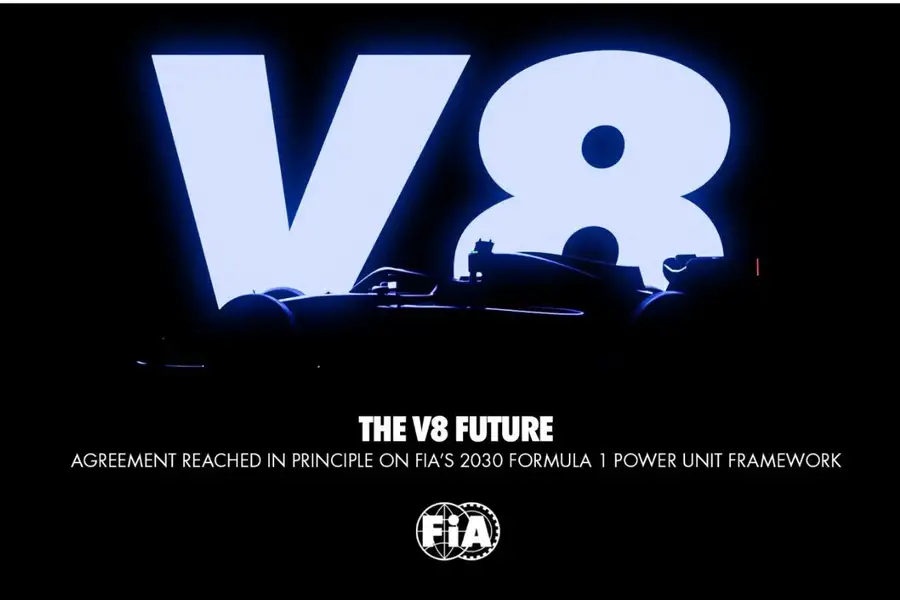
Las Vegas: Formula 1’s agreement in principle to reintroduce V8 turbo-hybrid engines in 2030 marks one of the sharpest technical U-turns in motorsport history, driven by an urgent need to reverse the soaring weight, expense, and complexity of its current power units. The 2026 regulatory cycle, which introduced 1.6-litre V6 hybrids featuring a vastly expanded 350kW electrical MGU-K contribution, prompted widespread concern across the paddock regarding heavy chassis and intricate energy-management demands. Consequently, following crucial discussions between the Fédération Internationale de l’Automobile (FIA), Formula One Management, and power-unit manufacturers earlier this week, stakeholders reached a broad consensus to cut the existing five-year cycle short by a season and transition to a 2.1-litre turbocharged V8 platform with limited hybridisation.
Reclaiming Acoustic Emotion and Agile Racing
Beyond engineering pragmatism, the pivot is aimed squarely at restoring the visceral spectacle and close wheel-to-wheel racing that defined earlier eras before V8s were phased out after 2013. The proposed 2030 architecture will operate on fully sustainable fuels while stripping away heavy electrical components to produce noticeably lighter, more cost-effective, and more nimble racing machines—potentially incorporating a driver-controlled KERS-style boost system for overtaking. FIA president Mohammed Ben Sulayem captured the sentiment on social media on Tuesday, noting that governing bodies had listened to supporters longing for the return of authentic V8 acoustics, while McLaren CEO Zak Brown confirmed during the Las Vegas Grand Prix weekend that teams are excited by the consensus and are now focused on finalising the finer details.
Reshaping Manufacturer Strategies Ahead of Shanghai Ratification
The strategic logic behind the U-turn is already triggering immediate adjustments across the grid’s long-term technical blueprints. Speaking at an FIA press conference in Las Vegas on Thursday, 19 November 2026, Cadillac CEO Dan Towriss revealed that General Motors has altered its works engine timeline in response to the impending shift, opting to remain a Ferrari customer through 2029 so it can debut its in-house power unit alongside the new V8 formula in 2030 rather than build a one-year V6 engine. Similarly, Alpine executive Flavio Briatore confirmed to media in Las Vegas that while final signatures remain pending, broad alignment across the paddock is virtually settled. With Motorsport.com reporting that the definitive regulatory framework will be presented to the FIA World Motor Sport Council in Shanghai next month for formal ratification, Formula 1 is poised to blend modern sustainability with its most celebrated mechanical heritage.
Published: 20 Nov 2026, 08:16 pm IST


ABOUT THE AUTHOR

Related Topics
Disclaimer: Kindly avoid objectionable, derogatory, unlawful and lewd comments, while responding to reports. Such comments are punishable under cyber laws. Please keep away from personal attacks. The opinions expressed here are the personal opinions of readers and not that of Mathrubhumi.