
The Problem: Lusail’s high-speed layout and aggressive kerbs subject front tyres to intense lateral energy and impact fatigue.
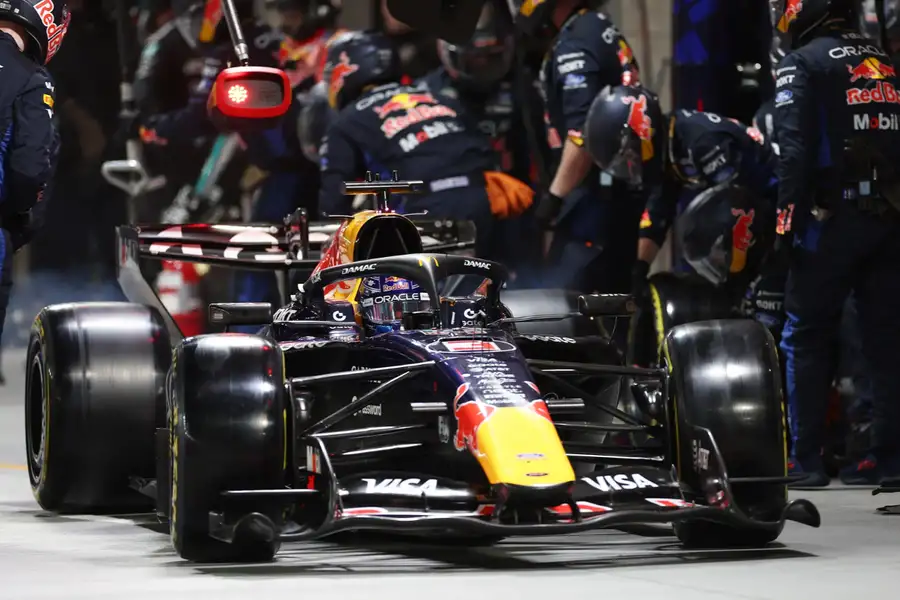
Lusail: Formula 1’s most unusual sporting intervention is back in force this weekend at the Qatar Grand Prix, where Pirelli and the FIA have capped each tyre set at a maximum of 27 laps around the Lusail International Circuit. While the rule guarantees at least two pit stops during Sunday’s 57-lap race, it is far from a gimmick; rather, it is the product of repeated tyre scares at Lusail since Formula 1 first visited the venue in 2021. Originally built for MotoGP, the 5.4-kilometre layout strings together high-speed corners with almost no slow sections to unload the rubber, subjecting front tyres, especially the front-left, to relentless lateral energy.
Debut Drama and the 2021 Kerb Punctures
Trouble surfaced during the inaugural Qatar Grand Prix in November 2021, when four drivers, Valtteri Bottas, George Russell, Nicholas Latifi, and Lando Norris, suffered sudden front-left punctures late in the race while attempting ambitious one-stop strategies. Following post-race laboratory inspections, Pirelli reported on Formula1.com that aggressive, repeated impacts over Lusail’s high-frequency "pyramid" kerbs at high speed had damaged the internal sidewall construction, causing rapid pressure loss and structural collapse after extended stints.
The 2023 Crackdown and 2024’s Unregulated Scares
When Formula 1 returned to Qatar in October 2023, Friday practice inspections revealed microscopic separation in the sidewall between the topping compound and the carcass cords—again triggered by impact fatigue from the redesigned kerbs. To prevent high-speed blowouts, the FIA imposed an emergency maximum stint limit of 18 laps per tyre set for Sunday’s race, forcing teams into a mandatory three-stop affair. Officials lifted the lap cap for the 2024 edition after modifying the kerbs further, yet trouble returned during the race when both Lewis Hamilton and Carlos Sainz suffered front-left punctures roughly 35 laps into their stints. Subsequent post-race analysis showed several front-left tyres reaching maximum wear, prompting Pirelli and the FIA to reintroduce a 25-lap limit for 2025, a weekend that still saw Pirelli raise minimum front pressures mid-event after discovering deep cuts from loose gravel dragged onto the track.
How Past Incidents Shaped 2026’s 27-Lap Rule
Those cumulative lessons directly inform this weekend’s regulations. According to Pirelli chief Formula 1 engineer Simone Berra, quoted by Grande Prêmio, indoor testing showed that the lower downforce levels of the 2026 cars allow a two-lap increase over last year’s 25-lap cap without compromising safety, though front tyres can still reach 100 per cent wear after 25 to 26 laps. Coupled with season-high minimum starting pressures of 29psi at the front and 27.5psi at the rear, the 27-lap ceiling stands as a direct response to Lusail’s unforgiving history.
Published: 27 Nov 2026, 03:59 pm IST


ABOUT THE AUTHOR

Related Topics
Disclaimer: Kindly avoid objectionable, derogatory, unlawful and lewd comments, while responding to reports. Such comments are punishable under cyber laws. Please keep away from personal attacks. The opinions expressed here are the personal opinions of readers and not that of Mathrubhumi.