
Charles Leclerc won the 2026 British Grand Prix after a late safety car triggered by Max Verstappen's crash. Here's what the FIA rules say about the redeployment and its impact on the race.
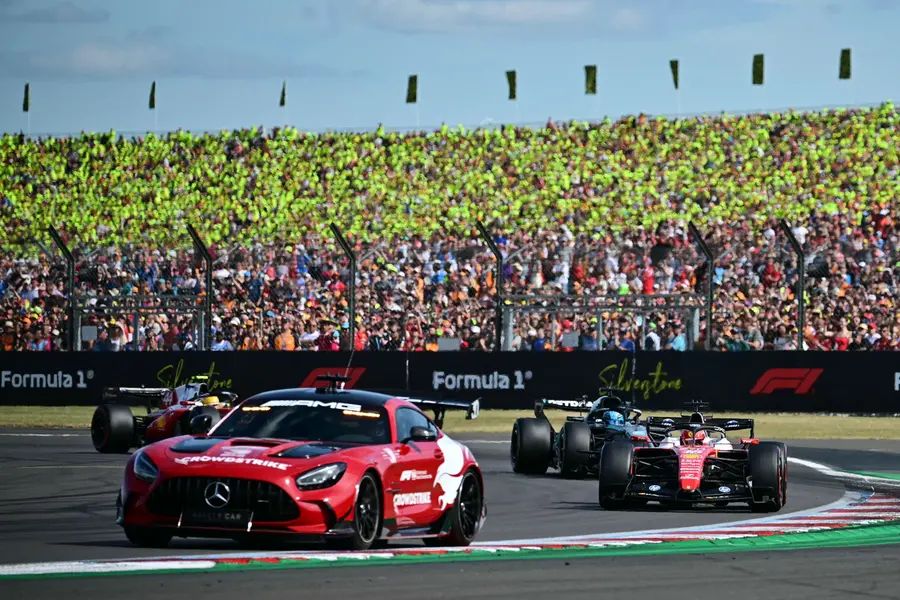
Silverstone produced a tense, late-race safety car drama at the 2026 British Grand Prix, and Charles Leclerc emerged from it with the victory ahead of George Russell in second and Lewis Hamilton in third.
What looked like a straightforward battle for the lead turned into a race-defining neutralisation, where the timing of the safety car mattered as much as raw pace.
The decisive moment came when the race was interrupted by a safety car phase after Red Bull Racing driver Max Verstappen's crash, compressing the field and forcing teams to rethink their strategy on the fly.
Under FIA procedure, that is the kind of situation where control can redeploy the safety car if the circuit remains unsafe or a fresh hazard appears, keeping the race under strict neutralisation until marshals and officials are satisfied the track is ready again.
The FIA has issued an official clarification regarding the late-race Safety Car procedure, attributing the confusion to a software issue rather than an operational error.
Explaining the sequence of events, the governing body said: “The Safety Car period regulation, Article B5.13.5, states that one lap must be completed following the unlapping procedure.
“This process was followed by Race Operations. The ‘Safety Car In This Lap’ message was displayed erroneously due to a software error.”
For Leclerc, the interruption became an opportunity to protect track position and convert it into the win. Russell followed in second, while Hamilton secured the final podium place in third, underlining how quickly Silverstone’s fast, unforgiving layout can turn a race into a strategic test rather than a pure sprint to the line.
What “redeployed” means
“Redeployed” usually means the safety car is sent out again after an earlier safety car period has ended, because the danger has returned or has not fully cleared. The FIA rules say the safety car may be used “to resume a suspended race,” which shows that a new safety car phase can begin as part of restarting control after interruption. In F1-style procedures, the car comes out from the pit lane, lights on, joins the track regardless of where the leader is, and the field forms up behind it .
The British Grand Prix showed why safety car timing is such a powerful force in Formula One: it can erase gaps, reshape pit-stop plans, and hand the initiative to the driver who handles the restart best. At Silverstone, that drama was not just part of the race story — it was the story.
Published: 05 Jul 2026, 09:46 pm IST
Related Topics
Disclaimer: Kindly avoid objectionable, derogatory, unlawful and lewd comments, while responding to reports. Such comments are punishable under cyber laws. Please keep away from personal attacks. The opinions expressed here are the personal opinions of readers and not that of Mathrubhumi.
