
The Asian Games also differ from the Olympics in the range of sports they accommodate
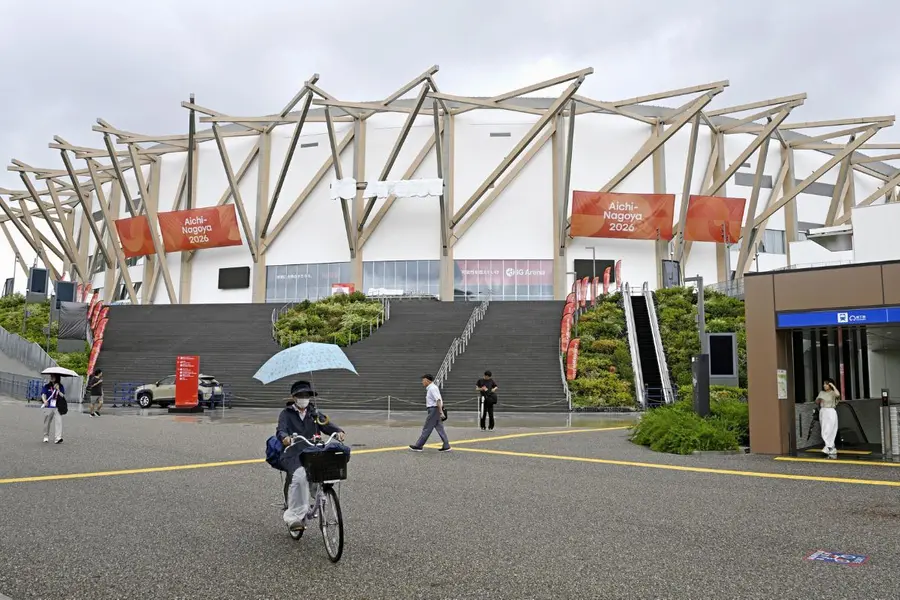
New Delhi: The Asian Games are usually associated with sports such as cricket, hockey, athletics, shooting, badminton and wrestling in India. But the Aichi-Nagoya 2026 edition will also feature several disciplines that remain relatively unfamiliar to the country's mainstream sporting audience.
The 20th Asian Games will be held in Japan from September 19 to October 4. Around 11,000 athletes from 45 countries and regions will compete across 43 sports. India will send a 503-member athlete contingent.
Also Read

Among the lesser-known disciplines featuring in India's campaign are Teqball, Kurash, Soft Tennis, Sepak Takraw and Sport Climbing.
Here is what you need to know about them.
1. Teqball: Football meets table tennis
Teqball combines elements of football and table tennis. Players use a specially designed curved table and control a football without using their hands or arms.
Competitors can play singles or doubles, with a maximum of three touches before returning the ball. The sport was developed in Hungary and has expanded internationally over the past decade.
Aichi-Nagoya will mark Teqball's debut as a medal sport at the Asian Games. The Olympic Council of Asia added it to the 2026 programme in March.
India will be represented by Mohamed Anas Imran Beg, Declan Marshall Gonsalves and Quimcy Dsouza. They will compete in men's doubles, mixed doubles and women's singles.
The sport combines the feel of a football rally with the rhythm of table tennis and elements of freestyle football.
2. Kurash: Wrestling, but without ground fighting
Kurash is a traditional jacket-wrestling sport from Central Asia, particularly associated with Uzbekistan.
While it may remind viewers of judo or wrestling, there is one major difference: competitors must remain on their feet.
Athletes wear jackets and belts and attempt to throw their opponents onto their backs. Ground fighting is not allowed. Striking, kicking, choking and joint locks are also prohibited.
The sport therefore focuses on grip, balance, timing and explosive throws.
Kurash has featured in recent editions of the Asian Games. India won two medals in the women's 52kg category at the 2018 Asian Games, with Pincky Balhara winning silver and Malaprabha Jadhav taking bronze.
India's Aichi-Nagoya squad includes Vipin Kumar in men's -66kg, Vishal and Yash Kumar in men's +90kg, Bharti and Sangita Balhara in women's -57kg, and Pincky Chauhan in women's -78kg.
3. Soft Tennis: Tennis with a lighter ball
Soft Tennis looks similar to conventional tennis, with players using rackets and competing across a net. But the equipment and playing style are different.
The sport uses a lightweight, air-filled rubber ball weighing between 30 and 31 grams, rather than the heavier felt-covered ball used in regular tennis.
Soft Tennis originated in Japan in the late 19th century and later spread across Asia. It has been part of the Asian Games since 1994.
The scoring system is also different from conventional tennis. Instead of the 15-30-40 system, Soft Tennis uses numerical scoring.
India has competed in the sport at previous Asian Games but is yet to win a medal.
The six-member Indian squad comprises Yogesh Choudhary, Om Yadav, Jay Meena, Aniket Chirag Patel, Aryan Thakur and Aadhya Tiwari. They will compete in men's team, men's singles and mixed doubles events, with Aadhya also entered in women's singles.
4. Sepak Takraw: Football skills on a volleyball court
Sepak Takraw is one of the most acrobatic sports on the Asian Games programme. It combines elements of volleyball with football-style kicking, heading and aerial skills.
Two teams play across a net, with three players forming a regu. The court is similar in size to a badminton court.
Players cannot use their hands or arms. Instead, they rely on their feet, knees, chest and head to control the ball.
Each team gets a maximum of three touches to return the ball. Players can then attempt spectacular aerial attacks, including scissor and bicycle-kick-style strikes.
Sepak Takraw has been part of the Asian Games since 1990. India has won two bronze medals in the sport — a men's Team Regu bronze at Jakarta-Palembang 2018 and a women's Regu bronze at Hangzhou 2022.
India will field men's and women's teams at Aichi-Nagoya. The men's team will compete in Team Regu and Quadrant events.
5. Sport Climbing: Racing against gravity
Sport Climbing is perhaps the most familiar of these five disciplines to younger audiences, given its growing international profile.
At the Asian Games, climbers compete on artificial walls using a combination of strength, flexibility, balance, technique and problem-solving skills.
There are three disciplines: Speed, Boulder and Lead.
In Speed, two climbers race up identical 15-metre walls, with the fastest time deciding the winner.
Boulder involves shorter but technically difficult routes. Climbers compete without ropes and must use technique and problem-solving skills to complete the designated routes.
Lead involves climbing a wall more than 12 metres high. The winner is determined by how high the climber gets within the allotted time.
Sport Climbing made its Asian Games debut at Jakarta-Palembang 2018. India has competed at the last two editions but is yet to win a medal.
At Aichi-Nagoya, India's representatives include Deepu Mallesh in men's speed and Joga Purty in women's speed.
Why these sports matter at the Asian Games
The five disciplines represent very different sporting traditions.
Teqball is a relatively new hybrid sport seeking wider global recognition. Kurash brings a traditional Central Asian combat sport to the continental stage. Soft Tennis has developed its own identity from conventional tennis, while Sepak Takraw reflects the acrobatic sporting traditions of Southeast Asia.
Sport Climbing, meanwhile, combines speed, strength and problem-solving on a vertical course.
The Asian Games also differ from the Olympics in the range of sports they accommodate. The continental event has traditionally provided a platform for sports with strong regional roots, alongside newer disciplines seeking international recognition.
For Indian viewers, Aichi-Nagoya will therefore offer more than the familiar medal contests. A curved table, a jacket throw, a soft rubber ball, an airborne kick or a race up a climbing wall could soon become some of the most unfamiliar and intriguing moments of India's Asian Games campaign.
Published: 17 Sept 2026, 08:48 am IST
ABOUT THE AUTHOR
Related Topics
Disclaimer: Kindly avoid objectionable, derogatory, unlawful and lewd comments, while responding to reports. Such comments are punishable under cyber laws. Please keep away from personal attacks. The opinions expressed here are the personal opinions of readers and not that of Mathrubhumi.