
Trionda, the official FIFA World Cup 2026 ball, brings cutting-edge sensors, four-panel design and real-time tracking tech.
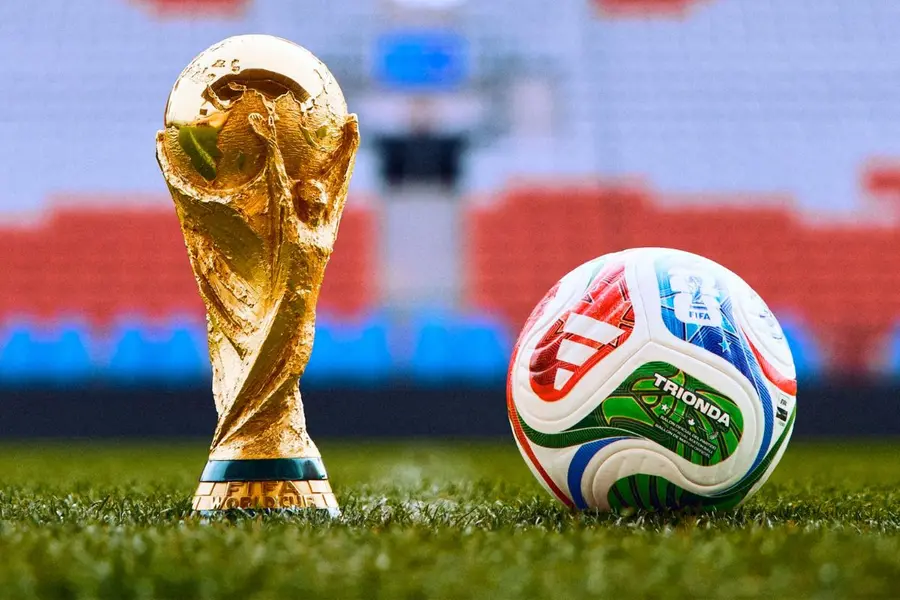
The 2026 FIFA World Cup, to be staged across Canada, Mexico and the United States, will feature one of the tournament’s most technologically advanced innovations, its match ball. Trionda, created by Adidas, the German sports manufacturer that has supplied every World Cup ball since 1970, marks a major leap forward in design, data integration and on-field officiating.
Unveiled in late 2025, Trionda is the first World Cup ball to combine an embedded motion-tracking sensor, a radically streamlined four-panel surface and climate-specific testing across North America. It is also the most expensive World Cup ball to date, retailing at £130, a price driven by the technology hidden inside.
Below is a detailed look at what makes Trionda unlike any World Cup ball before it.
Name and design
The name Trionda merges “tri”, a nod to the trio of host countries, with “onda,” the Spanish word for wave. The result, “three waves”, captures the energy of the la ola crowd wave popular in stadiums across the Americas.
Its bold colour palette draws directly from the hosts’ flags
- Red evoking Canada’s maple leaf
- Green from Mexico’s national emblem
- Blue representing the United States star
Flowing, wave-shaped graphics sweep across the ball’s surface and converge into a central triangular motif, symbolising unity between the three nations.
Four-panel construction for cleaner flight
Trionda uses a groundbreaking four-panel configuration, the fewest ever used on a World Cup ball. This streamlined, thermally bonded structure reduces aerodynamic drag and helps the ball travel with greater stability and predictability.
Textured detailing and strategic debossing improve grip and touch, while the low-absorption surface ensures consistent performance in a range of conditions, from humid summer matches to cooler evening fixtures.
Inside Trionda’s smart tech core
At the core of Trionda lies its most talked-about feature: a 500Hz motion-tracking sensor engineered by the manufacturer. The chip records data 500 times per second, capturing every touch on the ball, its exact position, speed, spin, and changes in direction.
Weighing just 14 grams, the sensor is embedded within one of the ball’s panels and calibrated so players cannot feel a difference in weight or balance.
This is not the first connected ball used at a World Cup, but the 2026 edition offers the fastest data capture and deepest integration with stadium technology to date.
The real power of Trionda’s data emerges when paired with the multi-camera tracking systems installed in every World Cup venue. Stadium cameras map player movements in three dimensions, while the ball’s sensor supplies exact timestamps for every contact moment.
For referees, this means more accurate offside decisions, quicker identification of handball or foul-related ball touches, and reduced guesswork in tight calls.
All data is relayed instantly to the VAR hub, helping officials review incidents with unprecedented precision.
In one of the World Cup’s more surprising technical requirements, Trionda must be charged before each match. The internal battery lasts up to six hours, comfortably covering a full game and warm-ups. The charging process is carried out alongside the usual match-day preparations.
Despite this, the technology remains invisible to players and spectators during play.
Tested for North American conditions
For the first time, the manufacturer conducted dedicated testing across host cities to ensure the ball matched regional climate demands. Trionda meets FIFA Quality Pro standards for shape retention, roundness, weight, bounce, and water resistance.
The result is a ball engineered to perform consistently across varied temperatures and altitudes in North America.
A legacy of iconic World Cup balls
Trionda follows a long line of memorable tournament balls produced by the same German company since 1970. Past editions include:
- 1970 (Mexico): Telstar
- 1974 (West Germany): Telstar Durlast / Chile Durlast
- 1978 (Argentina): Tango
- 1982 (Spain): Tango España
- 1986 (Mexico): Azteca
- 1990 (Italy): Etrusco Unico
- 1994 (United States): Questra
- 1998 (France): Tricolore
- 2002 (South Korea/Japan): Fevernova
- 2006 (Germany): +Teamgeist (Final: Teamgeist Berlin)
- 2010 (South Africa): Jabulani (Final: Jo’bulani)
- 2014 (Brazil): Brazuca (Final: Brazuca Final Rio)
- 2018 (Russia): Telstar 18 (Knockouts/Final: Telstar Mechta)
- 2022 (Qatar): Al Rihla (Finals: Al Hilm)
- 2026 (Canada/Mexico/USA): Trionda
Published: 24 May 2026, 06:40 pm IST
Related Topics
Disclaimer: Kindly avoid objectionable, derogatory, unlawful and lewd comments, while responding to reports. Such comments are punishable under cyber laws. Please keep away from personal attacks. The opinions expressed here are the personal opinions of readers and not that of Mathrubhumi.
