
The crisis has further deepened as Mohammad Rizwan and Imam-ul-Haq face investigations by national cybercrime authorities over allegations of leaking confidential team information.
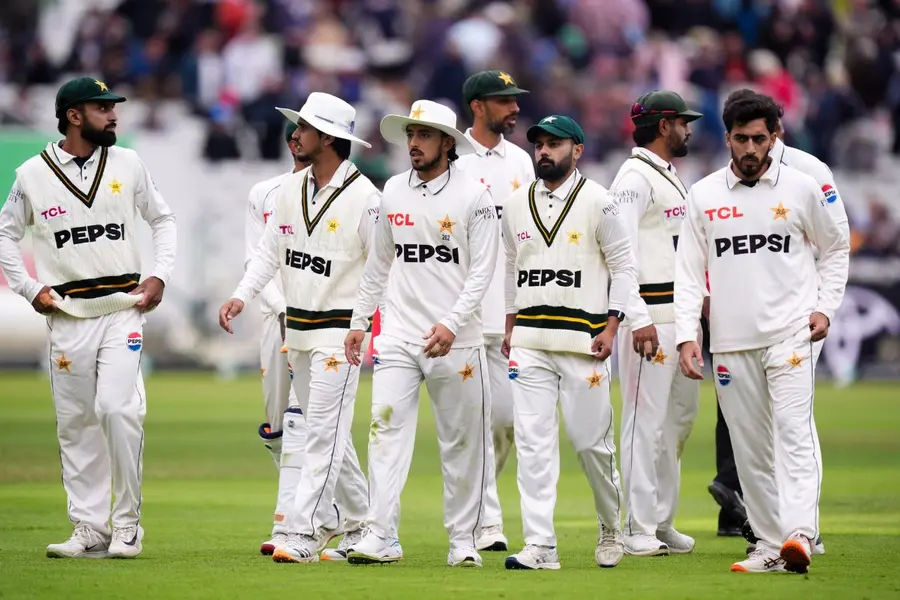
Karachi: Pakistan cricket sank to a new low following a crushing 3-0 Test series whitewash in England, though a spirited debut performance by Razaullah provided a brief ray of hope at the conclusion of a chaotic tour defined by mid-series sackings and squad dismissals.
Branded by critics as the worst visiting side to tour England in five decades, Pakistan's habitual instability persisted as head coach Sarfaraz Ahmed and bowling coach Umar Gul were dismissed mid-tour.
Additionally, seven players were dropped from the squad following a severe batting collapse that saw the team fail to reach 200 runs in five of their six innings.
White-ball coach Mike Hesson was hurriedly appointed to manage the team for the third and final Test, though the emergency tactical switch did little to alter the outcome.
The crisis deepened further off the field when ousted players Mohammad Rizwan and Imam-ul-Haq faced investigations by national cybercrime authorities over allegations of leaking confidential team information.
Reflecting on the collapse, former Pakistan captain Wasim Akram noted that the decline had been long in the making.
"It's a disappointing state but I could see this coming for the last five years and you can't blame one particular person and one factor because there are many," Akram told AFP.
Former star all-rounder Shahid Afridi offered a similarly grim assessment of the nation's cricket administration.
"These are gloomy times in Pakistan cricket," Afridi told AFP. "You don't disrespect players like this and your system is not strong."
A familiar pattern of instability
Mass overhauls following major defeats have long plagued Pakistani cricket administration. Over the past three years alone, the Test side has cycled through three captains and six head coaches.
The governance at the top reflects equal volatility, with the Pakistan Cricket Board (PCB) operating under five different chairmen over the last five years—a pattern that has severely disrupted long-term strategic development.
Strict punitive actions have historically accompanied such series defeats. Following a disastrous 3-0 defeat in Australia in 2010, the PCB imposed indefinite bans on former captain Mohammad Yousuf and veteran batter Younis Khan, alongside disciplinary measures against five other squad members, including Afridi.
The third Test loss at Edgbaston marked Pakistan's 16th defeat in their last 21 Test matches. The result leaves them anchored at ninth and last place in the World Test Championship (WTC) standings, mirroring their final position in the previous cycle.
The slump extends across all formats. Pakistan suffered an early exit in the group stage of the ODI Champions Trophy last year, despite the tournament marking the return of major ICC events to the country following a 29-year absence due to security concerns.
Their short-format record has suffered a similar decline. Pakistan failed to qualify for the semi-finals of the 2026 T20 World Cup, following an equally disappointing campaign two years prior that featured an unexpected group-stage defeat to the United States.
Long road to recovery
Former leg-spinner and 1992 World Cup winner Mushtaq Ahmed attributed the systemic downfall to structural deficiencies.
"We had a great number of match-winners and a strong legacy, and that is why we produced results in the past," Ahmed told AFP. "Now the decline is steep and will take time to fix."
With a fragmented domestic circuit failing to adequately prepare players for international Test cricket, experts see no immediate remedy.
"We need to realise that we lack talent in red-ball cricket. White-ball teams are okay," said Akram. "It's easy to blame the PCB chairman but when we were sleeping and not addressing the overall flaws then such a fall happens."
Public engagement is also waning as performance levels drop.
"All my four sons and I used to play in a local academy but in the last two years we all have lost interest as our team is not doing well," said local banker Mohammad Afzal.
"Cricket is fast losing ground in Pakistan and we need strong measures to revive the glory." (AFP)
Published: 13 Sept 2026, 12:11 pm IST
Related Topics
Disclaimer: Kindly avoid objectionable, derogatory, unlawful and lewd comments, while responding to reports. Such comments are punishable under cyber laws. Please keep away from personal attacks. The opinions expressed here are the personal opinions of readers and not that of Mathrubhumi.
