
The Iranian side was led by the Speaker of the Iranian Consultative Assembly, Mohammad Bagher Ghalibaf, assisted by Foreign Minister of the Islamic Republic of Iran, Abbas Araghchi.
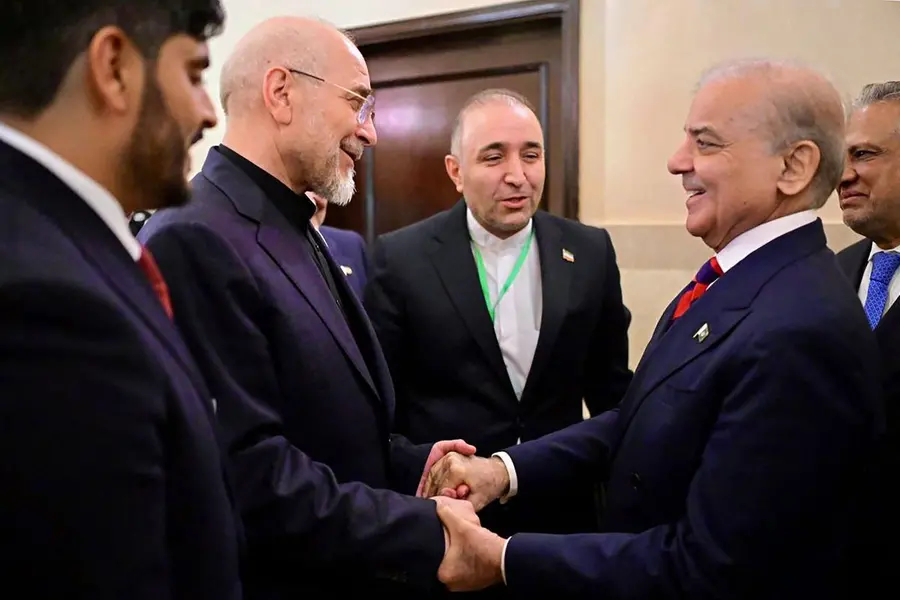
Prime Minister Muhammad Shehbaz Sharif held a meeting with the Iranian delegation at the Islamabad Talks on Saturday, as high-level diplomatic engagements continued in the Pakistani capital.
The Iranian side was led by the Honorable Speaker of the Iranian Consultative Assembly, Mr. Mohammad Bagher Ghalibaf, assisted by Foreign Minister of the Islamic Republic of Iran, Mr. Abbas Araghchi.
Appreciating Iran’s engagement in the Islamabad Talks, the Prime Minister affirmed Pakistan’s sincere resolve to continue playing its role as a mediator to help build momentum towards achieving meaningful results in the interest of regional and global peace and stability.
Deputy Prime Minister and Foreign Minister Muhammad Ishaq Dar, Chief of Army Staff and Chief of Defence Forces Field Marshall Syed Asim Munir and Interior Minister Syed Mohsin Raza Naqvi attended the meeting from the Pakistani side.
US and Iran begin rare direct engagement in Islamabad
The United States and Iran began historic face-to-face negotiations on Saturday in Pakistan, days after a fragile two-week ceasefire was announced, as the war entered its seventh week.
The White House confirmed the direct nature of the talks, describing it as a rare instance of high-level engagement.
Iran’s state-run news agency said three-party talks involving Pakistan began after Iranian preconditions were met, including a reduction in Israeli strikes on southern Lebanon. It also followed separate meetings between US and Iranian officials with Prime Minister Shehbaz Sharif.
The US delegation is led by Vice President JD Vance, while the Iranian delegation is headed by Parliament Speaker Mohammad Bagher Qalibaf. Discussions focused on advancing the ceasefire, which remains under strain amid ongoing disagreements and continued Israeli strikes against Hezbollah in Lebanon.
Competing proposals and wider regional tensions
Iranian state media said its delegation presented elements of its plan as “red lines” during meetings with Shehbaz Sharif. These included compensation for damage caused by US-Israeli strikes that began the war on 28 February and the release of frozen Iranian assets.
Iran’s 10-point proposal called for a guaranteed end to the war, control over the Strait of Hormuz, and an end to attacks on its regional allies, including a halt to Israeli strikes on Hezbollah. The US 15-point proposal includes restrictions on Iran’s nuclear programme and reopening of the strait.
The war has killed at least 3,000 people in Iran, 1,953 in Lebanon, 23 in Israel, and more than a dozen in Gulf Arab states, while damaging infrastructure across multiple countries. Iran’s control over the Strait of Hormuz has significantly disrupted global energy flows.
Around one-fifth of global oil trade had previously passed through the strait. Only 12 ships have been recorded transiting since the ceasefire.
Ahead of the talks, President Donald Trump accused Iran of using the Strait of Hormuz for “extortion” and said it would be opened “with or without them.” On Saturday, he said on social media that the US had begun “clearing out” the strait, though it was unclear what he was referring to.
Iranian Foreign Minister Abbas Araghchi said Tehran entered negotiations with “deep distrust” and warned it was prepared to retaliate if attacked again.
Published: 11 Apr 2026, 09:36 pm IST
Related Topics
Disclaimer: Kindly avoid objectionable, derogatory, unlawful and lewd comments, while responding to reports. Such comments are punishable under cyber laws. Please keep away from personal attacks. The opinions expressed here are the personal opinions of readers and not that of Mathrubhumi.
