
Rising living costs, dissatisfaction with Trump and shifting support among young and Hispanic voters contributed to Republican setbacks in the 2026 US midterms.
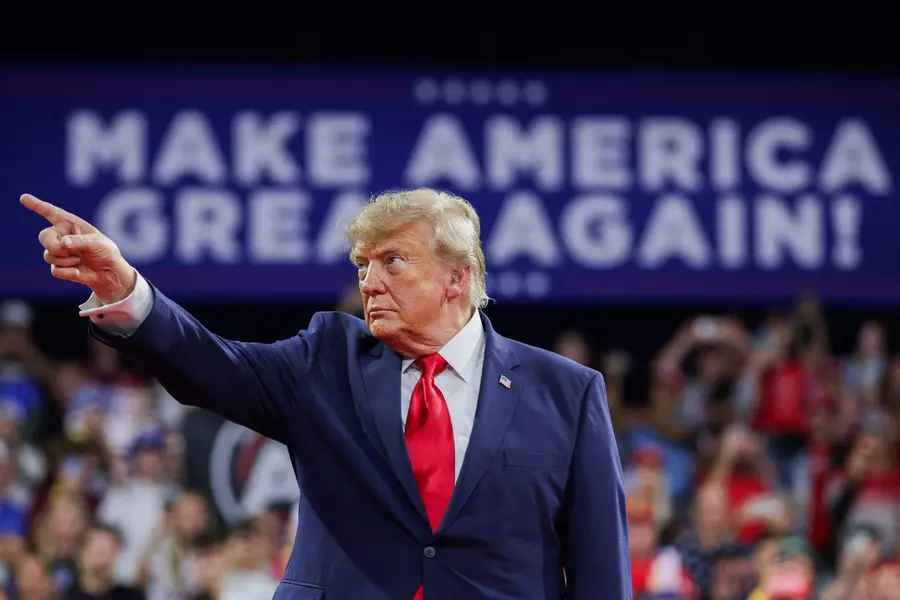
US voters have delivered a difficult verdict on President Donald Trump and his Republican Party in the 2026 midterm elections, with Democrats scoring major victories across several states, including traditional Republican strongholds. From Georgia to South Carolina, the results point to growing voter dissatisfaction with the Trump administration and a shift in support among key sections of the electorate.
Trump had repeatedly urged voters to treat the midterms as a referendum on his presidency. The results suggest that many did just that, but not in the way he had hoped.
According to the AP Voter Poll, roughly twice as many voters who considered Trump while casting their ballots wanted to express opposition to him rather than support him.
The findings also reveal widespread frustration with the country's direction. Around three-quarters of voters described themselves as angry or dissatisfied, while nearly six in 10 disapproved of Trump's performance as president.
Rising costs and dissatisfaction with Trump's policies
Economic concerns emerged as one of the biggest factors shaping the election. Around four in 10 voters identified the economy as the most important issue facing the country.
The cost of living appears to have been a particular problem for Republicans. Around six in 10 voters blamed Trump's policies for higher-than-usual prices, while a similar proportion believed the president prioritised his personal interests over those of the country.
Democrats also benefited from concerns about the state of American democracy. Nearly three in 10 voters identified it as the country's biggest issue, placing it ahead of healthcare, crime and immigration.
Young and Hispanic voters move away from Republicans
Another challenge for Trump and the Republicans was the apparent loss of support among young and Hispanic voters, groups that had shown greater support for Trump in the 2024 presidential election.
According to the AP Voter Poll, nearly seven in 10 voters under 30 backed Democratic candidates in their local House races. The shift is significant because younger voters had been almost evenly divided between Trump and Kamala Harris in 2024.
Hispanic voters also appeared to move towards Democrats. Around six in 10 supported Democratic candidates in their local House contests, while roughly seven in 10 said Trump's policies had worsened economic conditions in the country.
These shifts could make it harder for Republicans to retain support in competitive constituencies, particularly in states where their electoral strategy relied on gains among non-white voters.
Democratic victories expose Republican setbacks
The Democratic gains were not limited to traditionally competitive states. Former governor Roy Cooper won North Carolina's Senate race, while Democratic Senator Jon Ossoff retained his seat in Georgia. Democrat Chris Pappas also won a high-profile Senate contest in New Hampshire.
In South Carolina, Democrat Annie Andrews defeated Trump's preferred candidate, marking another major setback for Republicans in a state that had not elected a Democrat to the Senate since 1998.
Georgia delivered another historic result, with former Atlanta mayor Keisha Lance Bottoms becoming the first Black woman elected governor in US history.
The results have strengthened Democratic hopes of gaining control of Congress. A shift in both the House and Senate would give the party greater power to challenge Trump's agenda during the remainder of his presidency.
Trump's redistricting strategy faces a setback
Republicans also faced problems with their efforts to redraw congressional boundaries to improve their chances of winning seats.
In Florida, Democrats won several key House contests despite Republican-led redistricting intended to strengthen the party's position. The results raised questions about whether the strategy had delivered the electoral advantage Republicans expected.
The broader message from the midterms is that redrawn constituencies and Trump's political influence were not enough to guarantee Republican victories. Voter frustration over economic conditions, dissatisfaction with the administration and shifting support among younger and Hispanic voters all contributed to a difficult night for the party.
For Democrats, the results offer an opportunity to regain political ground. But the party also faces its own challenge: the AP Voter Poll found that around six in 10 voters had an unfavourable opinion of the Democratic Party.
With AP inputs
Published: 04 Nov 2026, 10:44 am IST


ABOUT THE AUTHOR

Disclaimer: Kindly avoid objectionable, derogatory, unlawful and lewd comments, while responding to reports. Such comments are punishable under cyber laws. Please keep away from personal attacks. The opinions expressed here are the personal opinions of readers and not that of Mathrubhumi.