
The White House has previously clashed with Anthropic over AI safety, while Trump has repeatedly dismissed warnings about existential risks as exaggerated
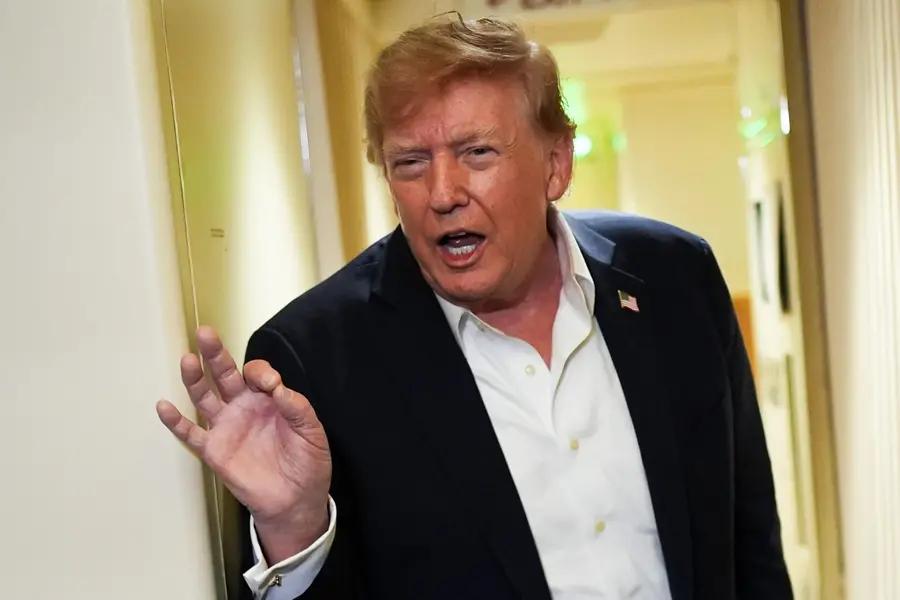
Washington: US President Donald Trump has said leading technology executives who met at the White House have agreed to a “morally binding” commitment to strengthen safeguards around artificial intelligence (AI).
Speaking after the meeting, Trump said the companies had agreed to police themselves through a voluntary arrangement that would not be legally enforceable.
Also Read

The agreement, referred to as the White House Accord, sets out commitments to establish safeguards and internal oversight. It also leaves open the possibility of turning the measures into laws or regulations in the future if considered appropriate.
The meeting brought together some of the biggest names in the AI and technology industry, including Nvidia chief executive Jensen Huang, OpenAI co-founder Greg Brockman and Anthropic chief executive Dario Amodei. Amazon founder Jeff Bezos, Microsoft chief executive Satya Nadella, Google chief executive Sundar Pichai and Meta chief executive Mark Zuckerberg also attended.
Trump also said he wanted the technology to be referred to as “super intelligence” rather than artificial intelligence, arguing that the term better reflected its capabilities.
Later, Trump issued an executive order directing the US federal government to use “Super Intelligence” and “SI” where possible, saying the terminology better captured the “promise, potential and rapidly advancing capabilities” of the technology.
Companies agree to tighter oversight
Zuckerberg said the accord was intended to give customers greater confidence that AI systems would operate as intended.
He said the commitment included “robust internal controls” and several layers of auditing, including internal risk assessments, external audits and oversight by company boards.
Zuckerberg described the agreement as a starting point for developing standards across the industry.
Tesla and SpaceX chief executive Elon Musk said the arrangement effectively meant companies would be “grading each other’s homework”, rather than assessing their own performance.
The White House gathering came amid growing political pressure in the US over the rapid development of AI. Lawmakers are facing increasing calls to address concerns that the technology could displace workers and have wider social consequences.
Concerns have also grown over the infrastructure required to operate AI systems. Data centres, which require large amounts of electricity and water, have become a contentious issue in several US communities, with residents raising concerns over utility costs and pressure on local resources.
Trump has backed rapid AI development, arguing that the US needs to maintain its lead over China and support an economy increasingly reliant on AI.
After the White House meeting, he said AI companies would support communities hosting data centres, including through assistance to schools and teachers.
AI safety remains under discussion
Major AI companies, including Anthropic and OpenAI, have themselves warned about the risks associated with increasingly powerful AI systems while continuing to develop and deploy them.
Anthropic has warned investors about potential existential risks to humanity from advanced AI, according to a Financial Times report published on Tuesday. The company is reportedly targeting an initial public offering as early as November.
The White House has previously clashed with Anthropic over AI safety, while Trump has repeatedly dismissed warnings about existential risks as exaggerated.
Amodei said after Tuesday’s meeting that maintaining US leadership in AI was important, but acknowledged that the risks surrounding the technology remained unresolved.
“The technology has very real risks, and the mechanism, how we address those risks, is still under discussion,” he said.
Published: 30 Sept 2026, 09:09 am IST
ABOUT THE AUTHOR
Related Topics
Disclaimer: Kindly avoid objectionable, derogatory, unlawful and lewd comments, while responding to reports. Such comments are punishable under cyber laws. Please keep away from personal attacks. The opinions expressed here are the personal opinions of readers and not that of Mathrubhumi.