
His comments come amid an ongoing political debate in Britain over immigration, integration and national identity.
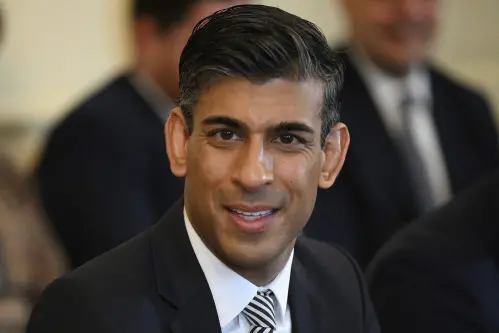
London: Former British prime minister Rishi Sunak has warned against linking skin colour with nationality, saying Britain must not create different categories of citizens based on race or how recently their families arrived in the country.
Sunak, the first politician of Indian heritage to serve as Britain's prime minister, made the remarks in his regular Sunday Times column after reflecting on a lecture he delivered at Lord's Cricket Ground last week. In the Marylebone Cricket Club's Cowdrey Lecture, Sunak spoke about cricket and sport as forces that can bring people together.
"I worry that Britain's great democratic achievement is coming under strain," writes Sunak.
"There are challenges that we must address: those posed by Islamism and exposed by the reaction to October 7 [attack in Israel], alongside those caused by the failure of those of us in government in recent years to adequately control immigration.
"There is, though, something else going on: a risk that we start equating skin colour with nationality. Or that we create different classes of Briton, treating those who arrived more recently as incapable of ever being as British as those who were here in 1707, regardless of how well integrated or patriotic they are," he notes.
Sunak referred to the so-called Tebbit Test, coined by Conservative MP Norman Tebbit in 1990. The test sought to use migrants' support for England or the countries of their heritage in cricket as an indicator of integration and assimilation.
"For all the criticism it received, this was a Test that anyone could pass. If you supported England because you now saw it as home, you were part of the team regardless of the colour of your skin," reflects Sunak.
"Ten-year-old me passed the test without even knowing about it. Born in Southampton, I would have found it odd not to support England, Hampshire and the Saints... In Britain we've created the world's most successful multi-faith, multi-ethnic democracy. I was a beneficiary of that. Whatever issues people had with me as PM -- and there was no shortage of those -- neither my race nor my religion was among them.
"No one was outraged by my role in appointing Church of England bishops. I could read a lesson at the King's coronation or light Diwali diyas in Downing Street with my daughters without controversy," he states.
The 46-year-old Conservative MP for Richmond then recalled comments made by some sections of British society during his time as prime minister questioning whether he could be English while being a "brown Hindu".
"In this world, if you're not white it doesn't matter who you support at the cricket: you can never be English. This reverse Tebbit test is impossible for any non-white person to pass," he states.
Sunak also warned against a situation in which newer migrants who identify with Britain and contribute to society are treated differently because of when they or their families arrived.
"people who live here, who feel British, who embrace our culture and embody our values, who strive to be the best members of society they can be, are marked down" because they are newer migrants to the country.
He argued that sport, particularly cricket, could play a role in promoting integration, noting its popularity across Britain's different ethnic communities.
"Sport, though, can play a small but significant role in encouraging integration. Cricket is almost unrivalled in being played by nearly every major ethnic group here. It is why I spent time as PM trying to ensure that more kids in England got to play it," he notes.
Sunak concluded his column with a warning against allowing race to become a defining factor in British politics.
"We cannot allow race to be reintroduced into our politics. We cannot allow Briton to be set against Briton," he concludes.
His comments come amid an ongoing political debate in Britain over immigration, integration and national identity. Reform UK leader Nigel Farage has used strong language on illegal migration, including describing it as an "invasion", while Sunak has sought to distinguish concerns over immigration from attempts to define Britishness through race.
Published: 21 Sept 2026, 03:01 pm IST
ABOUT THE AUTHOR

Related Topics
Disclaimer: Kindly avoid objectionable, derogatory, unlawful and lewd comments, while responding to reports. Such comments are punishable under cyber laws. Please keep away from personal attacks. The opinions expressed here are the personal opinions of readers and not that of Mathrubhumi.