
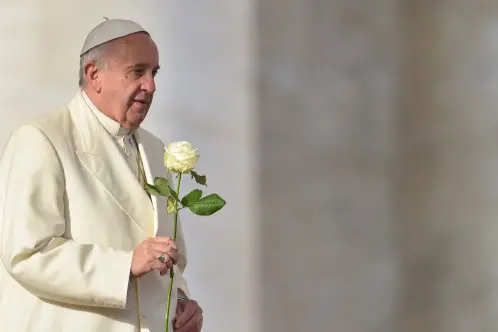
Vatican City: Pope Francis' death may have been caused by a cerebral haemorrhage and not complications from the severe pneumonia he had recently overcome, according to well-placed sources cited by Italian news agency ANSA on Monday.
The 88-year-old pontiff died on Easter Monday at 7:35 am local time, just a day after his final public appearance, during which he appeared frail but determined, blessing crowds gathered in St Peter’s Square from a wheelchair. While his presence brought reassurance to many of the faithful, the Vatican was reportedly not expecting such a sudden deterioration in his condition.
Quoting insiders, ANSA reported, “One of the possible causes of Pope Francis’ death was a cerebral haemorrhage.” Though the Pope had recently survived a serious bout of double pneumonia that required 38 days of hospitalisation at Rome’s Gemelli Hospital, sources suggest his passing was not directly linked to the respiratory illness.
He was discharged on March 23 and had returned to his Vatican residence, Domus Santa Marta, where he had been recovering. The exact cause of death, according to Vatican spokesman Matteo Bruni, is expected to be formally confirmed “this evening” (Vatican time).
Cardinal Kevin Farrell, the camerlengo of the Vatican, confirmed the Pope’s death and announced, “At 7:35 this morning, the Bishop of Rome, Francis, returned to the home of the Father. His entire life was dedicated to the service of the Lord and of his Church.”
Farrell made the statement from Domus Santa Marta, where Pope Francis had died. The Argentine pontiff had led the Catholic Church for more than 12 years and was the first from Latin America and the first non-European pope in nearly 1,300 years.
His last message, delivered on Easter Sunday, was a reflection on global conflicts and the need to safeguard human freedoms. He said freedom of religion and expression were “essential for world peace.”
In February, Francis had been admitted to hospital with a respiratory infection, which later developed into pneumonia in both lungs. His lengthy recovery and return to public life had been described by many as miraculous.
The Pope’s final resting place will be the Santa Maria Maggiore Basilica in central Rome — a departure from tradition, as he becomes the first pontiff in over a century not to be buried at St Peter’s Basilica. The fifth-century basilica already houses the tombs of seven other popes.
As tributes pour in from across the world, the Church now turns to the task of electing Francis’ successor, with Cardinal Farrell taking over administrative duties of the Holy See until a new pope is chosen.
(With inputs from AFP)
Published: 21 Apr 2025, 08:04 pm IST
Related Topics
Disclaimer: Kindly avoid objectionable, derogatory, unlawful and lewd comments, while responding to reports. Such comments are punishable under cyber laws. Please keep away from personal attacks. The opinions expressed here are the personal opinions of readers and not that of Mathrubhumi.
