
The Houthi gains have also raised fears that Yemen could slide back into a full-scale civil war after a truce that had largely kept the country quiet since 2022.
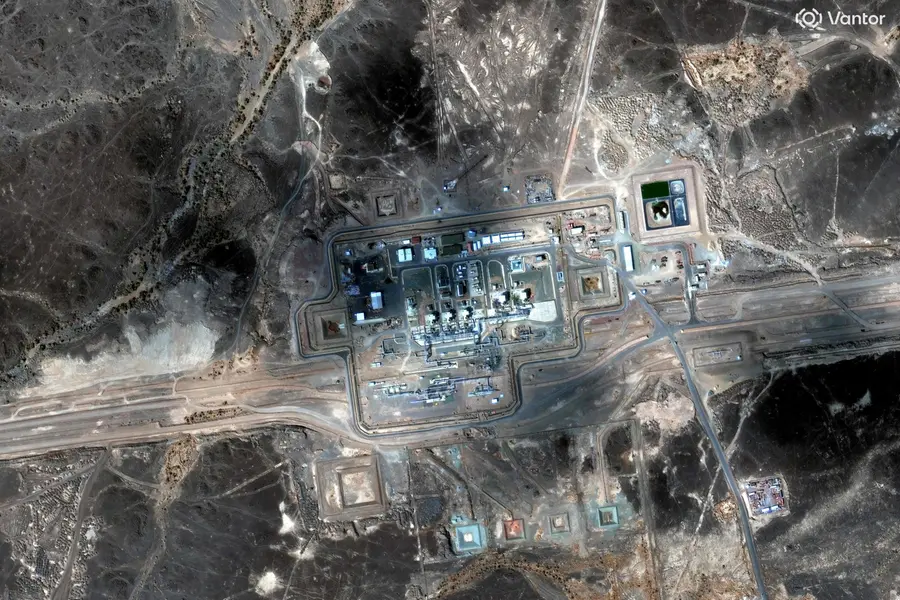
Cairo: Saudi Arabia's oil export route is facing fresh disruption after an attack damaged a crucial pipeline that could remain largely out of service for three to five weeks, while Yemen's Houthi rebels have seized strategic islands near a key Red Sea shipping chokepoint.
The developments threaten to complicate Saudi Arabia's efforts to keep its oil flowing to international markets while avoiding the Strait of Hormuz, where Iranian attacks have severely disrupted shipping.
Saudi Arabia relies on its 1,200-kilometre (745-mile) East-West Pipeline to transport crude from its oil-producing areas and Gulf ports to its western Red Sea coast. From there, the crude can be loaded onto tankers without passing through the Strait of Hormuz.
The pipeline was shut down Thursday after an attack that Saudi Arabia blamed on drones launched by Iranian-backed militias in Iraq.
Two regional officials briefed on the damage told The Associated Press that repairs could take three to five weeks, including work at a major pumping facility. One official said the pipeline could continue operating partially while repairs are carried out.
The pipeline has a capacity of up to 7 million barrels of oil a day, making prolonged disruption potentially significant for Saudi Arabia's ability to move crude to export terminals on the Red Sea.
The officials spoke on condition of anonymity because they were not authorised to brief the media.
Saudi oil giant Aramco, which operates the pipeline, did not immediately respond to a request for comment. The government-run Centre for International Communication said it was looking into an AP inquiry about the repair timeline.
Houthi gains add to Red Sea shipping risks
At the same time, the Houthis have expanded their control around the Bab el-Mandeb Strait, another major chokepoint for global shipping.
Iran-backed Houthi rebels captured the strategic Greater and Lesser Hanish islands, Yemeni government and Houthi officials said Monday. The islands are about 160 kilometres (100 miles) north of the Bab el-Mandeb Strait, which connects the Red Sea with the open ocean and provides a key route for Saudi Arabia's trade with Asian markets.
The island seizure follows the Houthis' capture last week of the port city of Mokha on the nearby mainland and the island of Mayun, located inside the Bab el-Mandeb Strait.
The latest advances could increase pressure on commercial shipping in the Red Sea while giving the Houthis a stronger position near one of the world's important maritime chokepoints.
The Houthi advance also puts the rebels about 20 miles (32 kilometres) from a US military base in Djibouti, on the opposite side of the Bab el-Mandeb.
For more than a month, the Houthis have targeted Saudi oil infrastructure and shipping in the Red Sea, adding pressure to global oil markets and increasing Iran's leverage in its war with the United States.
What does it mean for global oil markets?
The combination of damage to Saudi Arabia's alternative oil export route and growing Houthi control around the Red Sea creates another layer of uncertainty for global energy markets.
Saudi Arabia has been relying on its East-West Pipeline as an alternative to the Strait of Hormuz. But with the pipeline damaged and Red Sea access facing increased security risks, Riyadh's options for moving crude to international buyers could become more constrained.
The developments come as shipping through the Strait of Hormuz has already been severely disrupted by Iranian attacks, increasing the importance of alternative routes.
The wider conflict could therefore put additional pressure on oil supplies, shipping costs and energy prices if disruptions persist or spread to other infrastructure and maritime routes.
Yemen conflict threatens to widen
The Houthi gains have also raised fears that Yemen could slide back into a full-scale civil war after a truce that had largely kept the country quiet since 2022.
Saudi-backed Yemeni government forces have been attempting to regroup and push back against the rebels, but the Houthi advances along the Red Sea have so far met limited resistance.
The rebels deployed on the Hanish islands after hundreds of government-allied forces withdrew from the archipelago, according to two government officials and a Houthi official.
The fighting is also intensifying farther inland, particularly in the long-contested Taiz province.
About 150 civilians have been killed in fighting since Sept. 3, including a pregnant woman killed Saturday in a village in Taiz province, the government's Human Rights Ministry said. More than 200 civilians have been wounded, it said.
Thousands of families have fled their homes in Taiz and neighbouring provinces over the past day, said Khanzad Shah, acting head of Islamic Relief, a charity operating in the region.
“Many of them don’t have enough food or water as they had to flee with whatever they could carry. In some areas, whole villages have reportedly emptied,” he said.
The United Nations estimates that more than 80,000 people have been displaced in the past two weeks, including more than 2,000 who fled by boat to Djibouti.
The renewed fighting threatens to revive a war that has devastated Yemen for more than a decade, killing more than 150,000 people and pushing the country towards famine.
Saudi Arabia faces mounting security pressure
The Houthi advances have also brought renewed security concerns for Saudi Arabia's southern regions.
Saudi authorities sounded sirens Sunday afternoon in Abha and Khamis Mushait province, warning residents to take shelter from possible incoming fire. Both areas near the Yemeni border have faced repeated Houthi attacks in recent weeks.
A Houthi spokesman said the rebels fired dozens of missiles and drones at the King Khalid Air Base in Khamis Mushait, targeting hangars, radar installations and ammunition depots.
The statement by Brig. Gen. Yahya Saree on Monday did not specify when the attack occurred. The Houthis have frequently taken hours or days to claim responsibility for attacks.
Saudi Arabia did not immediately comment on the Houthi claim. Saudi civil defence said overnight that a projectile landed in another area near the Yemeni border along the Red
Published: 14 Sept 2026, 08:35 pm IST
ABOUT THE AUTHOR

Related Topics
Disclaimer: Kindly avoid objectionable, derogatory, unlawful and lewd comments, while responding to reports. Such comments are punishable under cyber laws. Please keep away from personal attacks. The opinions expressed here are the personal opinions of readers and not that of Mathrubhumi.