
Netanyahu has offered to serve as alternate prime minister while opposition leader Gadi Eisenkot takes the top post first. But disagreements over Iran security concerns, Arab-led parties and military service could derail Israel's unity government negotiations.
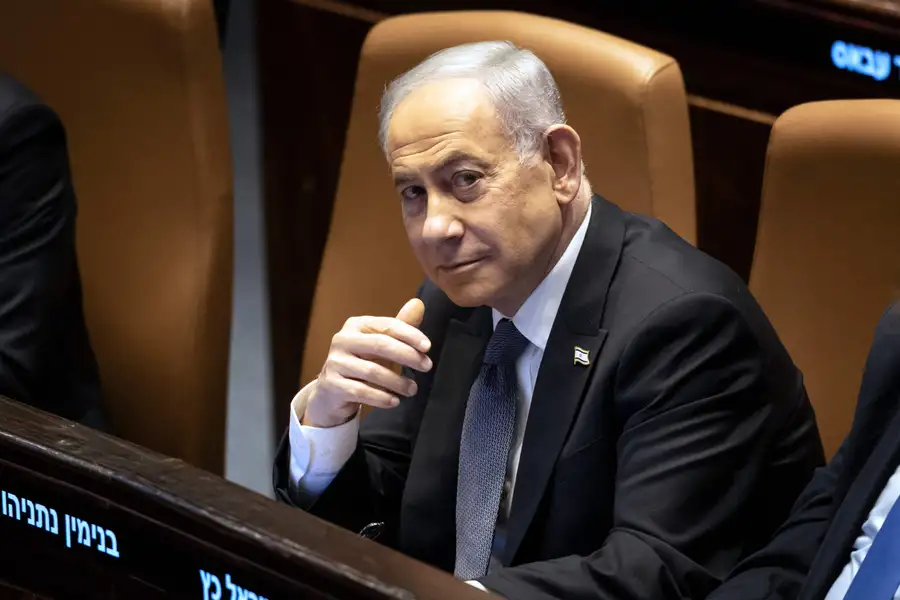
Jerusalem: Israeli Prime Minister Benjamin Netanyahu has offered to serve as alternate prime minister, allowing opposition leader Gadi Eisenkot to take the top post first under a proposed power-sharing arrangement. The offer comes as Israel struggles to form a government following inconclusive elections, with disagreements over coalition partners and security policy complicating negotiations.
The two leaders met on Sunday, November 29, at the Kirya military headquarters in Tel Aviv to discuss the possibility of forming a unity government. The meeting began with a security briefing, according to a statement from Eisenkot's Yashar party.
Under Netanyahu's proposal, Eisenkot would initially become prime minister while Netanyahu would serve as alternate prime minister before taking his turn under a rotation arrangement.
The proposal comes three weeks after Israel's president tasked Eisenkot with trying to form a government following inconclusive national elections.
Why has Netanyahu offered Eisenkot the first turn as prime minister?
Netanyahu's Likud party emerged as the most popular party in the October 27 elections. However, the right-wing and ultra-Orthodox parties traditionally supporting him failed to secure a parliamentary majority in the 120-member Knesset.
This left Netanyahu without a straightforward path to forming a government.
Meanwhile, Eisenkot has been exploring the possibility of building an alternative coalition with support from Arab-led and ultra-Orthodox parties, although disagreements over potential coalition partners have complicated those efforts.
Netanyahu's willingness to let Eisenkot serve as prime minister first is being seen as an attempt to break the political deadlock and bring opposition parties into a unity arrangement.
Iran security concerns complicate power-sharing proposal
Despite the offer, disagreements remain over the proposed rotation arrangement.
According to Israeli media reports cited by The Times of Israel, Netanyahu has attached conditions to his proposal, seeking to remain in the prime minister's position for an unspecified period to handle a possible upcoming security incident involving Iran.
Eisenkot has reportedly rejected this condition, insisting that any agreement must provide for a genuine transfer of power under the proposed arrangement.
The discussions are taking place against the backdrop of the ongoing Israel-US war against Iran, which began on February 28, 2026, according to the Associated Press report.
Netanyahu has argued that Israel faces significant security threats and needs a government capable of responding to them.
Eisenkot gives Likud 24 hours to negotiate
Before the meeting, Eisenkot had given Netanyahu and his Likud party 24 hours to demonstrate their willingness to negotiate a genuine unity agreement.
In a post on X on Saturday, Eisenkot invited Netanyahu and his negotiating team for immediate discussions on government formation.
He said he was prepared to consider compromises but wanted negotiations based on clear policy commitments and an agreed framework for governing.
Eisenkot also said he wanted a government representing all Israeli citizens, including those who did not vote for him or his political partners.
He claimed that his team had already submitted a detailed proposal through a confidential channel established at Netanyahu's request but had not received a response.
What are the major disagreements between the two political camps?
The proposed unity government faces several challenges beyond the question of who becomes prime minister first.
- Arab-led parties: Eisenkot's opposition bloc has considered support from Arab-led parties, while Netanyahu has repeatedly opposed relying on them to form a government.
- Ultra-Orthodox military service: Disagreements over mandatory military service for ultra-Orthodox Jewish men remain a major political issue.
- October 7 investigation: The proposed coalition must also address demands for a state-led investigation into the security failures surrounding the Hamas-led October 7, 2023, attacks.
- Iran security policy: Netanyahu and Eisenkot reportedly disagree over the conditions attached to the proposed prime ministerial rotation.
Why does Israel need a unity government?
Israel's October 27 election failed to produce a clear parliamentary majority for either political camp.
Although Likud emerged as the most popular party, Netanyahu's traditional right-wing and ultra-Orthodox allies did not secure enough seats to maintain their majority.
Eisenkot's opposition bloc faces its own challenges, particularly over whether Arab-led parties should participate in or support a coalition.
The political uncertainty comes after more than three years of conflict following the October 7, 2023, Hamas attack. Israel has been involved in wars in Gaza, against Hezbollah militants in Lebanon and in the conflict with Iran.
A unity government could potentially bring rival political groups together during this period, but disagreements over military policy, religious issues and the October 7 investigation remain significant obstacles.
Is Netanyahu's offer enough to break Israel's political deadlock?
Netanyahu's willingness to let Eisenkot become prime minister first represents a major change in his proposed approach to government formation.
However, the offer does not automatically guarantee a unity government.
The central disagreement is no longer limited to which leader occupies the prime minister's office. It also concerns the duration of the arrangement, the conditions for transferring power and the policies the coalition would follow.
For Eisenkot, accepting a rotation agreement with unclear conditions could undermine his stated objective of establishing a different political direction.
For Netanyahu, agreeing to serve second could offer a route back into government despite his traditional coalition failing to secure a majority.
The negotiations also highlight the influence of Arab-led and ultra-Orthodox parties, whose support could become crucial in determining Israel's next government.
The outcome of Sunday's meeting could therefore shape not only Israel's political leadership but also its approach to the ongoing Iran conflict and domestic security challenges.
Published: 29 Nov 2026, 05:50 pm IST


ABOUT THE AUTHOR

Disclaimer: Kindly avoid objectionable, derogatory, unlawful and lewd comments, while responding to reports. Such comments are punishable under cyber laws. Please keep away from personal attacks. The opinions expressed here are the personal opinions of readers and not that of Mathrubhumi.