
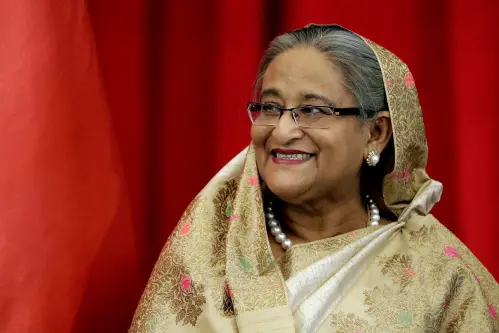
Sheikh Hasina, the Prime Minister of Bangladesh, has resigned and fled the country, seeking refuge in India amid a rising wave of protests and political unrest. This abrupt move comes as reports surface alleging that Pakistan's ISI and its Chinese counterpart may have played a role in destabilizing Hasina's government by financially supporting the student protest movement. However, it remains unclear what lies ahead for Bangladesh or Hasina.
Adding to the complexity of the situation, a 2009 cable from former US Ambassador James F. Moriarty, on Wikileaks, offers significant insights into Hasina’s leadership style and the internal dynamics of her administration.
Insights from the Wikileaks Cable
The cable revealed that Hasina’s governance was characterized by a reliance on a small, trusted circle of advisors, including family members and long-standing loyalists. Among these were her younger sister, Sheikh Rehana, and her son, Sajeeb "Joy" Wazed. Rehana was known for her substantial influence on Hasina’s political decisions, while Joy was instrumental in promoting the Awami League’s "Digital Bangladesh" initiative. After her resignation on Tuesday, Sajeeb Wazed Joy told the BBC that he doubted his mother would make a political comeback, as she has in the past, saying she was “so disappointed after all her hard work.”
The cable indicated her lack of trust in certain individuals within her inner circle of power, which some argue is the primary reason behind her downfall.
Dr. S. Jaishankar, India's External Affairs Minister, confirmed Hasina's arrival in Delhi after her abrupt resignation. This development follows weeks of mounting tensions and speculation about the Prime Minister’s political position.
The Role of Close Confidantes
The cable also highlighted the significant role of Retired Major General Tariq Ahmed Siddique, a close confidante of Hasina and her Defence and Security Adviser until her government’s recent ousting. Siddique’s influence was bolstered by his family ties, including his marriage connection to Rehana. His role in managing military and security matters was pivotal in Hasina’s administration.
Hasina’s approach to political appointments further underscored her reliance on a close circle. Despite her promises to introduce political reforms, the cable noted that she preferred to allocate sensitive roles to her trusted allies while sidelining those she considered disloyal.
The power struggle
The cable provided a detailed account of Hasina’s efforts to consolidate power during her incarceration from 2006 to 2008. It revealed how Hasina seized power by marginalizing party leaders and Presidium members who were not fully loyal to her. Figures such as Amir Hossain Amu, Abdur Razzak, Tofail Ahmed, and Suranjit Sengupta attempted to seize control of the Awami League and pressure Hasina to resign. However, their influence diminished under Hasina’s strategic management.
The cable also described Hasina’s actions against former allies Saber Hossain Chowdhury and Asaduzzaman Noor, who were sidelined due to their involvement with the Directorate General of Forces Intelligence (DGFI) during the state of emergency.
Current Implications
The revelations from the Wikileaks cable add layers of complexity to the ongoing political crisis in Bangladesh. The sudden resignation of Hasina has created a leadership vacuum, raising concerns about the stability of the government and the future direction of Bangladesh’s domestic and foreign policies.
Published: 06 Aug 2024, 09:08 pm IST
Related Topics
Disclaimer: Kindly avoid objectionable, derogatory, unlawful and lewd comments, while responding to reports. Such comments are punishable under cyber laws. Please keep away from personal attacks. The opinions expressed here are the personal opinions of readers and not that of Mathrubhumi.
