
Kim Song Gi, who previously served as director of the General Political Bureau of the Korean People's Army, has been appointed as the new defence minister.
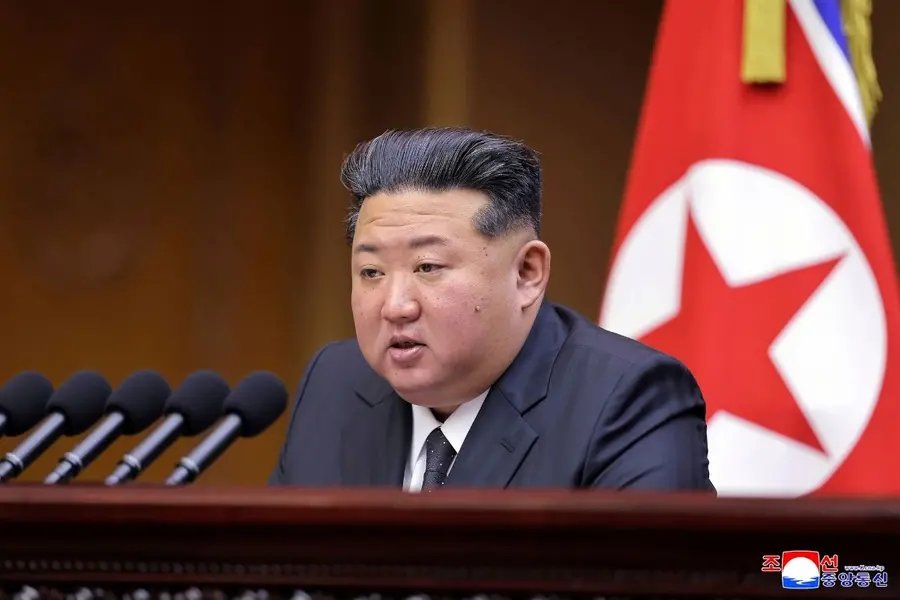
Seoul: North Korean Leader Kim Jong Un has dismissed his defence minister as part of a wider shake-up of the country’s military leadership, state media reported on Sunday.
The decision was made during a meeting on Saturday to discuss "structural reorganisation plans," according to the Korean Central News Agency (KCNA).
No Kwang Chol was stripped of his position as defence minister and demoted within the ruling party hierarchy to "first vice-director of the Munitions Industry Department," KCNA stated.
Kim Song Gi, who previously served as director of the General Political Bureau of the Korean People's Army, has been appointed as the new defence minister.
Additionally, senior official and defence advisor Pak Jong Chon was appointed vice-chairman of the Central Military Commission and named to the ruling party's Political Bureau, alongside several other military promotions.
In a separate report, KCNA noted that Kim honored scientists, researchers, and officials at a Saturday ceremony for their breakthroughs in military technology.
The honorees greatly contributed to "resolving scientific and technological problems of epochal significance in developing new combat weapon systems", KCNA reported, without elaborating on the specific weaponry.
State media also released a photograph showing Kim pinning a medal on one of the recipients.
The nuclear-armed nation's weapons research facility "has recently developed exclusive technologies, to be regarded as an event in strengthening the capability for fighting a war", adding that it demonstrated "the course of unique development of the country's military and technological capabilities".
These developments follow tests conducted in late June, where Kim personally supervised trials of a new extended-range multiple rocket launcher and artillery system.
Regional tensions and trilateral drills
The military shake-up follows the conclusion of annual joint military exercises between South Korea and the United States.
Pyongyang routinely denounces these drills as rehearsal for an invasion. However, this year's maneuvers drew heightened scrutiny after US President Donald Trump ordered them to be curtailed.
Trump publicly criticised the exercises as provocative toward Pyongyang while voicing frustration with Seoul over its level of support regarding conflict with Iran.
The US president also expressed interest in holding another meeting with the North Korean leader, whom he previously met twice during his first term.
Despite these gestures, Pyongyang has maintained a rigid stance, conducting missile tests and criticizing even the scaled-down maneuvers.
North Korea has also condemned recent US arms sales to South Korea alongside Washington's initiatives funding programs that document human rights abuses in the North.
Meanwhile, defense cooperation among Washington and its regional allies remains active. South Korea, the United States, and Japan are scheduled to conduct joint trilateral exercises—dubbed Freedom Edge—from September 7 to 11 in international waters east and south of Jeju Island.
"This exercise is a defensive drill conducted annually by the three countries to respond to North Korea's nuclear and missile threats and safeguard peace and stability in the region," South Korea's Joint Chiefs of Staff (JCS) stated on Friday. (AFP)
Published: 30 Aug 2026, 11:31 am IST
Related Topics
Disclaimer: Kindly avoid objectionable, derogatory, unlawful and lewd comments, while responding to reports. Such comments are punishable under cyber laws. Please keep away from personal attacks. The opinions expressed here are the personal opinions of readers and not that of Mathrubhumi.