
Japan is still likely to continue expanding its security ties with partners beyond the US, such as NATO, the European Union, India, the Philippines, Vietnam and other ASEAN members while maintaining its fragile rapprochement with South Korea.
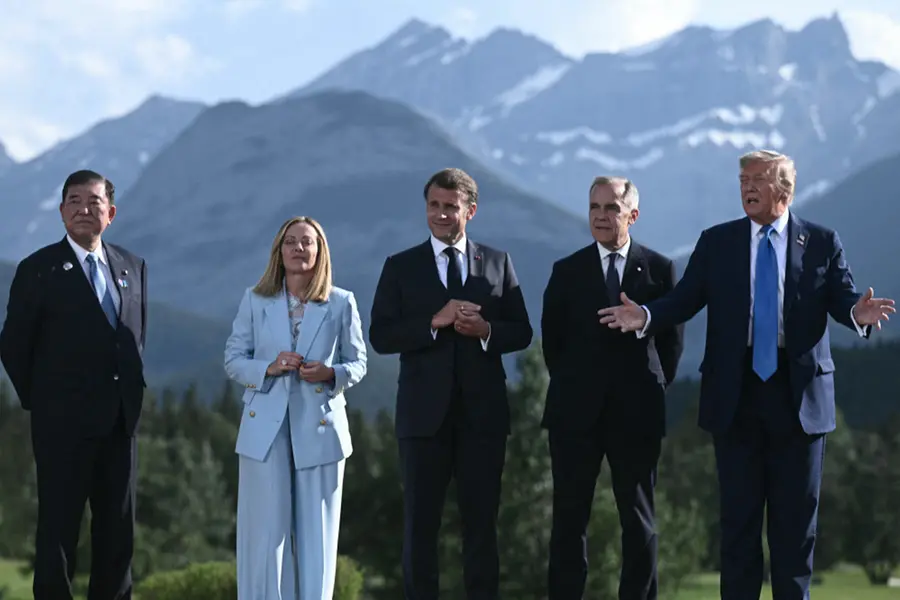
Tokyo: Japanese Prime Minister Shigeru Ishiba has sent a strong signal of discontent toward the Trump administration by abruptly pulling out of this week’s NATO summit at The Hague, despite earlier confirming his attendance.
Ishiba’s unexpected no-show places him alongside Australian Prime Minister Anthony Albanese and South Korean President Lee Jae-myung, who also skipped the summit. The move has raised questions about the current state of the Japan-U.S. relationship, which appears increasingly strained.
Japanese media reported that Ishiba cancelled his visit after it became clear that a one-on-one meeting with U.S. President Donald Trump was unlikely, and that a meeting of the Indo-Pacific Four (IP4) partners, Australia, New Zealand, South Korea, and Japan, would not take place either.
Although Japan will still be represented at the summit by Foreign Minister Takeshi Iwaya, signalling Tokyo's continued commitment to deepening ties with NATO, Ishiba’s absence underscores growing frustration with Washington.
The tension follows a series of recent developments, including steep tariffs imposed by the U.S. on Japanese goods and President Trump’s ambiguous remarks regarding the future of the longstanding U.S.-Japan military alliance.
Tariffs
Trump's tariff policy is at the core of the divide between the US and Japan.
Ishiba attempted to get relations with the Trump administration off to a good start. He was the second world leader to visit Trump at the White House, after Israeli Prime Minister Benjamin Netanyahu.
However, Trump's “Liberation Day” tariffs imposed a punitive rate of 25% on Japanese cars and 24% on all other Japanese imports. They are already having an adverse impact on Japan's economy: exports of automobiles to the US dropped in May by 25% compared to a year ago.
Six rounds of negotiations have made little progress, as Ishiba's government insists on full tariff exemptions.
Japan has been under pressure from the Trump administration to increase its defence spending, as well. According to the Financial Times, Tokyo cancelled a summit between US and Japanese defence and foreign ministers over the demand. (A Japanese official denied the report.)
Japan also did not offer its full support to the US bombings of Iran's nuclear facilities earlier this week. The foreign minister instead said Japan “understands” the US's determination to prevent Iran from acquiring nuclear weapons.
Japan has traditionally had fairly good relations with Iran, often acting as an indirect bridge with the West. Former Prime Minister Shinzo Abe even made a visit there in 2019.
Japan also remains heavily dependent on oil from the Middle East. It would have been adversely affected if the Strait of Hormuz had been blocked, as Iran was threatening to do.
Unlike the response from the UK and Australia, which both supported the strikes, the Ishiba government prioritised its commitment to upholding international law and the rules-based global order. In doing so, Japan seeks to deny China, Russia and North Korea any leeway to similarly erode global norms on the use of force and territorial aggression.
Strategic dilemma
In addition, Japan is facing the same dilemma as other American allies – how to manage relations with the “America first” Trump administration, which has made the US an unreliable ally.
Earlier this year, Trump criticised the decades-old security alliance between the US and Japan, calling it “one-sided”.
“If we're ever attacked, they don't have to do a thing to protect us,” he said of Japan.
Lower-level security cooperation is ongoing between the two allies and their regional partners. The US, Japanese and Philippine Coast Guards conducted drills in Japanese waters this week. The US military may also assist with upgrading Japan's counterstrike missile capabilities.
But Japan is still likely to continue expanding its security ties with partners beyond the US, such as NATO, the European Union, India, the Philippines, Vietnam and other ASEAN members while maintaining its fragile rapprochement with South Korea.
Australia is now arguably Japan's most reliable security partner. Canberra is considering buying Japan's Mogami-class frigates for the Royal Australian Navy. And if the AUKUS agreement with the US and UK collapses, Japanese submarines could be a replacement.
Political pressure
There are also intensifying domestic political pressures on Ishiba to hold firm against Trump, who is deeply unpopular among the Japanese public.
After replacing former prime minister Fumio Kishida as leader of the Liberal Democratic Party (LDP) last September, the party lost its majority in the lower house of parliament in snap elections. This made it dependent on minor parties for legislative support.
Ishiba's minority government has struggled ever since with poor opinion polling. There has been widespread discontent with inflation, the high cost of living and stagnant wages, the legacy of LDP political scandals, and ever-worsening geopolitical uncertainty.
On Sunday, the party suffered its worst-ever result in elections for the Tokyo Metropolitan Assembly, winning its lowest number of seats.
The party could face a similar drubbing in the election for half of the upper house of the Diet (Japan's parliament) on July 20. Ishiba has pledged to maintain the LDP's majority in the House with its junior coalition partner Komeito. But if the government falls into minority status in both houses, Ishiba will face heavy pressure to step down. AP
Published: 25 Jun 2025, 02:23 pm IST
Related Topics
Disclaimer: Kindly avoid objectionable, derogatory, unlawful and lewd comments, while responding to reports. Such comments are punishable under cyber laws. Please keep away from personal attacks. The opinions expressed here are the personal opinions of readers and not that of Mathrubhumi.
