
Pakistan Army Chief Asim Munir dominates US-Iran mediation, relegating Sharif's ministers to "adjuncts." Rawalpindi trumps Islamabad in ceasefire diplomacy, fueling fears of military over civilian rule.
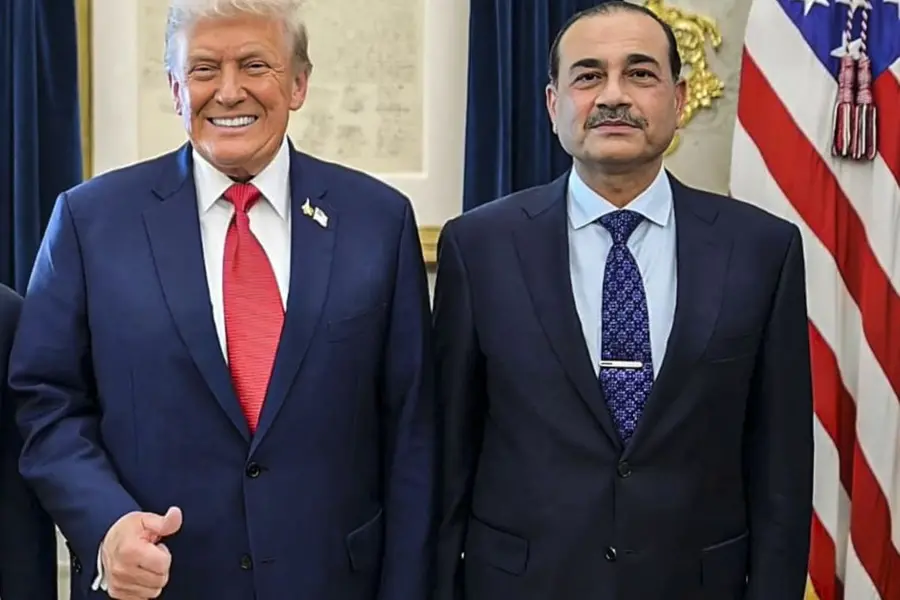
Pakistan's military strongman, Field Marshal Asim Munir, is firmly at the helm of the country's US-Iran diplomacy, sidelining civilian leaders and exposing Islamabad's deepening democratic deficits, as Rawalpindi orchestrates high-stakes ceasefire talks.
"Pakistan has emerged as an unlikely diplomatic broker... and Munir is widely seen as the key driving force," The Guardian reported Friday, citing his rare ability to connect US President Donald Trump and Iranian leaders. Negotiations, coordinated from army headquarters rather than Parliament, underscore the power tilt.
Former Pakistani envoy Maleeha Lodhi told the paper: "The army chief is the driving force; the foreign ministry is just a junior partner... Our government ministers are really an adjunct." Iran and the US reportedly trust Munir's influence over Prime Minister Shehbaz Sharif.
Munir's diplomatic spotlight
Munir's clout peaked with his June 2025 White House lunch with Trump -- the first serving Pakistani army chief to meet a sitting US president sans political title. Recent Islamabad talks saw him as the pivotal third party, with Trump leaning on his "knowledge of the Iranians."
Also Read: Exposed! Pakistan's sinister false‑flag tactics in Balochistan
Sharif publicly credits Munir's "crucial role" in message-relaying, while a Tehran visit with Interior Minister Mohsin Naqvi pushes second-round talks before the ceasefire lapses.
Structural Military Supremacy
The 27th Constitutional Amendment (November 2025) cements this: It created a Chief of Defence Forces post for Munir, commanding all services, plus lifetime immunity for five-star officers -- eviscerating civilian checks.
Critics like the International Commission of Jurists decry it as an "attack on judicial independence."
Munir's May 2025 Field Marshal promotion, post-India's Operation Sindoor setbacks, insulates him amid Sharif's coalition reliance.
Opposition faces ouster or jail -- Imran Khan's fate a stark reminder. Mediation success could burnish Munir's image, further eroding civilian space; failure might destabilize Sharif's government.
"Pakistan's geopolitical relevance rises, but at democracy's expense," said analyst Michael Kugelman of the Wilson Center. "Munir's veto institutionalizes military dominance."
Published: 17 Apr 2026, 09:18 pm IST
Related Topics
Disclaimer: Kindly avoid objectionable, derogatory, unlawful and lewd comments, while responding to reports. Such comments are punishable under cyber laws. Please keep away from personal attacks. The opinions expressed here are the personal opinions of readers and not that of Mathrubhumi.
