
Conflict, attacks on health workers and population movement are hampering efforts to track and contain the rapidly spreading virus.
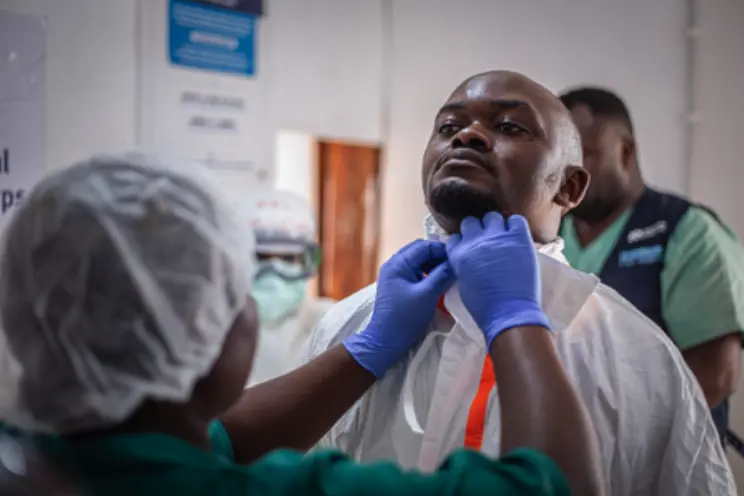
Bunia (DR Congo): The Ebola outbreak in the Democratic Republic of the Congo (DRC) has killed more than 3,000 people, with the disease continuing to spread faster than efforts to track and contain it.
According to the latest data from Congo’s Ministry of Health released Wednesday, the outbreak has recorded 6,186 confirmed cases and 3,007 deaths since it was declared in mid-May. The outbreak, caused by the rare Bundibugyo ebolavirus, is now the fastest-growing Ebola outbreak on record.
Conflict makes Ebola response harder
The outbreak is concentrated in eastern DRC, where ongoing conflict and population movements are making containment efforts more difficult.
Attacks on health workers, insecurity and the movement of miners and other communities have disrupted disease surveillance and access to affected areas. The United Nations has warned that fresh violence is driving further displacement and complicating efforts to control the outbreak.
In Ituri province, where the outbreak is centred, recent armed attacks have killed civilians and led to abductions. Clashes in neighbouring South Kivu have also displaced thousands of people.
UN Under-Secretary-General for Humanitarian Affairs and Emergency Relief Coordinator Tom Fletcher has called for a sustained, large-scale response, warning that the epidemic is growing exponentially and that time is running out.
Schools reopen amid transmission concerns
The outbreak has also raised concerns over the reopening of schools.
Classes resumed across the country on Tuesday despite objections from teachers and parents in Ituri, the epicentre of the outbreak. Some schools reported low attendance, while authorities and school officials said measures such as hand-washing facilities, sanitiser and temperature checks were being introduced.
Experts have warned that gaps in access to clean water, limited resources and logistical difficulties in remote areas could make infection prevention in schools challenging.
Children aged four and below have recorded the highest case-fatality rate among age groups for which data are available, at about 60 per cent.
No approved vaccine or treatment for current virus
The current outbreak is caused by the Bundibugyo virus, for which there is no approved vaccine or specific treatment.
The DRC has nevertheless begun distributing the Ervebo vaccine, which has been used against previous Ebola outbreaks and may offer protection. More than 50,000 doses have been received, with health workers and other frontline personnel among those being prioritised.
Vaccination began in Tshopo province under a compassionate-use framework, with authorities collecting data to assess its effectiveness against the virus responsible for the current outbreak.
Also read | ‘Crisis on top of a crisis’: Ebola outbreak worsens hunger in eastern Congo
Outbreak spreads across six provinces
The virus has now spread across six provinces and more than 60 health zones, according to authorities.
The outbreak had already crossed 6,000 confirmed cases by the end of August, with nearly 3,000 deaths. Authorities believe the virus may have been circulating undetected in communities since at least February.
The World Health Organisation has warned that the outbreak is on course to become the deadliest Ebola epidemic since the 2014-2016 West Africa outbreak, which killed about 11,000 people.
For health authorities and humanitarian agencies, the combination of a rapidly spreading virus, armed conflict, population displacement and weak health infrastructure is making the response increasingly difficult.
(With agency inputs)
Published: 02 Sept 2026, 06:51 pm IST
ABOUT THE AUTHOR

Disclaimer: Kindly avoid objectionable, derogatory, unlawful and lewd comments, while responding to reports. Such comments are punishable under cyber laws. Please keep away from personal attacks. The opinions expressed here are the personal opinions of readers and not that of Mathrubhumi.