
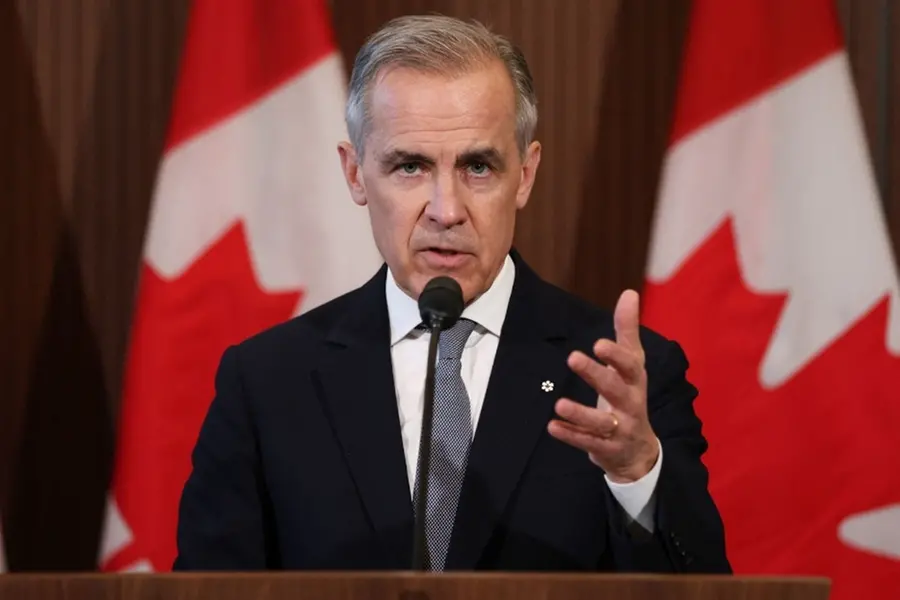
Ottawa: In a significant policy shift, Prime Minister Mark Carney announced that Canada must reimagine its economy as it faces a new era of strained relations with the United States. His remarks came after Trump unveiled a 25% tariff on auto imports from Canada, the EU, Japan, and South Korea, escalating trade tensions.
Speaking from Parliament Hill, Carney stated, "The old relationship we had with the United States, based on deepening integration of our economies and tight security and military cooperation, is over." He confirmed that Canada would respond strategically but did not disclose specific countermeasures.
Carney convened an emergency Cabinet meeting on Canada-US relations and indicated that he would speak with Trump soon. Ontario Premier Doug Ford also engaged with US Commerce Secretary Howard Lutnick, who assured that tariffs would be adjusted based on US content in vehicles. However, Ford remained sceptical, stating, "Trust but verify."
Industry experts have warned of severe disruptions. Flavio Volpe, president of Canada’s Automotive Parts Manufacturers Association, cautioned that the tariffs could paralyse both countries’ auto industries within a week. Meanwhile, Unifor President Lana Payne stressed that Canada would not allow manufacturing jobs to shift south while maintaining open market access.
Trump, in a Truth Social post, warned Canada and the EU against coordinated retaliation, threatening even harsher trade measures. Carney dismissed the threat, affirming Canada’s sovereignty: "We are masters in our own home."
Quebec Premier François Legault called for a renegotiation of the United States-Canada-Mexico Agreement (USMCA), though he questioned Trump's willingness to engage. Meanwhile, mayors from Canada, Mexico, and the US will meet in Washington for a trade summit to push for tariff relief.
With the new tariffs set to take effect on April 3, uncertainty looms over the future of Canada-US trade relations, as businesses brace for economic fallout.
Published: 28 Mar 2025, 07:32 am IST
Related Topics
Disclaimer: Kindly avoid objectionable, derogatory, unlawful and lewd comments, while responding to reports. Such comments are punishable under cyber laws. Please keep away from personal attacks. The opinions expressed here are the personal opinions of readers and not that of Mathrubhumi.
